A tree near your house in Amherst, NH deserves a closer look if it has developed a new lean, raised soil around its roots, fungal growth at the base, fresh cracks, hanging branches, weak stem attachments, or sudden canopy decline. These seven warning signs can indicate problems with the tree’s health or structure, especially when the trunk or branches are close enough to reach your roof, driveway, or another part of the property you use regularly.
That does not mean every tree showing one of these signs needs to come down.
At Technical Tree Service, we provide arborist services in Amherst, NH, including tree inspections and recommendations for managing damaged, declining, or structurally compromised trees.
We look at what has changed, where the problem is located, and what could happen if part of the tree fails. A tree growing at an angle for decades is different from one that started leaning after yesterday’s rainstorm.
The distinction matters when deciding whether to monitor the tree, address a particular defect, or consider removal.
1. The Tree Has Developed a New or Worsening Lean
A tree that has always leaned toward the sunlight may have developed supporting wood and roots that accommodate its growth pattern.
We would not recommend removing a tree simply because the trunk is not perfectly vertical.
What concerns us is movement.
If a large tree that stood upright last season is now leaning toward the house, something may have changed in its support system. A worsening angle after heavy rain, snow, or strong winds deserves particular attention.
We look for differences between the tree’s previous position and its current one. Old photographs can be useful here, especially when they show the trunk against a fixed reference such as a roofline or garage.
A new lean accompanied by lifted roots or cracks in the surrounding soil can indicate that the root plate has moved.
That is a different situation from a tree with a stable, long-established lean.
Which Direction Would the Tree Fall?
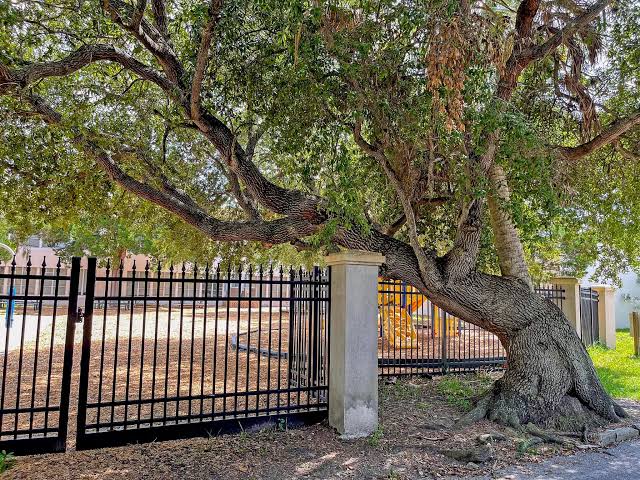
The direction of a lean is part of the assessment, but it does not predict exactly how the tree would fail.
Crown weight, branch arrangement, root condition, wind direction, and the location of structural defects all affect the forces acting on the tree.
If the tree stands close to the house, we want to know whether the trunk or major branches could reach the building.
We also consider nearby garages, driveways, walkways, and neighboring structures.
If the lean appeared suddenly or is continuing to increase, keep people and vehicles outside the possible fall area and arrange an inspection. Do not try to pull the tree upright with a vehicle or rope.
2. Soil Is Cracking, Heaving, or Lifting Around the Roots
The ground around a tree can reveal a problem before the crown looks unhealthy.
When the root plate begins moving, the soil may rise on one side of the trunk or separate from the roots on the other.
Fresh cracks, exposed supporting roots, or a noticeable change in the ground level can be evidence that the tree has shifted.
We pay attention to those changes because roots anchor the tree as well as supply water and nutrients.
A large pine with a full green crown can still have an anchorage problem.
For Amherst properties with wooded lots, sloped yards, or trees growing near driveways, the surrounding terrain also matters.
Construction Can Damage Roots Without Leaving an Obvious Wound on the Trunk
Recent excavation is something we want to know about during a tree health assessment.
Digging for a driveway, installing underground utilities, changing a drainage system, or moving heavy equipment repeatedly across the root area can affect the tree.
Roots may extend well beyond the visible canopy. Work that appears to be outside the immediate trunk area can still disturb them.
Symptoms may take time to appear.
We also consider what happened to the soil after construction. Compaction can limit the movement of water and air through the root zone. Changes in grading may alter drainage around a tree that previously grew under different conditions.
After periods of heavy rain or spring snowmelt, saturated ground can become another factor in root stability.
Fresh movement near the trunk deserves prompt attention, especially when the tree could reach a building or frequently used area.
3. Mushrooms or Fungal Growth Have Appeared Near the Base
Finding mushrooms beside a tree does not automatically mean the tree is dangerous.
Many fungi grow in soil, mulch, or buried organic material without causing structural decay in the living tree.
Other fungi are associated with wood decay, including decay in the trunk or roots.
The location and type of growth matter.
We pay particular attention to shelf-like fungal structures attached to the trunk, growth emerging from large roots, and recurring fungal fruiting bodies near the root collar.
These can indicate that additional investigation is warranted.
We also look for cavities, old wounds, missing bark, and areas where the wood has softened or deteriorated.
A Green Canopy Does Not Rule Out Internal Decay
A tree can continue producing leaves while decay develops inside its trunk.
The tissues responsible for transporting water and nutrients are concentrated near the outside of the stem. Parts of the interior wood may deteriorate without immediately stopping leaf production.
That is one reason a tree can appear healthy from the yard while having a structural defect that needs evaluation.
We would not diagnose the extent of internal decay from a mushroom alone.
The amount of sound wood remaining, the location of the defect, and the forces acting on the trunk all matter.
A cavity in a small branch and decay near the base of a large tree can present very different concerns.
Do not scrape away fungal growth, fill cavities, or cut into the trunk to investigate the problem yourself. Those actions will not establish whether the remaining structure is adequate.
4. Fresh Cracks, Splits, or Torn Wood Have Appeared
A fresh split in a major stem deserves attention even when the tree has not lost any branches.
We look for cracks running through the wood, exposed pale wood where an attachment has opened, and bark that has torn away during recent movement.
Not every visible line in the bark is a structural crack.
Some trees develop natural bark patterns, old seams, or surface injuries that remain stable for years.
The concern increases when a crack is new, extends through supporting wood, or appears to be widening.
We also look at whether the affected area carries a large portion of the crown.
A split at the attachment of two major stems can affect a substantial amount of the tree.
Heavy wet snow, ice accumulation, and strong winds can place additional loads on already weakened connections.
A Crack Near the House Changes the Priority
Imagine a mature maple with a split between two large stems.
If the stems extend over an unused wooded area, the consequences of failure may be limited.
If one extends above a bedroom or the main driveway, the same structural problem requires a different level of attention.
That is why we consider both the defect and what sits beneath it.
A professional inspection can help determine whether targeted tree trimming, other structural management, or removal is appropriate.
When a major split is actively opening or a large section has become unstable, do not stand beneath the affected crown to inspect it.
5. Dead or Broken Branches Are Hanging Over the House
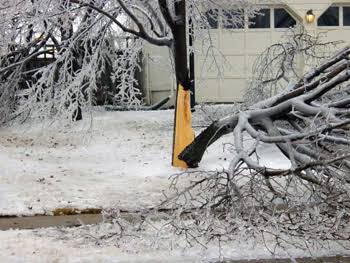
After a storm, homeowners usually notice the branches that landed on the lawn.
We also want to know what is still in the tree.
A broken branch can remain caught between other limbs without reaching the ground.
It may stay there through calm weather and move during the next windy day. More snow or ice can change the load again.
Large dead branches also deserve attention, particularly when they extend above roofs, parked vehicles, sidewalks, or outdoor areas where people spend time.
We consider the branch’s size, condition, attachment, and location.
A small dead twig in the upper canopy is not the same problem as a large broken limb hanging above the front entrance.
Do Not Clean Up Beneath a Hanging Limb
A homeowner may be tempted to remove the debris on the ground while leaving a damaged branch suspended overhead.
That creates unnecessary exposure to falling wood.
We recommend keeping the area clear until the hanging material can be evaluated and addressed.
Our storm damage cleanup service addresses fallen trees, damaged branches, and debris left after severe weather.
If a large branch is actively separating or a damaged tree is threatening the house, the situation may call for emergency tree service rather than routine cleanup.
Do not attempt to pull a hanging limb down with a rope or vehicle. The forces in partially broken wood can cause sudden movement.
6. Two Major Stems Are Separating at a Weak Union
Some trees grow with two or more large stems originating from the same area.
These are commonly called codominant stems.
Having multiple stems does not automatically make a tree unsafe.
The quality of the attachment matters.
Where bark becomes trapped between two growing stems, the connection may develop less supporting wood than a well-formed branch union.
As the stems grow larger, their weight and movement can place additional stress on that connection.
We look for included bark, fresh separation, cracks near the union, and signs that one stem has moved relative to the other.
Large maples and other broad-crowned landscape trees can develop these arrangements, but the individual structure is what determines the concern.
Can a Tree With Codominant Stems Be Saved?
Sometimes it can.
Depending on the condition and size of the tree, selective pruning or a properly designed support system may be considered.
Other trees have developed extensive splitting or decay that limits reasonable retention options.
We want to understand the condition of the attachment before recommending a particular service.
Cutting off one of two large stems without evaluating the remaining structure can leave a major wound and create another problem.
If you notice new separation between stems, particularly after a storm, do not try to tighten the union with improvised straps or hardware.
7. The Canopy Is Thinning or Large Sections Are Dying Back
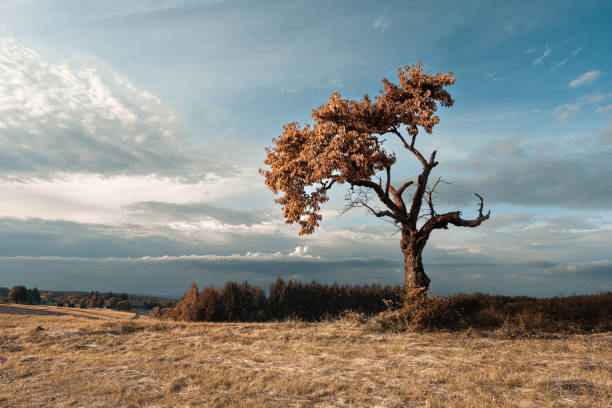
A tree that produces fewer leaves than it did in previous years may be responding to stress.
Sometimes the change is concentrated at the top of the crown. Other times an entire side has stopped producing normal foliage.
Possible causes include root damage, disease, insect activity, drought, drainage problems, and previous injuries.
We compare the affected tree with nearby trees of the same species when possible.
If several trees are showing similar symptoms, we may need to consider a shared environmental condition.
If one tree has declined while the surrounding trees remain healthy, its individual history becomes more important.
We also consider the season.
A deciduous tree without leaves in January is normal. A large section of that same tree remaining bare in June, while the rest of the crown is fully leafed out, deserves a closer look.
Canopy Decline and Structural Risk Are Not the Same
A declining tree is not automatically about to fall.
Some trees can respond to appropriate care once the cause of stress is identified.
We also know that a tree with a dense, green crown can still have serious structural defects in its trunk or roots.
That is why we evaluate biological health and structural condition separately before determining what work makes sense.
For homeowners looking at available services, our guide to professional tree service explains how inspections, pruning, maintenance, and removal serve different purposes.
How Close Is Too Close for a Tree to Be Near Your House?
There is no single distance that makes every tree safe or unsafe.
A healthy tree growing close to a house may have a manageable structure and a long history of stable growth.
A compromised tree farther away may still be tall enough to reach the building if it fails.
We look at the tree’s height, crown spread, structural condition, and possible failure directions.
The location of large branches also matters.
A tree may stand outside the roofline while a heavy lateral branch extends over the house.
That creates a different exposure from a similar tree whose crown grows away from occupied areas.
Distance is part of the assessment, but it does not replace an inspection of the tree itself.
How Amherst Weather Can Change an Existing Tree Problem
Southern New Hampshire experiences winter snow, freezing rain, strong winds, and periods of heavy precipitation.
These conditions can expose structural problems that developed long before a particular storm.
Wet snow adds weight to branches. Ice can remain attached to twigs and limbs as temperatures stay below freezing.
Wind moving a loaded crown increases the forces acting on branch attachments and the trunk.
Periods of heavy rainfall can also affect ground conditions, particularly where roots have already been damaged or the soil has recently been disturbed.
For an Amherst homeowner, the timing of a change can help us understand what happened.
A tree that started leaning immediately after a storm deserves different attention from one that has maintained the same angle for years.
We also consider whether the property has changed.
A tree along the edge of a newly cleared lot may experience different wind exposure after neighboring trees are removed.
That is not proof the tree will fail. It is a condition worth considering when reviewing its structure.
Which Tree Should Be Inspected First When Several Look Questionable?
On a wooded property, more than one tree may have dead branches, old wounds, or unusual growth patterns.
We do not automatically start with the largest tree or the one that looks least healthy.
We first consider what has changed and what could be affected if the tree or a major branch fails.
A recently cracked tree above the driveway may need attention before a larger declining tree deep in the back of the property.
Likewise, a tree with newly lifted roots beside the house deserves prompt evaluation even if its foliage still looks healthy.
This is an important part of tree risk assessment near a house in Amherst, NH.
We consider the likelihood of failure together with the likelihood of striking a target and the consequences of that impact.
Moving a parked vehicle or temporarily keeping people away from a particular area may reduce exposure while the tree is being evaluated, provided that can be done without entering the danger zone.
A professional assessment then helps determine what treatment or longer-term decision is appropriate.
When Can Pruning Help, and When Is Removal More Appropriate?
Some trees have defects limited to individual branches.
Removing damaged or deadwood may address the immediate concern while preserving the remaining tree.
In other cases, the problem involves a major stem, the root system, or a large portion of the crown.
Those conditions require a different evaluation.
We consider the remaining structure, the species, the tree’s location, and the practical options available.
Our tree service in Amherst, NH includes tree removal, trimming, inspections, and other work based on the condition of the property.
If the tree has suffered major structural failure and cannot reasonably be retained, tree removal may be the appropriate recommendation.
But we do not want homeowners to assume that every cavity, dead branch, or leaning trunk calls for removing the entire tree.
The location and extent of the problem determine the options.
What Happens During a Professional Tree Inspection?
When we inspect a questionable tree, we consider more than the visible symptom that prompted the call.
We look at the roots and surrounding ground, the trunk, major branch attachments, and the crown.
We also consider nearby structures, access areas, previous damage, and changes to the property.
Sometimes the cause of a problem is reasonably apparent during a visual evaluation.
Other situations may require additional investigation before the extent of internal decay or root damage can be determined.
We want to distinguish what can be observed from what remains uncertain.
Our tree care consultations can help homeowners understand the condition of their trees and discuss suitable management options.
A professional inspection provides a basis for deciding whether the next step is monitoring, maintenance, corrective work, or removal.
What Should You Do Before the Tree Is Inspected?
If you notice a fresh split, newly lifted soil, a hanging major branch, or a tree that has suddenly changed position, keep people away from the affected area.
Do not climb the tree, cut into a questionable trunk, or try to test a damaged branch by pulling on it.
You can describe what you have seen without getting underneath the tree.
Older photographs can be useful if they show when a lean or other visible condition changed.
Tell us about recent storms, excavation, driveway work, drainage changes, or equipment operating near the roots.
If a branch or tree is contacting a power line, stay away and notify the electric utility. Do not assume a fallen line is safe because the power appears to be out.
For homeowners in nearby communities, our arborist services in Bedford, NH are also available for tree-health and structural concerns.
We Look at the Tree Before Recommending What to Do
Technical Tree Service is based in Bedford, New Hampshire, and serves homeowners in Amherst, Bedford, Merrimack, Hollis, Milford, Nashua, and other southern New Hampshire communities.
We provide tree inspections, health assessments, trimming, removal, and emergency services for trees that need attention near homes and other structures.
If you have noticed a new lean, lifting roots, cracks, fungal growth, dead branches, or a change in the canopy, call us at (603) 438-5956.
We can review the condition you are seeing and arrange an on-site assessment.
We want to understand what has changed, how the tree is supported, and what it could affect before recommending pruning, continued monitoring, or removal.