After heavy snow or freezing rain in Dunbarton, start your tree inspection from a distance. Look for hanging branches, fresh splits, a new lean, disturbed soil around the roots and anything that changed above a roof, driveway, barn or utility line.
We do not recommend walking underneath a snow- or ice-loaded canopy to get a closer look. A branch can remain attached after it cracks, and another limb may be holding it in place.
At Technical Tree Service, that is what we are trying to sort out during a post-storm inspection: what changed, what is still supporting weight and what could be affected if another section fails.
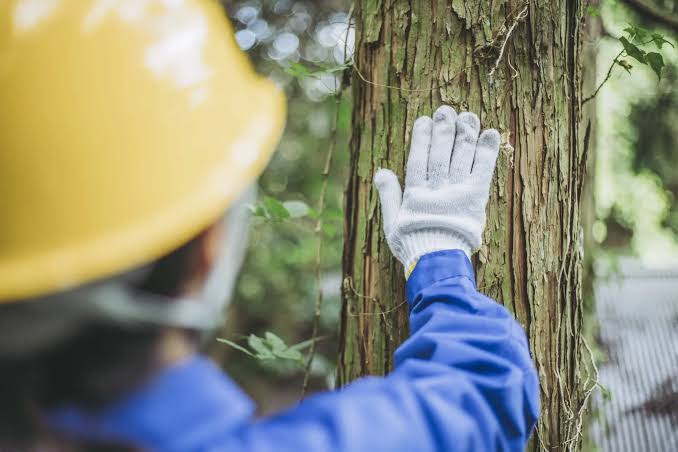
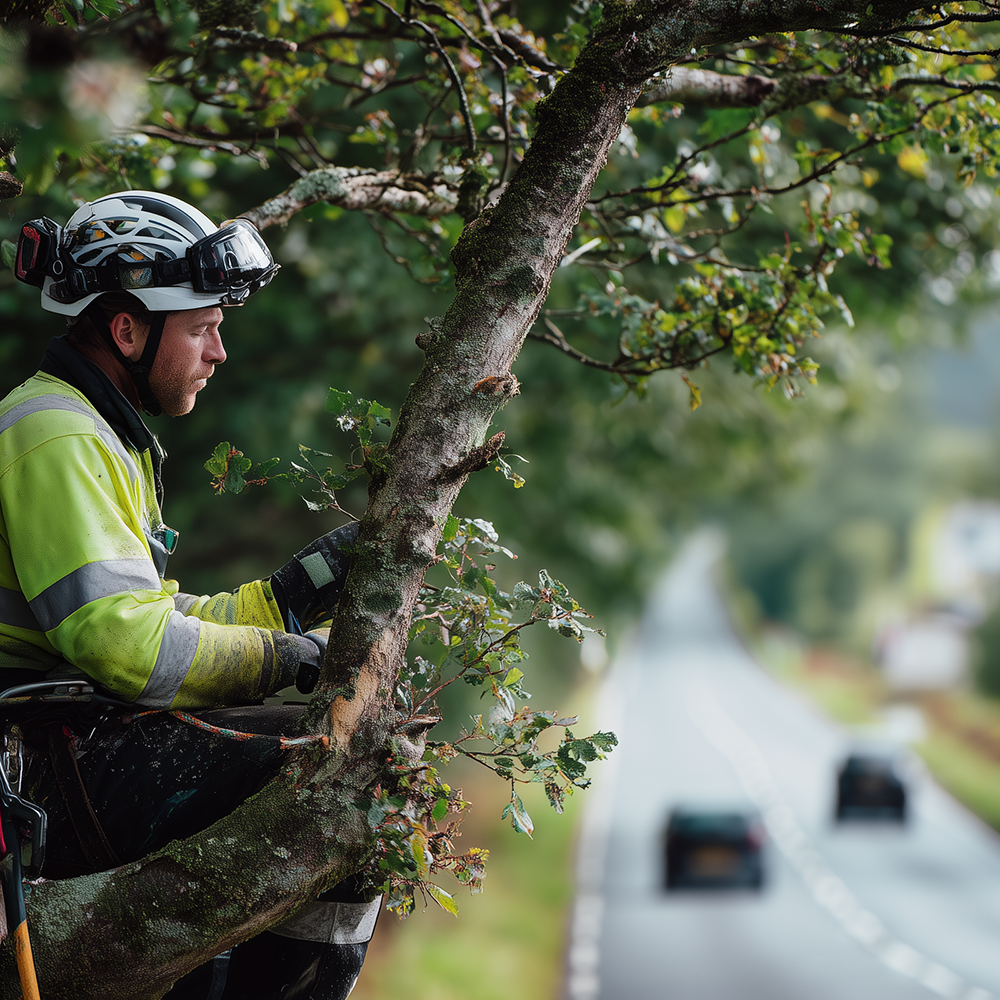
Our arborist services in Dunbarton, NH include on-site evaluation of the canopy, trunk, branch attachments, roots and surrounding property before we recommend pruning, monitoring or removal.
Dunbarton Has Seen What Heavy Wet Snow Can Do
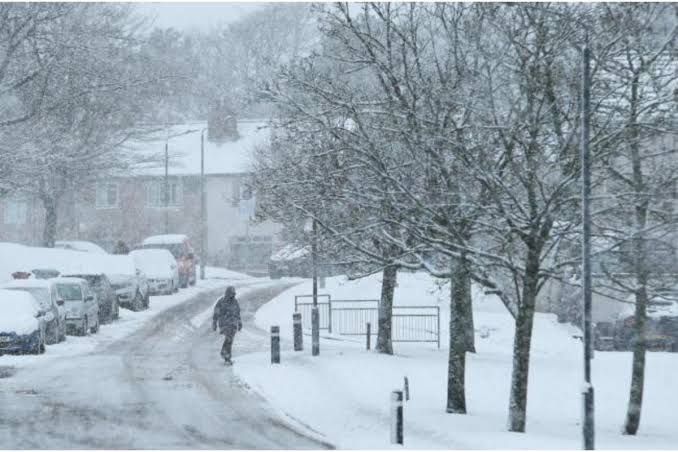
Heavy snow is not an abstract concern around here.
Dunbarton’s own emergency-management reporting describes late-winter storms that brought heavy wet snow, downed trees, damaged power lines and widespread outages across town.
That combination creates two separate problems for a tree.
The snow or ice adds load to branches and stems. At the same time, wet or thawing soil can reduce root support, especially when wind arrives with the storm.
A tree may lose a limb from the crown.
Another may begin leaning because the root plate moved.
A third may stay standing with no obvious ground damage but have a broken top lodged high in another branch.
Those trees do not need the same response.
Wait Until You Can Inspect From a Safe Position
The storm ending does not mean the canopy has stopped moving.
Ice may still be attached.
Snow can shift as temperatures rise.
A cracked limb can hang for hours or days before dropping.
Start where you can see the tree without standing beneath it. Binoculars can help with the upper crown.
If the only way to see the damage is to walk underneath loaded branches, that is where a ground-level homeowner inspection should stop.
Do Not Hammer or Shake Ice Off Mature Branches
Ice-covered branches look like they need help, especially when they are bent toward a driveway or roof.
Hitting them with a pole, shaking them or trying to chip ice away can release a loaded branch suddenly.
It can also damage frozen wood that might otherwise recover as the ice melts.
For mature trees, our preference is to keep people outside the fall area and let the load come off naturally unless an immediate hazard requires professional intervention.
Once the ice has melted, we get a much better view of what actually returned to position and what did not.
A Branch That Stays Bent Deserves Another Look
Some branches bend under snow and spring back when the weight disappears.
Others do not.
If a major limb remains lower than it was before the storm, the change matters even when you cannot see a clean break from the ground.
The wood may have cracked internally or the attachment may have shifted.
We pay close attention to a permanent change in branch position because the visible bend can be the only clue available from below.
Look for Broken or Hanging Limbs First
Hanging limbs are one of the most immediate post-storm problems.
The broken section may still be connected by bark.
It may be resting on another branch.
A snapped top can become lodged lower in the crown.
These pieces can look stable when the wind is calm and then move when another branch flexes or snow falls out of the canopy.
We look at where the branch broke, what is holding it and what sits beneath it.
A hanging limb over unused woods and the same limb over the front walk create different priorities.
Check the Driveway Before You Check the Back Woods
That distinction matters on Dunbarton properties.
Long driveways are common, and a damaged tree does not have to hit the house to create an urgent problem.
A large limb suspended above the only driveway can block access if it falls.
A leaning tree can interfere with emergency vehicles.
Storm debris can also hide wires or tensioned wood along the edge of the road.
If you need tree service in Dunbarton, NH after a storm, tell us where the damage sits relative to the house, driveway and road. That helps us understand the immediate consequence before we arrive.
Fresh Splits Matter More Than an Old Scar
After a storm, homeowners sometimes notice every mark on a trunk for the first time.
Not every crack was created last night.
We look for signs of fresh movement: newly exposed light-colored wood, torn bark, a union that has opened, a seam that appears wider than before or two stems that are no longer sitting in the same position.
Those changes tell us more than the presence of an old weathered scar.
A new structural split through a major stem needs prompt evaluation.
Co-Dominant Stems Can Open Under Snow and Ice Load
Two large stems growing from the same union can each carry a substantial crown.
Snow and ice add weight to both sides.
If the union contains included bark or has already begun separating, the load can widen an existing weakness.
From the ground, look for a new gap between the stems, fresh bark tearing or exposed wood below the fork.
Do not put your hand into the crack or stand underneath the stems to judge how deep it is.
We can inspect the attachment and decide whether the tree is a candidate for pruning, structural support, monitoring or removal.
An Old Lean and a New Lean Are Different Problems
Plenty of healthy trees grow at an angle.
A lean that has existed for decades is not automatically a sign that the tree is about to fall.
What concerns us after a snow or ice storm is change.
If the trunk is sitting at a noticeably different angle, inspect the ground from outside the potential fall zone.
Look for lifted turf, fresh soil cracking, a mound forming on one side of the trunk or a gap opening at the root flare.
Those can indicate movement of the root plate.
Root-Plate Movement Changes the Decision
A tree with several broken branches can sometimes be repaired through pruning.
A tree whose root system has shifted is a different structural problem.
The root plate anchors the entire tree. When that support changes, removing a few damaged limbs does not automatically restore stability.
Snowmelt can also leave soil wet at the same time the crown is carrying extra weight.
If we find fresh root movement during a tree health assessment, we evaluate the tree as a whole rather than treating the canopy and roots as separate issues.
White Pines Are Worth Checking, but Species Does Not Decide the Outcome
White pine is common on wooded and rural properties around Dunbarton.
After heavy snow, pine branches can sag dramatically. Conifer branches often carry snow differently from broad hardwood limbs and can flex downward under load.
That does not mean every bent white pine is failing.
We look for broken tops, snapped scaffold limbs, an imbalanced crown, fresh trunk damage and root movement.
Edge trees deserve extra attention because they may have developed heavier growth toward open space.
A mature pine beside a house or driveway also carries different consequences from one well inside a wooded lot.
Maples, Oaks and Other Broad-Crowned Trees Need Structural Attention Too
Broad hardwood crowns can collect substantial snow and ice.
What matters most is how that crown is attached.
Long lateral limbs, narrow unions, included bark, existing decay, old storm wounds and heavy end weight can all influence what happens when winter load builds.
A large oak with sound attachments may come through the storm with minor twig loss.
A maple of similar size with a weak co-dominant union may split.
We inspect the actual tree rather than making the decision from species alone.
Look at What Is Under the Damaged Part
Tree risk is partly about the likelihood of failure and partly about what the tree can hit.
That is why our inspection includes the property around the tree.
We note roofs, decks, garages, barns, driveways, walkways, parked vehicles, play areas and utility lines.
A defect becomes more urgent when a person or structure is regularly inside the possible fall path.
On a larger wooded lot, that same defect may be managed differently if there is no occupied target nearby.
Power Lines Change the Rules Immediately
If a tree or branch is touching a power line, keep away.
Do not move the branch.
Do not assume a wire is safe because it looks insulated or because the power is already out.
New Hampshire emergency guidance tells residents to stay away from downed electrical lines and call 911.
Dunbarton includes customers served by more than one electric distribution utility, so report the outage or tree contact to the utility shown on your account as well.
Tree work around energized conductors requires utility coordination and the appropriate qualified personnel.
A Broken Branch on the Ground Is Not the End of the Inspection
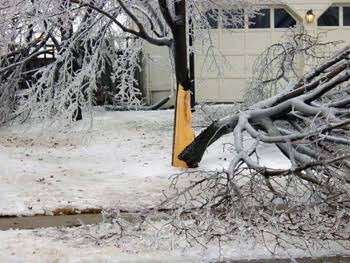
The piece that fell may be the most obvious damage.
It may not be the most important damage.
When a large limb tears out, we look at the remaining attachment and surrounding crown.
Did another limb crack when the first one fell?
Is the remaining canopy now heavily weighted to one side?
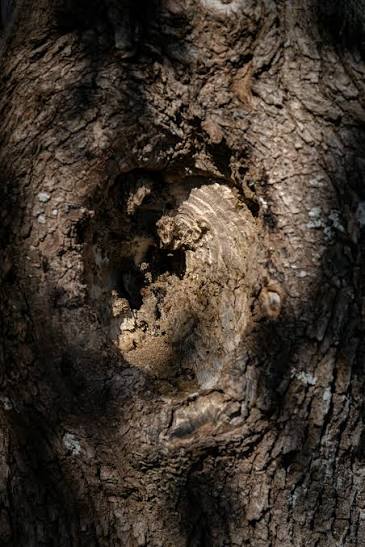
Did the failure expose decay inside the trunk?
Is a neighboring branch holding a broken section?
Walking straight to the branch pile can cause you to miss what is still above it.
Torn Bark Can Show How the Failure Happened
Storm failures often leave more than a clean break.
A limb can peel bark down the trunk or tear wood out of a major union.
The size and location of that wound affect what can be retained.
Do not cut loose bark randomly or apply wound paint because the trunk looks unfinished.
We first determine what tissue is still attached and whether corrective pruning is needed.
Check Existing Cables and Support Systems
If a mature tree already has cables, rods or other structural support, include those in the post-storm inspection.
Look from the ground for an obvious broken cable, displaced hardware or a supported union that appears to have changed position.
Do not assume the system makes the tree storm-proof.
Support hardware is meant to reduce certain loads. It does not remove the possibility of failure, and the tree still needs to be evaluated after a major event if something has changed.
Do Not Assume Every Damaged Tree Needs Removal
Winter damage can look severe immediately after a storm.
That visual impact does not always tell us whether the tree can recover.
A tree with sound roots and trunk structure may need selective pruning of broken material.
Another may need monitoring after a damaged section is removed.
In some cases, the main structure has been compromised enough that removal makes more sense.
Our job is to separate those situations.
A professional inspection should not begin with the conclusion that the tree has to come down.
When Pruning May Be Enough
Pruning may be appropriate when the primary trunk and roots remain stable and the damage is limited to branches that can be removed without leaving an unmanageable crown.
We can remove loose or broken limbs, make appropriate cuts at damaged attachments and address additional deadwood that creates an obvious hazard.
Our tree trimming in Dunbarton is based on the condition of the tree rather than taking off as much canopy as possible.
Storm cleanup is a poor time to top a tree or make random large cuts because the crown looks uneven.
When Monitoring Makes More Sense
Some trees need time.
A branch may have bent and returned.
A tree may have lost part of its crown without compromising its main stem.
The best recommendation may be corrective pruning followed by another inspection after the next growing season.
This is where a broader health assessment helps.
We consider crown density, wounds, decay, root condition, species response and the position of the remaining branches before deciding whether more work is needed.
When Removal Moves Higher on the List
Removal becomes more likely when we find changes such as major root-plate failure, a severe trunk split, a broken main stem, extensive decay exposed at a failure point or a remaining structure that cannot reasonably be managed around the property’s targets.
A tree may also become an emergency when it is resting on a house, hanging over occupied space or blocking access.
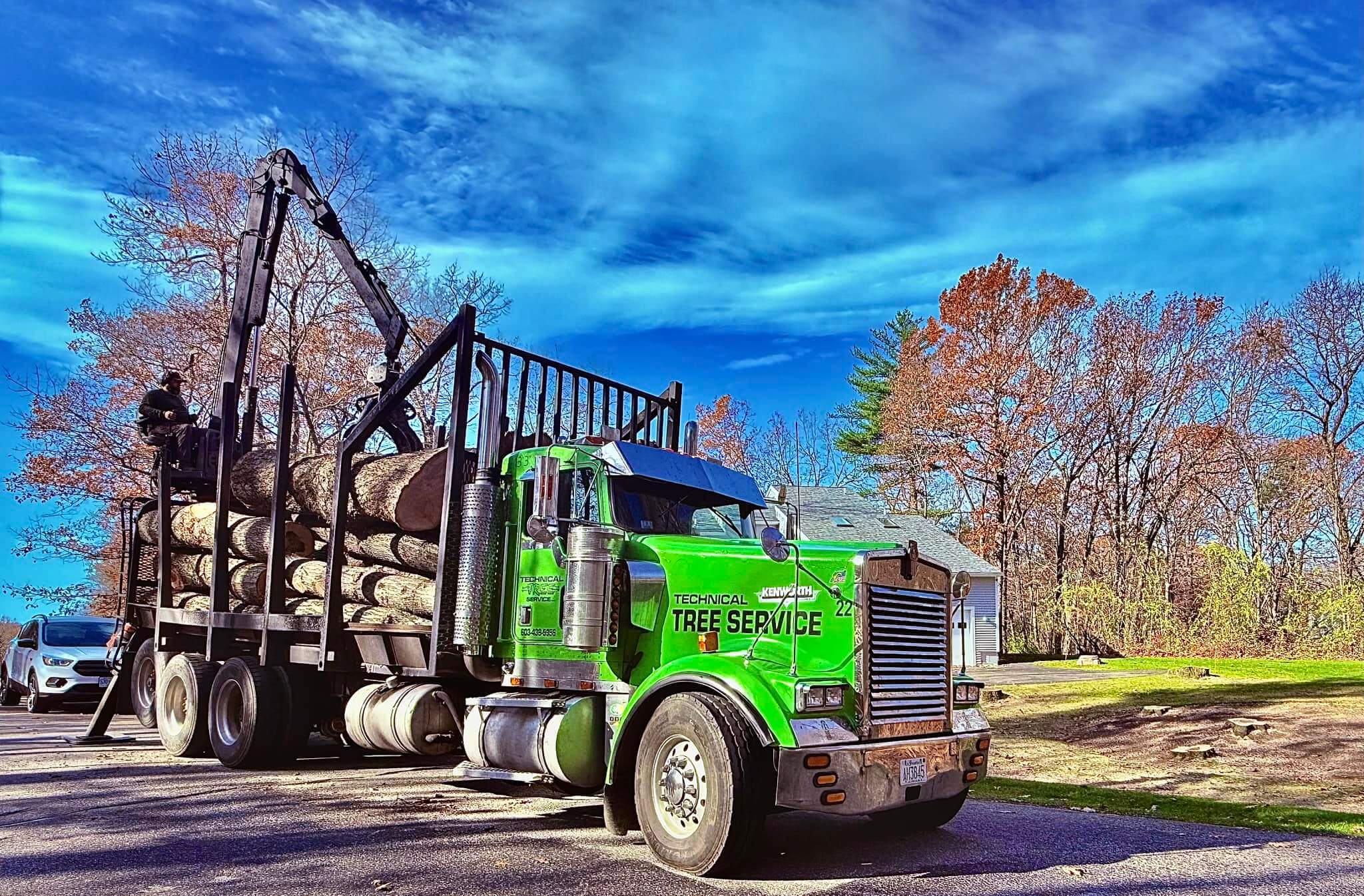
Technical Tree Service has company-owned cranes for jobs where damaged sections need controlled handling rather than conventional lowering or felling.
The method still depends on the property and the tree.
Storm Damage Can Store Enormous Tension in Wood
A partly fallen tree is not the same as a tree lying flat and relaxed on the ground.
One trunk may be supporting another.
A root plate can try to settle as weight is removed.
Bent branches can release when they are cut.
Broken tops can remain suspended.
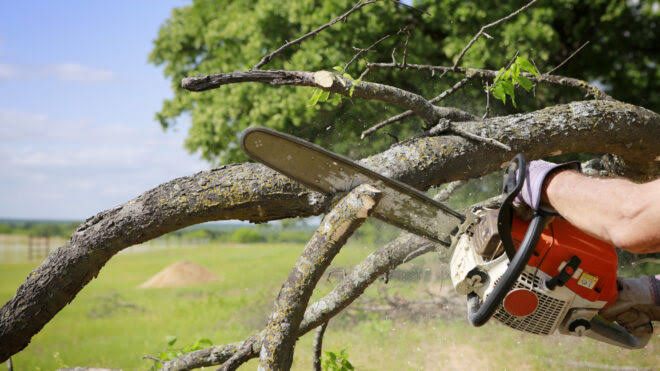
This is one reason we discourage homeowners from starting with a chainsaw simply because the storm is over.
The tree may be carrying forces that are not obvious from where you are standing.
What Counts as an Emergency?
We treat the situation differently when the tree is creating an immediate access or property hazard.
Examples include a tree on a structure, a major hanging limb over occupied space, a newly uprooted tree leaning toward a house, a blocked driveway or storm damage involving utility lines.
Technical Tree Service provides 24/7 emergency tree service, and our Dunbarton service page states emergency response within one hour for emergency calls in town.
For widespread debris without an immediate suspended hazard, our storm damage cleanup service can address fallen material while the remaining trees are checked for further problems.
What a Professional Post-Storm Inspection Looks At
When we evaluate a tree after heavy snow or ice, we are not checking one broken limb in isolation.
We look from the root zone through the crown.
That includes the current lean, root flare, soil movement, trunk, old cavities, new cracks, major unions, deadwood, broken branches and the distribution of the remaining canopy.
We also consider what surrounds the tree.
Access matters on Dunbarton properties with narrow drives, slopes, stone walls, septic areas, woods and wet ground.
The recommendation has to make sense for the tree and for the site.
Arborist Services in Bow Follow the Same Inspection Logic
Winter storms do not stop at the Dunbarton town line.
For properties east of Dunbarton, our arborist services in Bow, NH use the same root-to-canopy approach.
The individual property still changes the recommendation.
A mature tree beside a busy driveway, a forest-edge tree and a tree standing in open lawn experience different exposure and have different targets beneath them.
That is why we inspect before recommending work.
Know Which Type of Tree Service the Damage Calls For
Post-storm care does not always mean calling for removal.
Some trees need an inspection.
Some need pruning.
Some need debris cleanup.
Others need an emergency response because the tree has already failed or is actively threatening a structure or access route.
If you are not sure where your situation fits, our guide to the types of tree service and when you need them explains how those services differ.
The right starting point is based on what happened to the tree, not on what service name sounds closest.
What You Can Safely Check From the Ground
After the snow and ice have started coming off, you can make a useful first check without walking underneath the canopy.
Look for:
- broken, cracked or hanging branches;
- a top or large limb lodged in another part of the crown;
- fresh exposed wood at major unions;
- a trunk or stem that has changed position;
- new soil cracking, lifting or gaps around the roots;
- branches or trees contacting wires;
- damage over the house, barn, driveway or walkway;
- an existing cable or support system that appears damaged.
If you cannot see the area safely from outside the fall zone, stop there.
That is enough information to make the call.
What We Want to Know When You Contact Us
Tell us what changed during the storm.
A useful description might be:
“The pine top broke and is still caught over the driveway.”
Or:
“The maple has two main trunks, and I can see fresh wood where they meet.”
Or:
“The tree did not fall, but it is leaning farther toward the barn and the soil lifted at the base.”
Photos taken from a safe location can also help us understand the situation before we arrive.
You do not need to climb, move debris or stand underneath the tree to give us useful information.
Schedule a Tree Inspection After Heavy Snow or Ice in Dunbarton
If you need a tree inspection after an ice storm in Dunbarton, NH, call Technical Tree Service at (603) 438-5956.
We have ISA Certified Arborists available to evaluate storm-damaged trees, and we provide pruning, tree health assessments, removal, crane-assisted work and storm cleanup throughout Dunbarton and surrounding Southern New Hampshire communities.
For planned care, we can inspect the tree and determine what work makes sense.
If a tree is down, split, hanging over occupied space or blocking access, our emergency service is available 24/7.