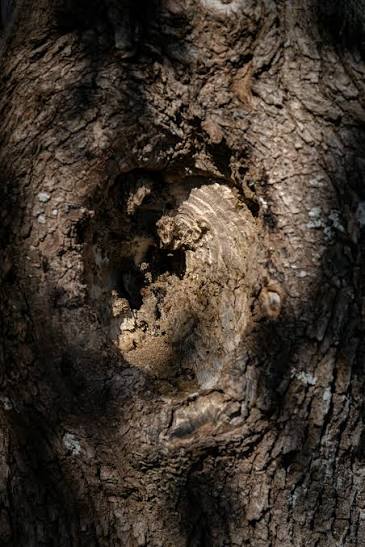
A hollow trunk does not automatically- mean we recommend removing a tree in Londonderry. A cavity tells us that wood has been lost or altered inside the trunk. It does not tell us, by itself, how much sound structure remains, whether the decay is progressing, how the crown is loading that section of trunk, or what the tree could strike if it failed.
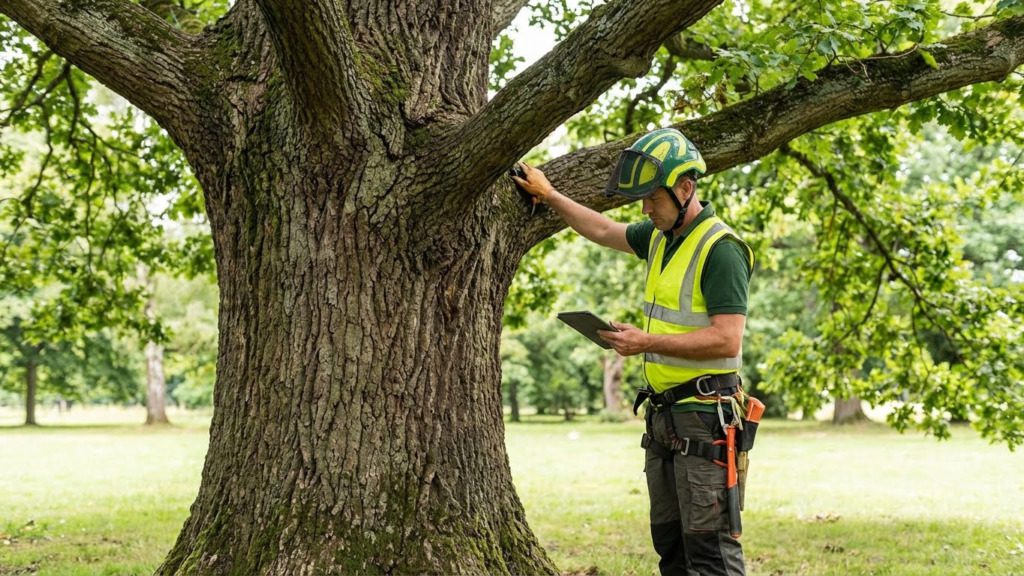
When we perform an arborist assessment in Londonderry, NH, we look at the tree as a whole. The cavity matters. So do the roots, trunk, branch attachments, crown, surrounding ground, and nearby targets. That is the information we need before deciding whether monitoring, pruning, another form of tree care, or removal makes sense.
A Tree Can Be Hollow and Still Be Alive
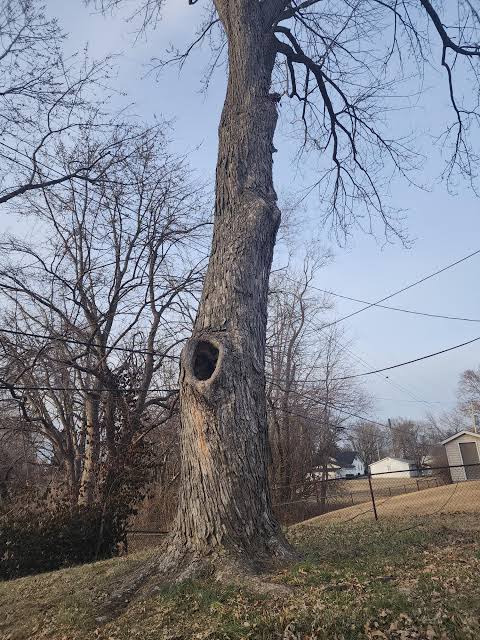
The center of a trunk and the living tissue near its outside do different jobs.
Internal decay can remove heartwood while living tissues closer to the exterior continue moving water and supporting growth. That is why a tree can have a large visible cavity and still leaf out normally.
A green crown, though, does not settle the structural question.
We separate tree vitality from tree structure. A tree may still be biologically active while decay has changed its ability to withstand wind, snow, ice, or the weight of its own crown. The opposite mistake happens too: seeing a hollow and assuming the tree has already lost the ability to stand.
Both conclusions skip the assessment.
Our broader tree health assessment service looks from the root area through the trunk and canopy rather than treating one visible symptom as the entire diagnosis.
We Don’t Use a Single Hollow-Trunk Percentage as a Removal Switch
Homeowners sometimes find rules online saying that a tree should come down when a cavity reaches one-third of the trunk.
We would not make the decision from that number alone.
The opening you can see from outside may not show the shape or distribution of internal decay. The remaining wood may be continuous in one tree and badly compromised by cracks in another. The same cavity can also mean something different near the root flare, at a major union, or higher on the trunk.
Other factors change the loading. A broad, heavy crown extending toward one side does not behave the same way as a smaller, more balanced crown. Old wounds, recent storm damage, and root disturbance can change the picture again.
Our own guidance on how arborists assess a leaning tree makes the same distinction: a cavity does not tell us by itself how much load-bearing wood remains or whether the tree has developed compensating growth.
The Outer Wood Around the Cavity Deserves a Close Look
What remains around the hollow matters more than the fact that there is empty space in the center.
We look for continuity in the remaining trunk wall and for signs that the outside structure is beginning to fail. Fresh cracks, opening seams, buckling tissue, or areas that appear to be separating get our attention because they add another structural defect to the cavity.
An old wound can look rough without behaving like an active crack. New movement is a different concern.
That distinction is difficult to make from one photo taken from the driveway. Our tree service in Londonderry, NH starts with an on-site inspection because structure, access, and surrounding conditions affect the recommendation.
Fungal Growth Changes the Assessment, but It Still Needs Context
Mushrooms, conks, or brackets growing from the trunk or root area can be associated with wood-decay fungi. We want to know where that fungal growth is emerging and what part of the tree may be affected.
A mushroom in mulch does not tell us the same thing as a fruiting body attached directly to the root flare.
Finding fungal growth also does not tell us, from sight alone, the full extent of decay. We consider it with the cavity, root condition, cracks, canopy response, and other symptoms.
If a hollow tree has begun producing fungal fruiting bodies at the base, that gives us more reason to examine the root flare and lower trunk carefully rather than making a recommendation from the cavity opening alone.
Roots Can Matter More Than the Hollow You Can See
A large cavity attracts attention because it is obvious. Root movement can be easier to miss and may change the situation faster.
We look for newly raised soil, cracking around the root plate, exposed or damaged roots, and a change in the tree’s angle. A tree that has grown at an angle for years is different from one that shifted after saturated soil and strong wind.
Southern New Hampshire regularly sees snow, ice, wind, and wet ground conditions. Those loads can expose defects that were already developing. A hollow tree with stable roots and no recent movement presents a different question from a hollow tree whose root plate has begun lifting.
When a tree changes position suddenly, we treat that as a reason for prompt evaluation.
Our emergency tree service is intended for situations where a tree or major part of it has created an immediate hazard rather than a routine maintenance question.
What the Tree Could Hit Changes the Decision
We do not evaluate a tree in isolation from the property around it.
A hollow tree at the edge of a large wooded area does not create the same exposure as a tree with the same structural condition beside a bedroom, garage, driveway, or frequently used walkway.
That does not make the tree stronger or weaker. It changes the consequence if failure occurs.
Sometimes moving a movable target can reduce exposure. Other situations may support pruning or another form of tree care. Trees with unacceptable risk may need removal.
This is one reason our assessments consider clearance from roofs, driveways, and walkways along with potential targets beneath the tree.
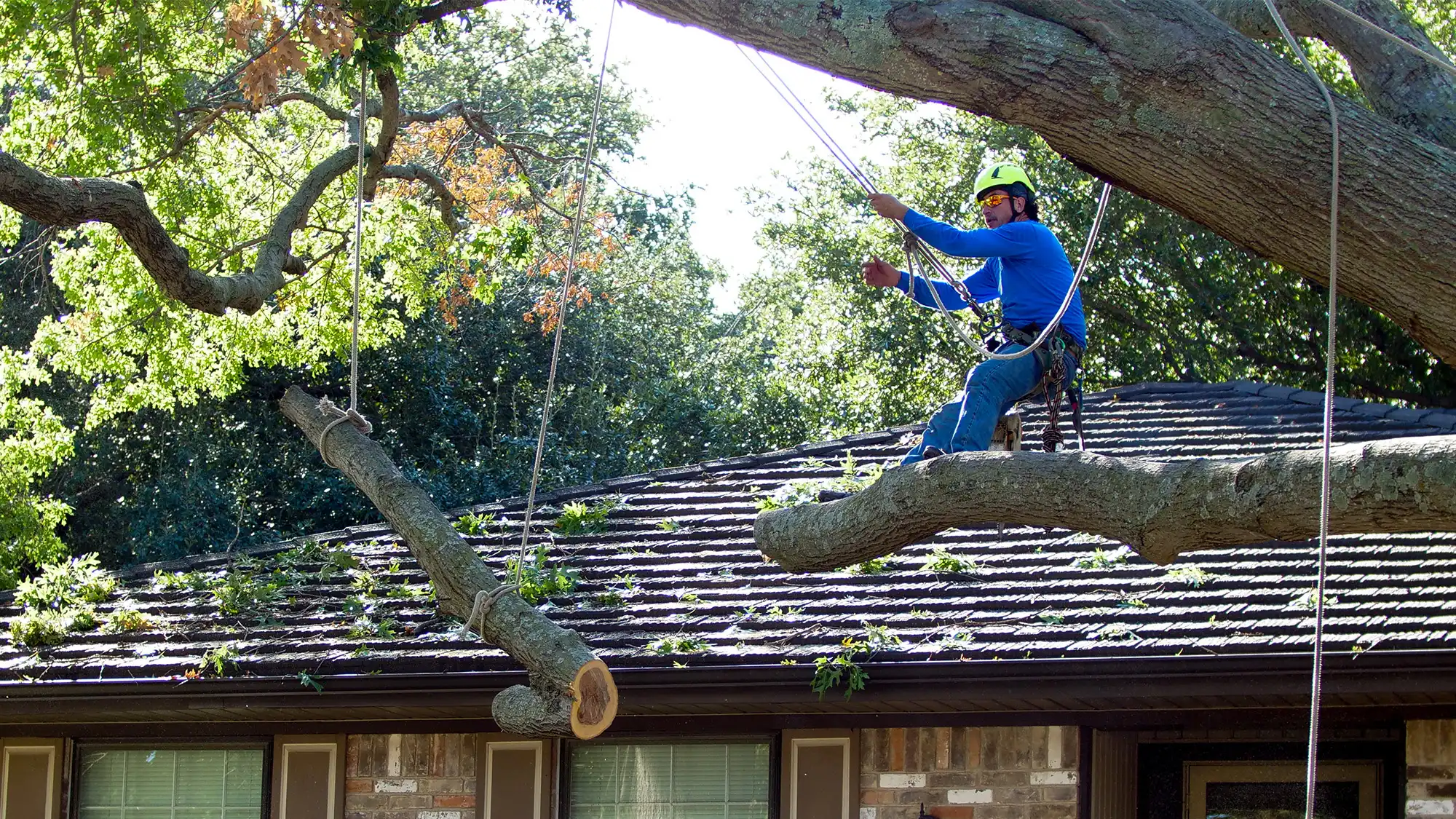
If selected branches are contributing more load or exposure than they should, professional tree trimming may become part of the discussion. We do not assume pruning can correct every structural problem, and removing live canopy without a clear objective can create another problem instead.
When a Hollow Tree Becomes More Concerning
A cavity deserves faster attention when other warning signs appear with it.
We pay particular attention to deep or developing cracks, new lean, root-plate movement, fungal fruiting bodies attached to structurally important areas, significant crown dieback, broken major limbs, and evidence that the outer trunk wall is losing continuity.
Location can move the same defect higher on the work list. A compromised section over open ground gives us more management room than one positioned over the only driveway or the roof.
After storms, the combination matters even more. A cavity that was present for years may deserve a fresh look if the tree has lost a large branch, shifted at the roots, or developed a new crack.
Homeowners in nearby communities can use the same assessment approach. We also provide arborist services in Derry, NH for tree-health, structural, and maintenance questions.
Removal Is One Possible Recommendation, Not the Starting Assumption
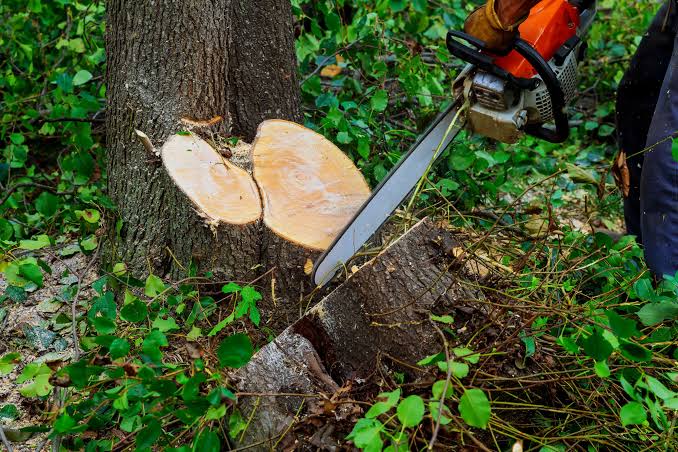
Some hollow trees do need to be removed.
If decay, cracking, root instability, crown loading, and target exposure add up to a condition we cannot reasonably manage, tree removal may be the appropriate recommendation.
Other trees may be candidates for pruning, monitoring, or another management approach. Our Londonderry service information includes pruning, bracing, monitoring, and removal among the possible responses following tree-health and risk evaluation.
That range of options matters because removal is permanent. We want a reason tied to the condition of the actual tree and property, rather than a rule pulled from a generic cavity chart.
For situations where the answer is still unclear, our tree-care consultations provide another starting point for reviewing what is happening on the property.
Londonderry Tree Rules Can Depend on Where the Property Is
Local rules deserve a check before removal.
Londonderry’s Historic District ordinance treats mature trees with a circumference of six feet as “significant trees.” Removal of significant trees within the Historic District is subject to the Historic District Commission’s Certificate of Approval process, and the ordinance describes conditions under which removal may be allowed, including decay, disease, or a public-safety hazard. It also requires a native replacement tree after a significant tree is removed.
Properties affected by the Conservation Overlay District have another layer of rules. The district covers specified wetlands, streams, and buffers. Its permitted-use section includes removal of hazardous trees, while other impacts can fall under more restrictive provisions.
There is also a separate New Hampshire timber-tax question. Londonderry’s Assessing Department states that an Intent to Cut under RSA 79 is generally required before timber cutting, with exemptions depending on the circumstances and amount of wood involved.
For an individual residential tree, we recommend confirming the property’s district and the scope of the proposed work with the Town rather than assuming that every private-property removal follows the same rule.
What We Check During a Hollow Tree Assessment
When we inspect a hollow tree, we are trying to understand what the visible cavity does and does not tell us.
We look at the cavity and surrounding trunk, active cracks or old wounds, root flare and visible root movement, crown condition and loading, fungal growth, dead or broken branches, changes after storms, and what sits within reach of the tree or affected section.
We also want some history. Has the cavity looked the same for years? Did a crack appear recently? Has the tree begun leaning? Was soil excavated or compacted around the roots? Did a large branch fail during the last storm?
Those details can change the recommendation.
Our tree maintenance service in Londonderry gives homeowners another route for ongoing care when the tree does not require removal but still benefits from professional attention.
Have the Tree Evaluated Before Deciding What the Hollow Means
If you can see into the trunk of a mature tree, take that condition seriously enough to have it evaluated, especially when the tree is near a home, driveway, road, or area people use regularly.
You do not need to decide from the ground whether the tree is “33% hollow,” and you should not dig into decayed material to try to measure it yourself.
We can inspect the tree in Londonderry, look at the cavity in the context of its roots, crown, structure, and surroundings, and explain what we can confirm from the property.
If you are concerned about a hollow trunk, call Technical Tree Service at (603) 438-5956 to schedule an on-site assessment.