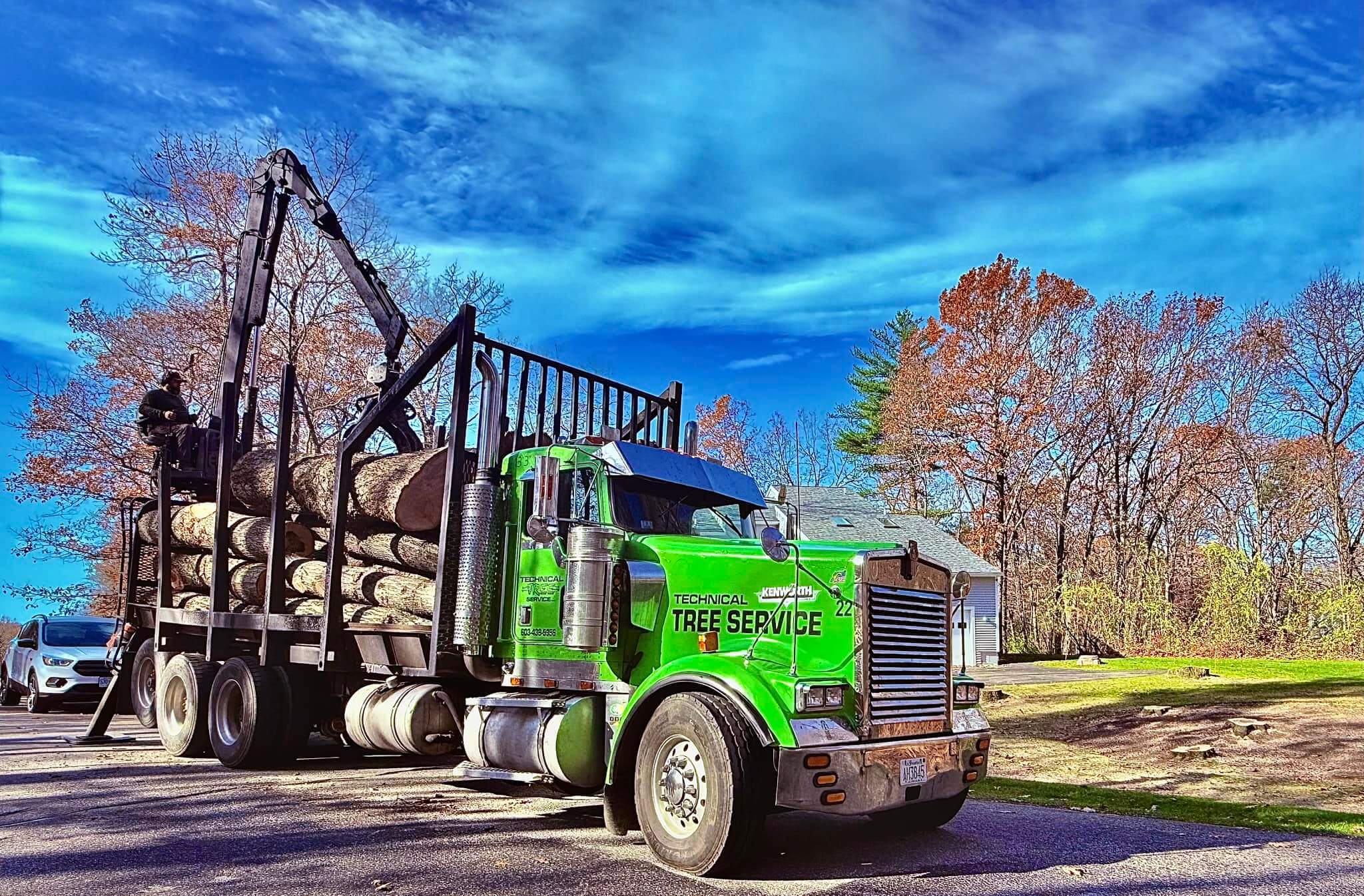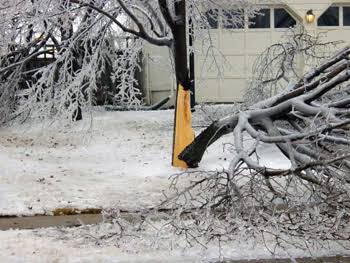
Post-storm tree maintenance in Dunbarton should start by removing immediate hazards, then shift to careful pruning, root and trunk evaluation, and follow-up monitoring. We do not try to make a damaged tree look normal in one visit. If the main structure and roots remain sound, preserving usable living crown can give the tree a better chance to recover.
At Technical Tree Service, our approach after a major storm depends on what actually happened to the tree. A hanging limb over a driveway needs a different response from an old maple that lost several secondary branches. A pine with fresh root movement needs a different plan from a tree with stable roots and one torn limb.
Our tree maintenance in Dunbarton, NH can include inspection, corrective pruning, crown cleaning, root-zone evaluation, monitoring and longer-term maintenance when the tree is a reasonable candidate to keep.
First, Deal With What Can Hurt Someone
Tree recovery comes after the immediate hazard has been controlled.
A storm can leave large branches hanging in the crown, broken tops resting against neighboring trees and trunks loaded against the ground under tension. A tree may also be leaning toward a house or lying across the only driveway into a property.
Those situations deserve attention before anyone begins cleaning up cosmetic damage.
Our 24/7 emergency tree service handles immediate hazards such as fallen trees, dangerous leaning trees and large broken sections that require controlled removal.
If the tree is stable and the remaining damage is not creating an immediate threat, we can slow the process down and make better decisions about preservation.
Stay Away From Trees or Limbs Involving Power Lines
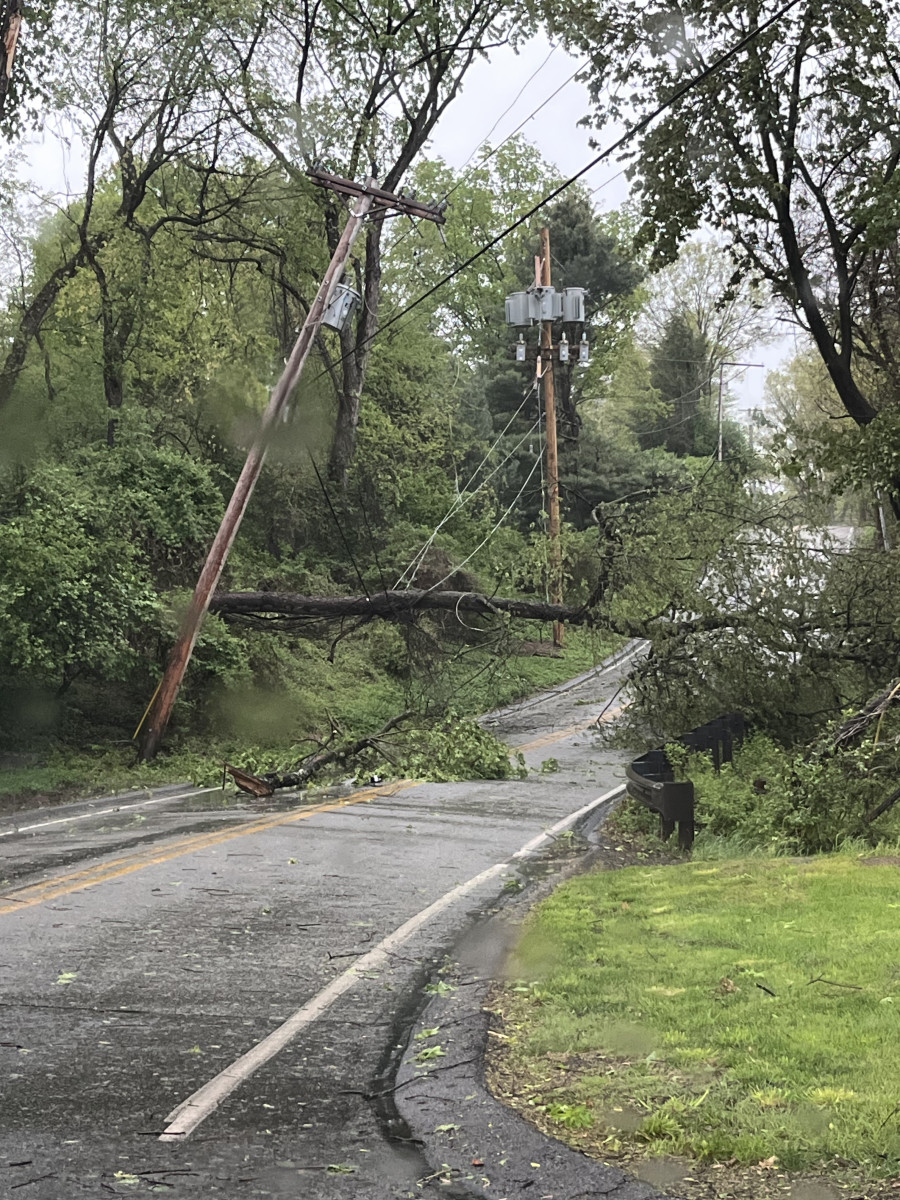
A branch against a utility line changes the job immediately.
Do not pull it away with a rope, cut the branch from the ground or assume a wire is dead because the neighborhood lost power.
We stay clear of electrical conductors until the appropriate utility has addressed the electrical condition. New Hampshire storm guidance tells residents to treat downed and sagging lines as hazards and contact the utility or 911 when emergency assistance is needed.
Once electrical hazards are handled, tree cleanup can proceed under the appropriate conditions.
Dunbarton Driveway Access Can Be Part of the Emergency
Dunbarton has wooded properties, rural roads and long private drives where a tree can create a serious problem without ever touching the house.
A trunk across a driveway may block residents, emergency vehicles or utility crews.
The town has experienced winter storms where heavy wet snow brought down both trees and power lines across the community. That is one reason we look at access first during storm response.
Our broader tree service in Dunbarton, NH is planned around the realities of these properties, including narrow drives, slopes, stone walls, wetlands, wooded edges and limited equipment access.
Once the Hazard Is Controlled, We Reassess the Whole Tree
The branch on the ground tells us what failed.
The rest of the tree tells us what happens next.
We check the trunk, major unions, remaining crown, root flare and surrounding soil. We look for fresh cracks, torn attachments, decay exposed by the break and changes in the tree’s lean.
We also look at what remains over the house, driveway, barn, walkway or utility corridor.
That broader evaluation is where a tree health assessment becomes useful. A storm may reveal a structural issue that existed before the weather arrived.
We Remove Broken Material Without Automatically Reshaping the Whole Crown
Storm cleanup can tempt people to keep cutting until the tree looks balanced again.
We prefer a more conservative approach.
Immediately after major damage, the first pruning objective is to deal with loose, cracked and broken material that creates a problem. Healthy branches that survived the storm still contain living tissue and stored energy that the tree can use during recovery.
A damaged crown may look uneven for a while.
That appearance alone is not a reason to remove large amounts of live wood.
Proper Cuts Matter After a Branch Tears
Storm breakage often leaves a jagged stub.
When a damaged branch can be pruned, we make the final cut at the appropriate branch attachment rather than cutting flush against the trunk.
The branch collar is part of the tree’s natural response to injury. Removing it creates a larger wound and can interfere with the tree’s ability to compartmentalize damaged tissue.
Large branches also need to be handled so their weight does not strip bark down the trunk while the cut is being completed.
Our tree trimming in Dunbarton uses the pruning method that fits the branch, tree condition and maintenance objective rather than treating every storm wound the same way.
Flush Cuts Create More Damage
A flush cut removes the swollen branch collar and cuts into trunk tissue.
The result may look visually clean, but the wound is larger than necessary.
We want the trunk left intact while the damaged branch is removed.
This matters on mature trees because one poor cut can leave a large exposed area that the tree has to compartmentalize for years.
Storm cleanup already gives the tree enough damage to deal with. The pruning work should not add another wound without a reason.
Do Not Top a Storm-Damaged Tree
Topping is one of the easiest ways to turn storm cleanup into a longer-term structural problem.
Cutting the remaining crown back to stubs removes living foliage the tree can use for recovery. The new shoots that develop around those cuts may also have weak attachments.
A damaged tree can look sparse after broken branches are removed.
We would rather accept that temporary appearance than strip the rest of the crown in an attempt to make everything symmetrical.
Future structural work can be planned after we see how the tree responds.
Crown Loss Is a Guide, Not an Automatic Removal Percentage
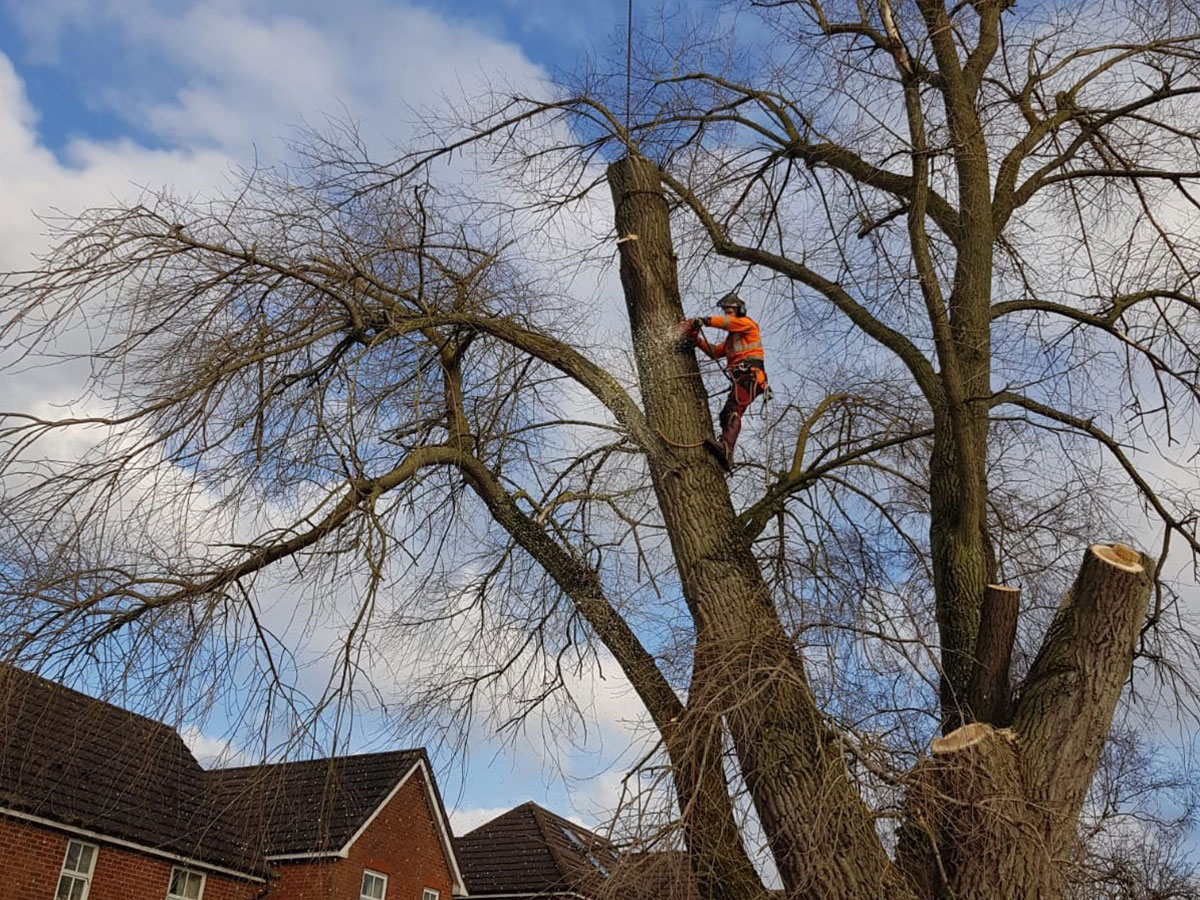
Homeowners sometimes hear that a tree should come down once it loses half of its crown.
We do not use that number as a stand-alone removal rule.
The percentage tells us something about how much productive canopy remains, but we also need to know where the damage occurred.
Losing many small branches is different from losing the main leader.
A tree with substantial crown loss may retain a sound trunk and root system.
Another tree with much more foliage may have a major split through the main stem.
Structure changes the recommendation.
The Main Stem Matters More Than the Tree Looking Ugly
A tree can lose several branches and still retain the framework needed for recovery.
Damage through the main trunk is harder to work around.
If a primary stem has split deeply, a major leader has broken below the usable crown or extensive decay is exposed at the failure point, we have fewer options for rebuilding a stable structure.
That does not mean every broken leader requires removal.
It means we look at what remains and whether that remaining structure can support a reasonable future crown.
A New Lean Needs Root Evaluation
Some Dunbarton trees have leaned for decades.
That old growth pattern is different from a tree that changed angle during last night’s wind or heavy snow.
Fresh soil cracking, lifted turf, exposed roots or movement of the root plate can indicate that anchorage has changed.
We do not recommend pushing a mature tree upright and packing extra soil around the roots as a general repair.
Adding soil can cover the root flare, while compacting the root zone can reduce the air and water movement roots need.
A changed lean calls for evaluation before anyone tries to make the ground look flat again.
Root Damage Can Show Up Later in the Crown
Root injury does not always produce an immediate visual change above ground.
A tree may remain green during the first season and begin showing sparse foliage or branch dieback later.
That is why post-storm maintenance can continue after the broken branches are gone.
We watch crown density, shoot growth, leaf development and new dieback during the following growing seasons.
A tree that appeared to recover can give us new information once the canopy is active again.
Do Not Fertilize Automatically After the Storm
A damaged tree does not automatically need fertilizer.
The problem may be structural rather than nutritional.
Root damage, poor drainage, saturated soil, drought, decay or loss of canopy cannot be corrected by applying nutrients on a schedule.
Our Dunbarton maintenance work starts with the condition of the tree and root zone. If fertilization has a defined purpose, we can recommend it based on the tree and site.
We do not use “storm happened” as the diagnosis.
A Fixed Three-Month Fertilizer Rule Does Not Tell Us Enough
Timing matters, but the bigger question comes first: does the tree need fertilizer at all?
New Hampshire soils vary, and nutrient applications should make sense for the species, soil and symptoms.
A tree with damaged roots may have less capacity to use what is added.
A tree with adequate nutrition may gain nothing from an application.
This is why our maintenance process can include soil and root-zone evaluation before treatment.
Water According to Soil Conditions, Not the Calendar
The same principle applies to irrigation.
We do not tell every homeowner to water every five or seven days after a storm.
After heavy snow or rain, the root zone may already be wet.
Later in the season, a recovering tree may benefit from supplemental water during a dry stretch.
The goal is to avoid prolonged drought stress without creating saturated soil around roots that are already compromised.
Check soil conditions and rainfall rather than following a fixed interval copied from a generic storm guide.
Mulch Can Help the Root Zone When It Is Applied Correctly
A moderate layer of mulch can reduce competition from turf, moderate soil-temperature swings and slow moisture loss during dry conditions.
The mulch should stay away from direct contact with the trunk.
Piling material against the bark creates a different set of problems and can hide the root flare.
Mulch also does not stabilize a tree whose root plate has moved.
Structural root movement still needs to be evaluated separately.
Loose Bark Does Not Need Aggressive Surgery
A torn branch can pull a strip of bark with it.
Loose pieces may sometimes need cleanup, but living bark that remains attached should not be cut away simply to create a smooth geometric wound.
Trees respond to injury by compartmentalizing damaged tissue.
We try to preserve living tissue and avoid enlarging the injury.
Wound paint is generally unnecessary on ordinary storm pruning wounds.
Give the Tree Time Before Cosmetic Pruning
Once broken and hazardous branches have been handled, the tree may need time before additional shaping.
Storm damage can leave one side fuller than another.
It can create gaps.
New growth may appear in places that look awkward during the first season.
Removing more healthy branches immediately because the crown looks uneven can take away tissue the tree is using to rebuild.
We can revisit the structure after recovery becomes clearer.
Spring May Reveal Damage Winter Hid
A winter cleanup does not always finish the diagnosis.
Once leaves emerge, hidden branch damage may become easier to see.
A cracked limb might sag under the added weight of foliage.
One part of the crown may leaf out normally while another stays sparse.
New dieback may appear around an old storm injury.
For trees we retain after a major storm, a spring or summer follow-up can tell us whether recovery is moving in the direction we expected.
Recovery Can Take More Than One Pruning Cycle
A large damaged tree does not always rebuild a useful structure in one season.
New shoots may develop around damaged areas.
Some become candidates for future branches.
Others may need reduction or removal later so the tree does not build a crowded, weak replacement crown.
That work is different from the initial storm cleanup.
The first visit makes the tree safer and deals with obvious damage. Later visits can guide the structure that develops in response.
When the Tree Is a Good Candidate to Keep
We are more comfortable retaining a storm-damaged tree when the main trunk remains sound, the root system appears stable and enough usable crown remains to rebuild.
The tree’s condition before the storm matters too.
A mature tree that was healthy and structurally reasonable before losing one large limb may have a good recovery path.
We may recommend corrective pruning and monitoring rather than removal.
Technical Tree Service’s maintenance process is built around that distinction. Preservation remains an option when the tree’s remaining structure supports it.
When Removal Becomes the Better Maintenance Decision
Some damage changes the tree too much.
Major root failure, a severe trunk split, extensive internal decay at the failure point, loss of the main structure or a remaining crown that cannot reasonably be managed around occupied targets can shift the recommendation toward removal.
Location matters here.
A badly compromised tree deep in an unused wooded area creates a different situation from the same tree beside a bedroom, driveway or barn.
When removal is appropriate, our general tree removal service can be planned around the access, tree condition and property below it.
Crane-Assisted Work Is Sometimes Part of Post-Storm Maintenance
Storm-damaged trees can be poor candidates for ordinary climbing or conventional dismantling.
A cracked trunk, suspended top or unstable section over a structure may need additional control.
Technical Tree Service owns cranes for jobs where lifting tree sections offers a better way to manage the material.
We do not bring in a crane simply because the tree is large.
Tree condition, working radius, access, ground conditions and what surrounds the tree determine whether crane-assisted work fits the job.
Cleanup and Tree Maintenance Are Different Parts of Recovery
Removing branches from the lawn does not tell us whether the remaining tree is structurally sound.
Our storm damage cleanup can address fallen material, damaged trees and debris after severe weather.
Maintenance looks beyond the pile on the ground.
We still want to know whether the tree that lost that pile has another hanging section, an exposed cavity, a new crown imbalance or root damage that deserves follow-up.
This distinction becomes more important on properties where several trees were hit in the same storm.
Wooded Lots Need Priorities, Not Automatic Cleanup of Every Damaged Tree
A large Dunbarton property may have dozens or hundreds of trees.
The maintenance priority should start with trees that can affect people, buildings, roads, driveways and utility access.
A broken tree well inside the woods may have ecological value as standing or down wood when it does not create an unacceptable hazard.
A similar break beside the home needs a different response.
That target-based approach helps property owners put time and money toward the trees that matter most to daily use of the property.
Look at Forest Edges After Neighboring Trees Fail
Storms can change exposure even for trees that survive intact.
If several trees fall along one edge of the woods, the remaining trees may suddenly receive wind from a direction they were previously sheltered from.
That does not mean the survivors should be removed.
It gives us a reason to look at their roots, crown balance, lean and position before the next strong weather event.
Maintenance after the storm should account for what changed around the tree as well as what changed on the tree.
Tree Maintenance in Bow Follows the Same Recovery Process
Properties in Bow experience many of the same New Hampshire weather stresses.
Our tree maintenance in Bow, NH uses the same sequence: inspect the damage, address hazards, preserve appropriate live structure and monitor trees that need time to recover.
The individual site still controls the recommendation.
A tree close to a road, driveway or home receives a different level of attention from one growing away from occupied areas.
Know Which Tree Service You Actually Need
A major storm can generate several different calls.
One property may need emergency removal.
Another may need crown cleaning and corrective pruning.
A third may need a health assessment because nothing has fallen but the tree’s roots or crown have changed.
If the damage is still difficult to categorize, our guide to the types of tree service and when you need them explains how inspection, trimming, removal, cleanup and other services fit different situations.
Choosing the service begins with the condition of the tree.
Post-Storm Maintenance Should Prepare the Tree for What Comes Next
The final part of storm recovery happens after the debris is gone.
We look at whether young trees need structural pruning.
We check mature trees for deadwood, weak attachments and remaining storm wounds.
We monitor trees that lost substantial canopy.
We reconsider clearance near roofs and driveways if branches shifted or broke.
A storm gives us new information about how the tree responds to load.
Good maintenance uses that information before the next winter or wind event.
Schedule Post-Storm Tree Maintenance in Dunbarton, NH
If a major storm has damaged trees on your property, call Technical Tree Service at (603) 438-5956.
We have ISA Certified Arborists available to evaluate the tree from the roots through the crown. We provide pruning, health assessments, storm cleanup, removal and crane-assisted tree work throughout Dunbarton and surrounding Southern New Hampshire communities.
For planned work, we can inspect the property and build a maintenance plan around the trees that can reasonably be retained.
If a tree is down, split, blocking access or creating an immediate hazard, our emergency service is available 24/7.