Professional Tree Maintenance in Bow, NH
Tree maintenance in Bow, NH should start with the condition of the tree and the property around it. Pruning, Tree Health assessment, soil care, shrub maintenance, Tree Fertilizer and Deep Root Fertilizer can all be useful, but they solve different problems. Technical Tree Service evaluates the tree, root zone, surrounding landscape and maintenance objective before recommending work.
Technical Tree Service provides tree and shrub maintenance for residential and commercial properties in Bow. The company has more than 25 years of tree service experience, is fully insured, is a member of the Tree Care Industry Association (TCIA), and has ISA Certified Arborists available for Tree Health, pruning and maintenance decisions. Related services include arborist services in Bow, tree trimming in Bow, Tree Health assessments and tree care consultations.
Bow’s landscape adds several local considerations. The town sits in the Merrimack River watershed, has wooded residential properties, streams, wetlands and ponds, and experiences New Hampshire snow, ice, wind, summer heat and periods of drought. Good maintenance accounts for those conditions instead of treating every tree with the same annual checklist.
What Tree Maintenance Includes
Tree maintenance is planned care intended to preserve healthy trees, improve structure, reduce avoidable conflicts with buildings and access areas, and identify developing problems while there are still multiple management options. It is broader than trimming a few branches once a year.
Depending on the tree and site, a maintenance plan may include:
- Visual Tree Health inspection
- Structural pruning for young and developing trees
- Crown cleaning for selected dead, broken or damaged branches
- Clearance pruning around roofs, driveways, signs and walkways
- Assessment of cracks, cavities, decay indicators and weak branch unions
- Root-zone and soil-compaction review
- Shrub and ornamental tree maintenance
- Tree Fertilizer or Deep Root Fertilizer recommendations when justified
- Monitoring for insects and disease symptoms
- Storm preparation and post-storm inspection
- Tree preservation planning before grading, trenching or construction
Not every tree needs every service. A healthy mature tree in good soil may need little beyond periodic inspection and selective pruning. A tree beside a driveway or house may need closer attention because the consequences of branch failure are different. A declining tree may need a Tree Health assessment before anyone decides whether fertilizer, pruning, treatment, monitoring or removal makes sense.
Common Tree Health Issues on Bow Properties
Property owners usually notice symptoms before they know the cause. Sparse foliage, yellowing leaves, dead branches, premature fall color, fungal growth, cavities, peeling bark, a new lean or a change in branch structure can all justify a closer look. The same symptom can come from very different problems.
Root disturbance is one of the easy problems to overlook. Driveway work, grading, trenching, construction traffic and repeated parking over a root zone can reduce soil pore space or physically damage roots. Trees growing near pavement may also have less usable rooting volume than trees in a wooded section of the same property.
Water can cause problems in both directions. Trees on well-drained slopes may show drought stress after a dry summer, while trees near low areas, wetlands or compacted soil may struggle with excess moisture and limited root-zone oxygen. Bow’s Natural Resources Inventory documents a mix of streams, ponds, wetlands and hydric soils across town, so drainage should be evaluated at the property level rather than assumed from the town name or ZIP code.
A professional sometimes described as a tree doctor or tree surgeon should look at the entire tree and site. Those are informal terms. An arborist assessment is more useful because it separates health, structural and maintenance questions before a treatment is selected.
Native and Common Tree Species Relevant to Bow Maintenance
There is no published street-tree inventory showing that one species dominates Bow residential properties. Southern New Hampshire’s widespread hemlock-hardwood-pine forest, however, commonly includes white pine and eastern hemlock, with red oak on drier sites and sugar maple on richer sites. Those species are all relevant to tree maintenance in Bow.
White Pine
White pine can develop long horizontal limbs and considerable sail area. On exposed properties, snow, ice and wind can reveal weak attachments or old storm damage. Maintenance may involve inspection after severe weather, selective deadwood removal and clearance where limbs conflict with buildings or access.
Red Oak
Red oaks can become large canopy trees with substantial limbs over roofs, driveways and lawn areas. Mature-tree pruning should have a specific purpose. Removing too much live canopy at once can create unnecessary stress, while ignoring large dead or damaged branches near occupied areas can leave an obvious maintenance concern.
Sugar Maple
Sugar maple is associated with New Hampshire landscapes but can be sensitive to changes in rooting conditions. Compaction, heat, drought, road salt and construction disturbance can all affect canopy condition. If a maple thins or changes color early, fertilizer should not be the automatic first response; the root zone and site history matter.
Eastern Hemlock
Eastern hemlock deserves insect monitoring because hemlock woolly adelgid is established in New Hampshire. White, wool-like material at the base of needles is a recognizable sign. The Bow Conservation Commission has also circulated hemlock woolly adelgid information, which makes hemlock monitoring particularly relevant for local property owners.
Bow Soil Conditions, pH, and Tree Nutrition
There is no single “Bow soil pH” that should be used to prescribe fertilizer. Soil conditions vary by parcel, drainage, past land use, fill, landscaping and construction history. New Hampshire soils are naturally acidic in many locations, but a tree-care decision should be based on the actual root zone rather than a townwide average.
UNH Cooperative Extension notes that unaltered New Hampshire soils commonly fall around pH 4.5 to 5.5, while different trees and shrubs have different preferred ranges. A soil test can measure pH and nutrients such as phosphorus, potassium, calcium and magnesium. That information is more useful than guessing from leaf color alone.
This matters because nutrient availability changes with pH. It also matters because adding nutrients does not correct problems such as buried root flares, damaged roots, poor drainage or severe soil compaction. Many established trees already have adequate nutrients and do not benefit from routine fertilizer applications.
For properties where soil is part of the concern, Technical Tree Service can evaluate root-zone conditions and discuss whether testing, soil conditioning, mulch correction or fertilization should be considered as part of a broader Bow tree maintenance plan.
Tree Fertilizer, Deep Root Fertilizer, and Tree Food
Tree Food is a common marketing term for fertilizer. Trees make their own energy through photosynthesis. Fertilizer supplies selected mineral nutrients; it does not replace sunlight, water, functional roots or suitable soil structure.
Tree Fertilizer may be appropriate when an assessment or soil test identifies a nutrient need, or when a qualified professional has a specific management objective. It should not be applied simply because a tree looks weak. Drought, root loss, drainage problems, construction injury, insects and disease can produce symptoms that fertilizer will not solve.
Deep Root Fertilizer generally refers to placing liquid fertilizer into the soil within the root zone. The term sounds more specialized than it sometimes is. UNH Cooperative Extension notes that subsurface fertilizer is not generally more effective than broadcast application in most circumstances, although subsurface placement can have site-specific uses, including reducing runoff on slopes. That is why Technical Tree Service treats deep-root fertilization as one possible tool rather than a default prescription.
If a property is close to water, over-fertilization deserves extra caution. Excess nutrients can move with runoff or leach into groundwater. Bow lies in the Merrimack River watershed, and the town’s natural-resource planning places substantial emphasis on water quality. Fertilizer rates, timing and the need for treatment should reflect that setting.
When Is the Best Time to Prune Trees in Bow?
There is no single month that is best for every species and every pruning objective. Dead, broken or hazardous branches may need attention when they are discovered. Structural pruning on a young tree may be scheduled differently from clearance pruning beside a roof or restorative work after a storm.
Dormant-season pruning can be useful for many deciduous trees because branch structure is easier to see without foliage and the tree is not actively producing leaves. Other work may be timed around flowering, pest concerns, weather, species response or the reason for pruning.
The question should be: what are we trying to accomplish? Removing selected deadwood, improving young-tree structure, providing clearance and reducing a damaged limb are different objectives. Technical Tree Service’s professional tree trimming service and Bow pruning page provide additional information on how pruning is evaluated.
How Bow’s Climate Changes the Maintenance Schedule
Bow properties experience freeze-thaw cycles, snow loading, ice, strong wind, spring saturation, summer heat and periods of limited rainfall. A maintenance calendar should leave room for weather rather than assume that the same work occurs on the same date each year.
- Late winter and early spring: inspect winter breakage, hanging limbs and structural changes before active growth.
- Spring: watch leaf development, flowering, soil moisture, insect activity and trees that leaf out unevenly.
- Summer: monitor drought stress, premature leaf drop, sparse foliage and newly dead branches.
- Fall: review tree structure before winter and address root-zone or soil-care needs where appropriate.
- After severe weather: stay clear of suspended limbs, unstable trees and utility hazards, then arrange a professional inspection.
The USDA Plant Hardiness Zone Map is useful for plant selection because it reflects average annual extreme minimum winter temperature. Bow has been described as USDA hardiness zone 5a in older gardening references, but the USDA released a more detailed national map in 2023. Property owners choosing new trees or shrubs should check the current USDA map by ZIP code or property location instead of relying on an older zone label alone.
Protecting Trees During Ice Storms and Nor’easters
Ice storms and nor’easters can add load to branches, expose weak unions and bring down trees that were already compromised. Preventive maintenance cannot make a tree storm-proof, but inspections can identify some conditions worth addressing before severe weather arrives.
For mature trees near houses, driveways or utility access, look for dead limbs, old cracks, cavities, broken tops and branches that changed position after previous storms. Multi-stem trees with included bark can also deserve closer evaluation. Younger trees may benefit from structural pruning before defects become larger and harder to manage.
After a storm, do not stand under hanging limbs or approach downed utility lines. Technical Tree Service provides storm damage cleanup and 24/7 emergency tree service when damage creates an urgent hazard.
Emerald Ash Borer, Winter Moth, and Other Insect Concerns
Emerald ash borer is established in New Hampshire and attacks ash trees. UNH Cooperative Extension notes that infected ash trees often die within three to five years. Signs can include canopy decline, woodpecker “blonding” where outer bark is removed, and S-shaped larval galleries beneath the bark. Suspected ash decline should be evaluated before the tree becomes too deteriorated to manage safely.
Winter moth has been detected in southern New Hampshire. Its larvae feed on deciduous trees and shrubs in spring, with hosts including oak and maple. One year of leaf damage does not automatically mean a tree is lost, but repeated heavy defoliation can add stress, especially when drought or other problems are already present.
Eastern hemlock has a different concern: hemlock woolly adelgid. The small white woolly masses associated with this insect are easier for property owners to recognize than the insect itself. Because pest activity changes over time, treatment decisions should be based on current identification and tree condition rather than a standing annual spray schedule.
Shrub and Ornamental Tree Maintenance
A maintenance visit does not have to stop at the largest shade trees. Shrubs and ornamental trees around foundations, entrances, signs, property lines and garden beds are part of the same landscape system.
Shrub care may include selective pruning, deadwood removal, renewal pruning, size management and evaluation for insect or disease symptoms. Repeatedly shearing every shrub into the same shape can create a dense exterior while leaving weak or bare interior growth. Selective cuts often preserve a more natural form and improve light penetration.
Timing matters for flowering shrubs because pruning at the wrong point in the growth cycle can remove flower buds. Species identification should come before the pruning method. Technical Tree Service can include shrub maintenance in a broader Tree Health and landscape-care visit.
Tree Maintenance Near Bow’s Rivers, Ponds, and Wetlands
Bow is in the Merrimack River watershed. The Merrimack River forms the town’s eastern boundary, while local water resources include Turee Pond, Bow Bog Brook, Turkey River and many smaller streams and wetlands. Root stability, erosion, saturated soil and nutrient runoff can all matter more on properties near water.
Two place names are easy to confuse with the town. Bow Lake is not in Bow; it is in Strafford with a portion in Northwood. Turkey Pond is in Concord, although the Turkey River flows from that system through Bow toward the Merrimack River. For an actual Bow property, the maintenance plan should use the waterbody, wetland and parcel conditions at that address rather than assuming “Bow Lake” is local to the town.
There is no universal rule that lakefront or riverfront trees should be inspected every fixed number of months. Trees near active shorelines, erosion, saturated soils, recent construction or heavily used areas may justify more frequent review. A stable tree in an undisturbed area may not need the same schedule. Inspect again after major flooding, wind, ice or visible root-zone changes.
Working With the Bow Conservation Commission and Local Tree-Cutting Rules
The Bow Conservation Commission works on forest management, open-space protection, water resources, wildlife and environmental education. Routine pruning or removal of an ornamental tree beside a home is different from a timber harvest, land-clearing project or work that affects wetlands and protected resources.
Bow’s official Cutting Trees guidance states that most timbering operations require a Notice of Intent to Cut. It also lists exemptions, including shade and ornamental trees that are generally considered trees within striking distance of a building. Larger harvesting, land-conversion work and projects near regulated wetlands or shorelands can involve additional town or state requirements.
For construction or development, Bow’s permitting information notes that wetlands, erosion, shoreland and alteration-of-terrain rules may trigger additional review. Property owners planning major clearing should verify current requirements with the Town and, where applicable, New Hampshire Department of Environmental Services before work begins.
Residential and Commercial Tree Maintenance in Bow
Residential maintenance may focus on shade, roof and driveway clearance, play areas, gardens, privacy plantings and mature trees close to the house. Commercial maintenance may need a different schedule because parking areas, pedestrian routes, signs, loading areas, customers and tenants affect how work is planned.
Technical Tree Service provides maintenance for both types of property. Commercial clients can also review commercial tree services in Bow for information about ongoing property care, crane work, emergency response and large-site planning.
For owners managing properties in several communities, Technical Tree Service also has local maintenance pages for Concord, Bedford, Manchester and Merrimack.
A Verified Tree Maintenance Example
A July 2026 verified Google review displayed on Technical Tree Service’s Bow arborist service page describes a returning customer who previously used the company for tree removal and later had Technical Tree Service professionally fertilize arborvitae that appeared to need help.
The review supports the company’s experience with fertilization and repeat maintenance work. The review text does not identify the customer’s property as being in Bow, so it should not be presented as a Bow case study. That distinction matters: a genuine local case study should include a Bow location, date, tree species, property conditions, work performed and an outcome confirmed by the company or customer.
How Much Does Annual Tree Maintenance Cost for a Two-Acre Bow Property?
There is no reliable average that applies to every two-acre property. Acreage tells very little about the actual scope. One two-acre parcel may have a few maintained trees around a house; another may have dozens of mature trees, wooded edges, difficult access, shrubs, storm damage and trees close to buildings.
Pricing can change with the number and size of trees, pruning objectives, tree condition, equipment access, root-zone work, fertilization, cleanup, proximity to structures and whether work can be grouped into one visit. A maintenance plan can also separate urgent work from lower-priority items so the owner can schedule care over time.
Technical Tree Service provides pricing after an on-site assessment. That allows the estimate to reflect the actual property instead of using acreage as a shortcut.
Why Bow Property Owners Use Technical Tree Service for Maintenance
- More than 25 years of tree service experience
- ISA Certified Arborists available for Tree Health and maintenance decisions
- Fully insured tree service company
- Member of the Tree Care Industry Association (TCIA)
- Tree and shrub maintenance for residential and commercial properties
- Tree Health assessments, pruning, soil and root-zone care
- Tree Fertilizer and Deep Root Fertilizer recommendations when conditions support treatment
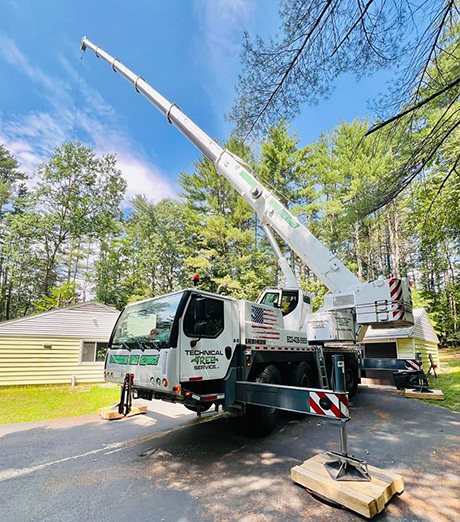
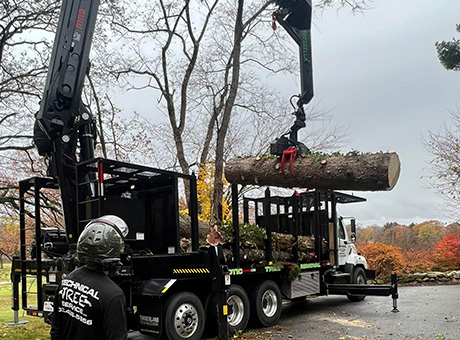
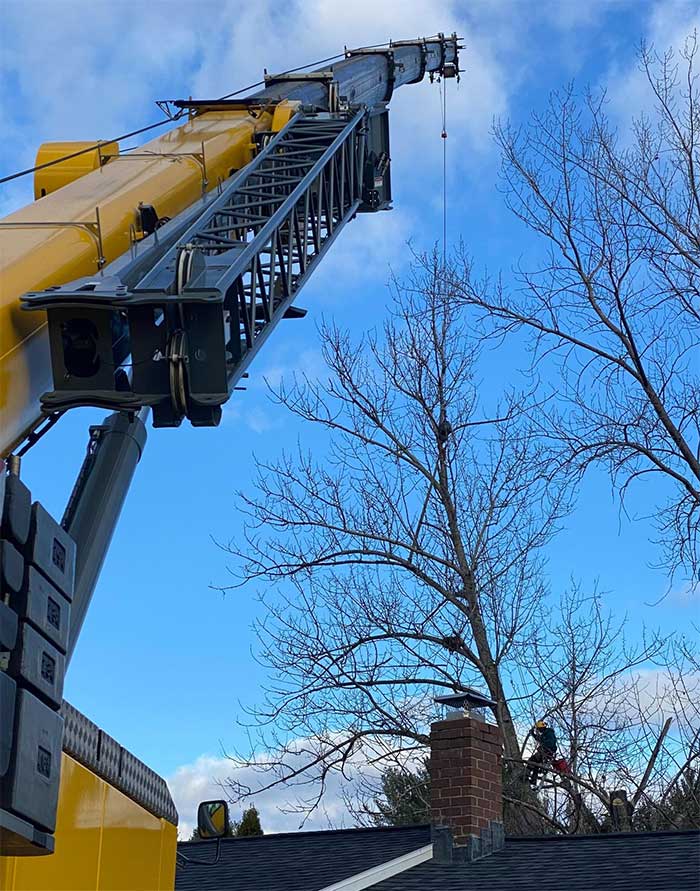
- Company-owned crane equipment for projects that require controlled lifting
- 24/7 emergency tree service and storm cleanup
- On-site estimates for planned work
The maintenance decision should still come from the tree in front of you. A healthy tree does not become healthier because more services are added to a quote. Technical Tree Service evaluates the condition, site and objective first, then recommends the work that fits the property.
Frequently Asked Questions About Tree Maintenance in Bow, NH
What tree species are common on Bow properties?
Bow does not publish a residential tree inventory that identifies one dominant species. Southern New Hampshire forests commonly include white pine and eastern hemlock, with red oak and sugar maple also occurring in the regional forest mix. Individual Bow properties may contain many additional native and ornamental species.
How does Bow’s soil pH affect Tree Health and fertilization?
Bow does not have one soil pH that applies to every property. New Hampshire soils are often acidic, but pH can change with site history, fill, drainage and landscaping. Soil testing is the better basis for lime or fertilizer decisions. Tree Fertilizer should not be used to treat root damage, poor drainage or other non-nutrient problems.
When is the best time to prune trees in Bow?
The timing depends on species, condition and pruning objective. Dormant-season pruning works well for many deciduous trees, while broken or hazardous branches may need prompt attention regardless of season. Flowering cycles, pests and the reason for pruning can also change the schedule.
Do I need a permit for tree work in Bow, NH?
Routine work on shade or ornamental trees near a building is different from a timber harvest. Bow states that most timbering operations require a Notice of Intent to Cut and lists specific exemptions. Wetland, shoreland, land-conversion or development work can involve additional town or state approvals. Confirm current requirements before major clearing.
How do ice storms and nor’easters affect a maintenance schedule?
They create a reason for additional inspection rather than a fixed annual date. Check trees after major snow, ice or wind for broken limbs, new cracks, changed lean, root movement and hanging branches. Trees near houses, driveways and occupied areas may deserve a higher inspection priority.
What are signs of emerald ash borer?
Possible signs include thinning or dying ash canopies, woodpecker blonding of the bark and S-shaped larval galleries under the bark. Emerald ash borer attacks ash trees and is established in New Hampshire. Suspected ash decline should be assessed early because heavily deteriorated ash can become more difficult to manage.
What about winter moth?
Winter moth has been detected in southern New Hampshire and feeds on deciduous trees and shrubs, including oak and maple. Repeated heavy defoliation can stress trees. Identification matters because several caterpillars can cause similar-looking leaf damage.
How often should lakefront trees in Bow be inspected for root stability?
There is no universal interval. Bow Lake itself is in Strafford and Northwood, not the Town of Bow. For Bow properties near the Merrimack River, Turee Pond, streams or wetlands, inspection frequency should reflect erosion, soil saturation, tree condition, targets and recent weather. Reinspect after flooding, severe wind, ice or visible root-zone change.
What does USDA hardiness zone 5a mean for Bow tree care?
Zone 5a is an older label sometimes associated with Bow-area gardening references. USDA updated the national Plant Hardiness Zone Map in 2023, and the current map should be checked for the specific property. Hardiness zones describe extreme minimum temperature for plant selection; they do not determine pruning, fertilization or Tree Health needs by themselves.
Is Tree Food the same as fertilizer?
Tree Food is a common marketing term for fertilizer. Fertilizer supplies selected nutrients. Trees produce energy through photosynthesis, so sunlight, water, healthy roots, soil structure and growing space remain part of Tree Health.
Does every tree benefit from Deep Root Fertilizer?
No. Deep Root Fertilizer is not a universal treatment. A declining tree may be affected by drought, root injury, compaction, drainage, pests, disease or structural decline. The cause should be evaluated before fertilizer is selected.
When should I call a tree doctor or tree surgeon?
Call a qualified tree professional when you see dead branches, cracks, cavities, fungal growth, sudden leaning, root damage, unusual leaf loss, sparse foliage or storm damage. Tree doctor and tree surgeon are informal terms; an arborist assessment is the better starting point when Tree Health or structure is uncertain.
What is the average annual maintenance cost for a two-acre property?
There is no dependable flat average because two-acre properties can have very different tree populations, access and service needs. Technical Tree Service prices planned maintenance after inspecting the property and defining the scope.
Schedule Tree Maintenance in Bow, NH
If a tree is declining, a shrub needs corrective pruning, roots have been disturbed or you want a maintenance plan before another New Hampshire winter, Technical Tree Service can inspect the property and recommend the next step.
Call (603) 438-5956 or request an on-site estimate for tree maintenance in Bow, NH. For a broader overview of available services, see our guide to professional tree services or the main Bow tree service page.