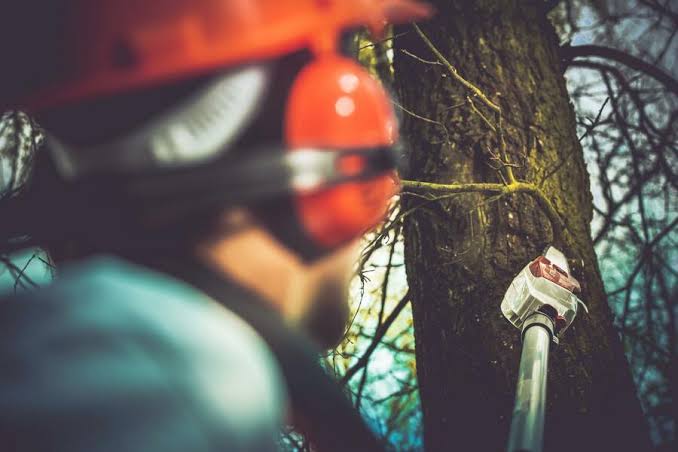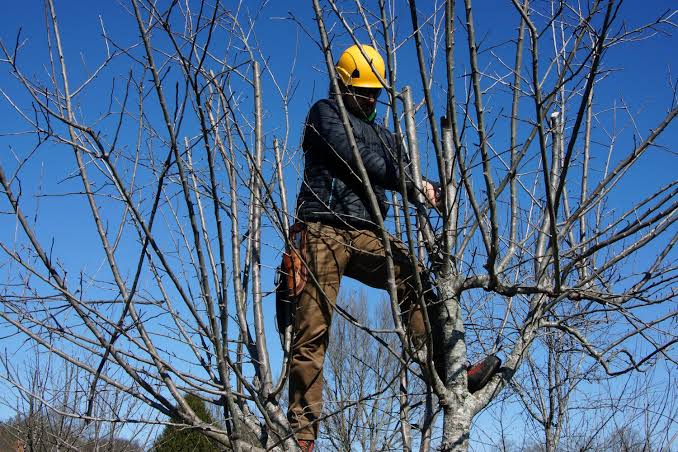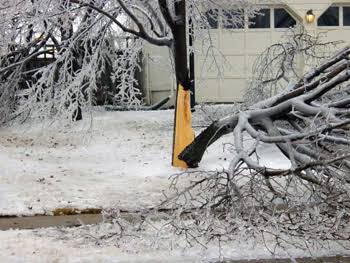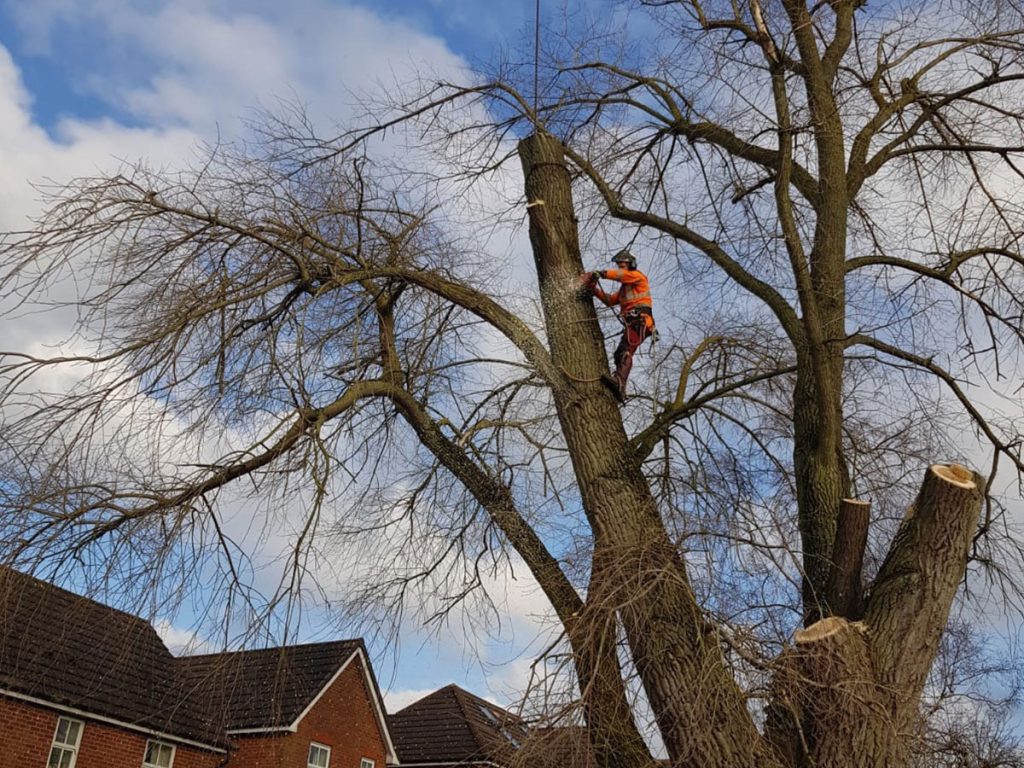
An arborist storm damage inspection in Derry, NH should examine the tree’s roots, trunk, major branches, and remaining canopy before deciding whether it can be saved. After strong winds, heavy snow, or ice, the most concerning signs include a newly leaning tree, lifted soil around the roots, deep trunk cracks, and large branches hanging above a house or driveway. If you notice any of these conditions, keep people away from the area and arrange an on-site assessment.
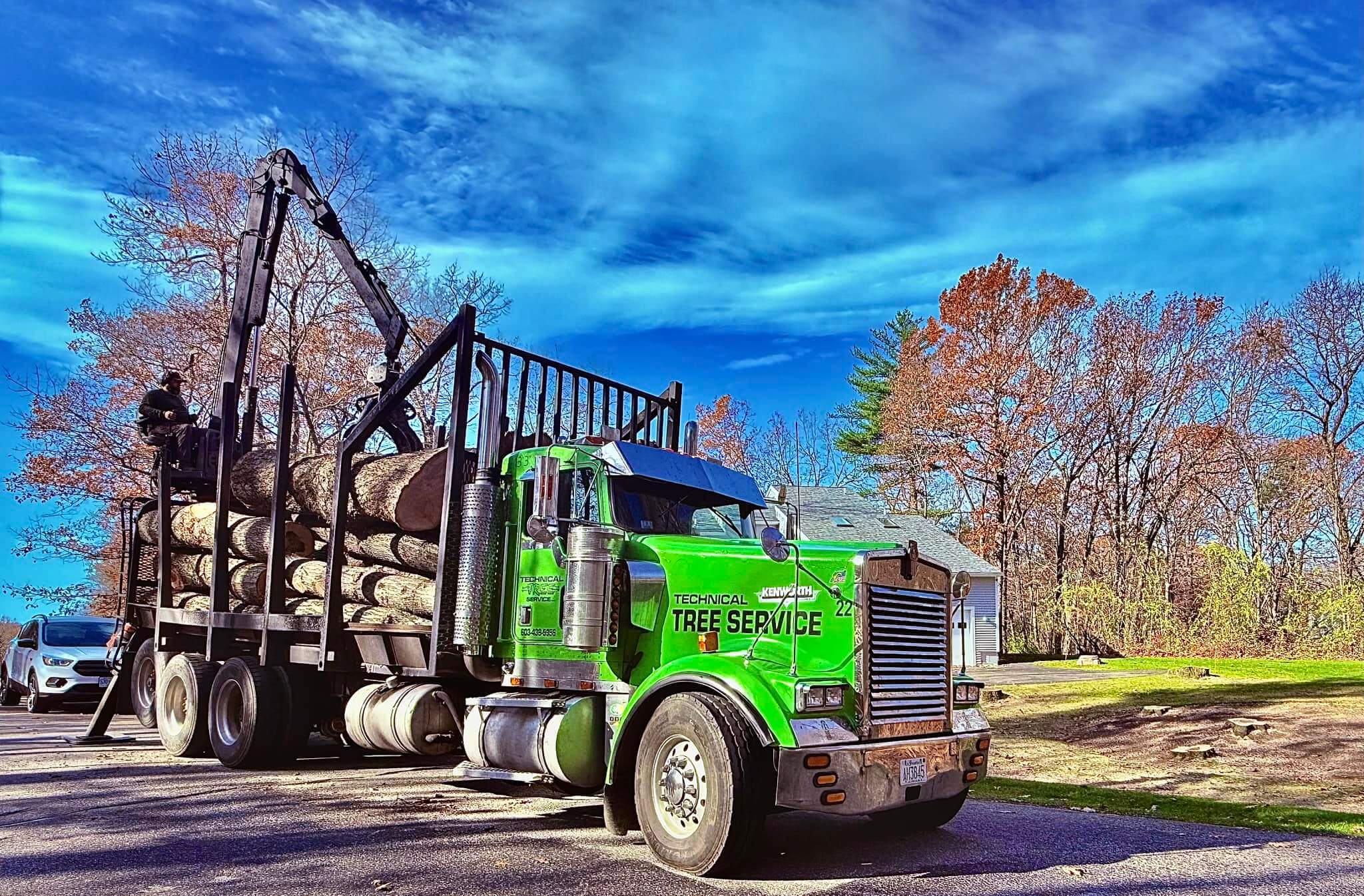
At Technical Tree Service, we provide arborist services, tree health assessments, storm damage cleanup, and tree removal throughout southern New Hampshire, including Derry, Windham, and Londonderry.
When we evaluate storm damage, we look beyond the branches that have already fallen. The remaining tree may have experienced changes in its structure, and the condition of the trunk and roots can determine whether pruning is enough or whether removal needs to be considered.
What Should You Do Before Inspecting a Storm-Damaged Tree?
Start by looking at the property from a safe location. Don’t walk beneath a damaged crown, climb into a tree to examine a broken branch, or stand beside a trunk that has recently shifted.
Branches may remain suspended by small amounts of wood or bark. A fallen trunk can also be held under tension by another tree, a roof, or the ground.
These conditions can change without warning, even after the wind has stopped.
If you see a downed wire or a tree touching electrical equipment, stay well away. Treat the wire and anything touching it as energized. Contact 911 when there is an immediate emergency and notify the electric utility.
Liberty Utilities advises New Hampshire residents to treat all downed wires as dangerous, including communication cables that may be contacting energized electrical lines. You can review its tree and power line safety guidance.
Once you have ruled out an immediate danger in the area where you are standing, you can observe the visible damage from a distance. Leave close inspection and work on unstable parts to qualified professionals.
What Does an Arborist Check After a Storm?
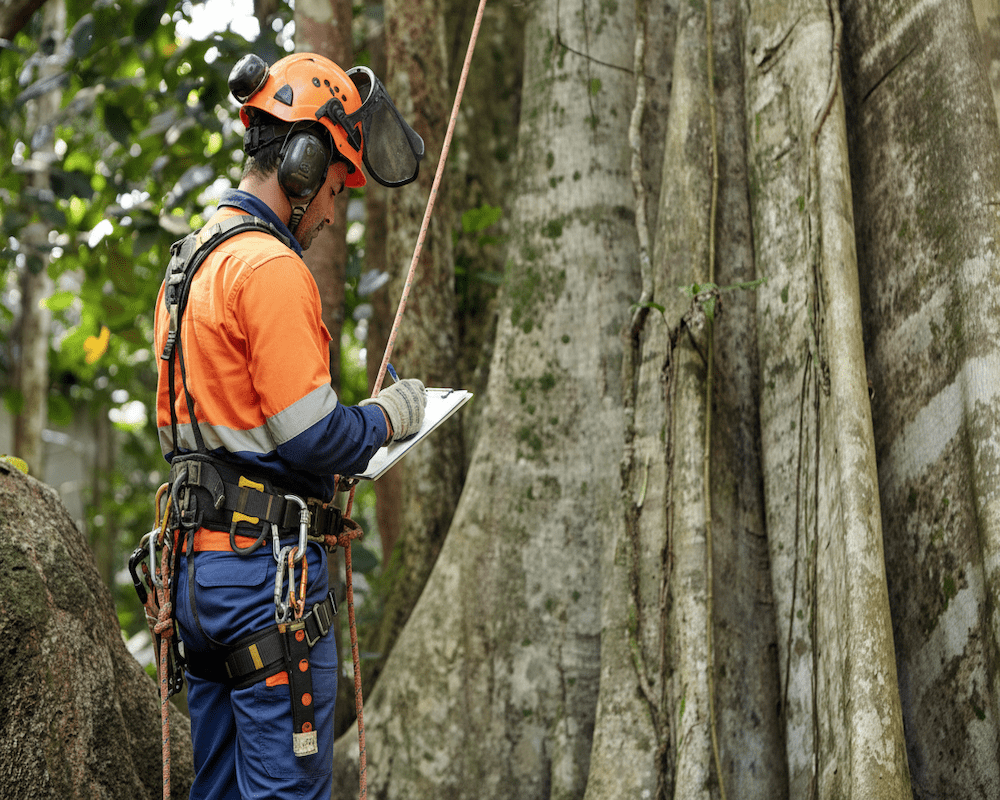
A storm damage inspection is organized around the entire tree rather than one damaged limb.
We consider the condition of the root system, the trunk, the major branch attachments, and the crown. We also examine the surrounding property to understand what could be affected if part of the tree failed.
A damaged branch over an unused section of woodland presents a different concern from a similar branch above a front entrance.
For homeowners requesting arborist services in Derry, NH, our site describes on-site evaluations covering structural concerns, root conditions, tree health, and proximity to buildings and frequently used areas.
1. Root system and soil movement
Tree stability begins below the ground.
Strong winds can move a tree enough to damage roots or shift the soil around its base. Saturated ground may provide less resistance to this movement, particularly when the tree has a large crown exposed to wind.
We look for newly raised soil, cracks extending away from the trunk, exposed structural roots, and areas where the root plate appears to have lifted.
A tree that remains standing may still have lost part of its anchorage.
These signs deserve prompt attention, especially when the tree could reach a home or other occupied area.
2. Trunk condition and major cracks
Next, we examine the trunk for splitting, twisting damage, missing bark, cavities, and visible decay.
A narrow superficial bark wound has different implications from a crack extending deeply into the structural wood.
Large vertical splits can indicate that the trunk or a major stem has been overloaded. A crack near an existing cavity or decayed section may be particularly concerning.
We also pay attention to where the trunk divides into multiple stems. A storm can widen an existing weak attachment or reveal damage that was difficult to see before.
The UMass Amherst guidance on inspecting storm-damaged trees explains why trunk cracks, cavities, and damaged branch unions need careful evaluation.
3. Crown and branch attachments
High winds and snow loads can break individual branches, remove a central leader, or split a major attachment.
We examine the crown for broken branches that remain attached, sections resting against other limbs, fresh cracks, and changes in the distribution of weight.
Some broken branches are obvious from the ground. Others remain hidden among the foliage.
A branch that is still hanging can be more dangerous than one that has already fallen, particularly when it is positioned above a driveway, sidewalk, or outdoor seating area.
UMass Amherst uses defective branches around two inches in diameter as one reference point during inspection. That is not a universal safety threshold. A smaller branch can still cause an injury, and the consequences depend on where it might fall.
How Can You Tell Whether a Leaning Tree Is Dangerous?
The first question is whether the tree’s position has changed.
Some trees have grown at an angle for many years. An established lean does not automatically mean the tree is unstable.
A tree that suddenly tilts after a windstorm is different, especially when the ground behind the trunk has lifted or cracked.
We consider the tree’s previous growth pattern, the condition of its roots, and the location of the crown.
Photographs taken before the storm can help establish whether the angle has changed.
Do not try to straighten a large tree using a vehicle, chain, or rope. If roots have shifted, pulling on the trunk can create additional damage or cause the tree to fall.
A newly leaning tree near a structure calls for an on-site evaluation rather than observation from beneath its canopy.
Does a Cracked Tree Trunk Always Mean Removal?
No, but a significant crack requires careful assessment.
The location and depth of the damage matter. A wound limited to outer bark is different from a split that extends through major structural wood.
We also need to understand whether the crack is new, whether it has expanded, and whether decay is present around it.
Some defects affect one branch attachment. Others involve the main trunk or several major stems.
If much of the tree’s supporting structure has been compromised, removal may be the more reasonable option.
Where damage is limited and the remaining structure is suitable, pruning or another management approach may be considered.
A photograph alone cannot reliably establish the depth of a crack or the condition of wood concealed beneath the bark.
Can a Tree Survive Losing Large Branches in a Storm?
Many trees can recover from some branch loss, particularly when they were healthy before the storm and retain a sound trunk and root system.
The survival outlook changes when the tree loses major structural limbs, much of its living crown, or its central leader.
We don’t use one percentage of canopy loss to decide every case.
A tree that loses several outer branches may still have a suitable structure for continued growth. Another tree with less visible foliage loss may have a severe split at its main attachment.
The condition of the remaining tree is what guides the recommendation.
Our tree health assessment service considers crown condition, visible structural problems, root-zone concerns, and other symptoms that affect the tree’s long-term outlook.
When Can Storm-Damaged Trees Be Saved With Pruning?
Pruning may be appropriate when damaged branches can be removed while leaving enough healthy structure for the tree to continue growing.
For example, a tree with several broken outer limbs and a sound main trunk may be a reasonable candidate for cleanup pruning.
The cuts should address specific defects without removing unnecessary living branches.
We want to avoid creating large wounds or stripping away healthy foliage simply to make the crown look symmetrical after a storm.
Proper pruning also involves understanding branch attachments. A broken limb should not be cut flush against the trunk, and heavy branches require a method that prevents additional tearing.
Our tree trimming services cover selective pruning, deadwood removal, and other tree maintenance objectives when the tree is suitable for retention.
Can Cabling or Bracing Help a Storm-Damaged Tree?
Some structurally compromised trees may be candidates for support systems, depending on the defect.
Cabling and bracing are used in selected situations to help manage movement or loading in certain stems and branches.
They cannot restore severed roots, replace missing structural wood, or make a severely unstable trunk sound again.
A support system also requires appropriate design and future inspections.
Before recommending this type of work, the tree needs to be assessed to determine whether enough healthy structure remains.
Technical Tree Service’s confirmed website services include inspections, pruning, consultations, and tree removal. Specific cabling or bracing installation availability should be confirmed directly before planning that work.
When Is Removal the Better Choice After a Storm?
Removal may be appropriate when major damage prevents the remaining tree from being retained at an acceptable level of risk.
That can include severe trunk splitting, substantial root failure, extensive structural damage, or deterioration that leaves the tree unable to support its remaining crown.
The position of the tree matters as well.
A compromised tree next to a home or busy driveway deserves a different priority from one in a secluded area with little exposure to people or property.
We evaluate the condition and surroundings before recommending removal.
Our professional tree removal service addresses damaged and hazardous trees, including removals that require careful planning around buildings and restricted access.
Not every storm-damaged tree needs to come down, but some damage cannot reasonably be corrected through pruning.
What Is the Difference Between Emergency Cleanup and an Arborist Inspection?
Emergency cleanup focuses on a problem that needs prompt action.
A tree may be blocking a driveway, resting on a building, or leaving a large broken branch suspended over an occupied area.
The immediate work may involve removing the unstable material or restoring access once the site is safe.
An arborist inspection looks at the remaining tree and considers what should happen next.
After removing a broken limb, we may still need to examine whether the remaining branch attachment, trunk, or root system has been affected.
That distinction matters when a storm causes several failures in the same tree.
Our storm damage cleanup service addresses fallen trees and debris. We also offer 24/7 emergency tree services for urgent tree hazards.
Depending on the condition of the tree, additional evaluation may be appropriate after the immediate problem has been addressed.
Should Every Tree on the Property Be Inspected?
After a significant storm, we recommend starting with trees that could affect people, buildings, driveways, and other regularly used areas.
A mature tree beside the house should receive closer attention than a similar tree in an isolated section of woodland.
We also look for evidence that the storm affected multiple trees across the property.
If several nearby trees lost large limbs, it may be worth examining others with comparable exposure or preexisting structural concerns.
Prioritizing does not mean ignoring the rest of the property. It helps organize where inspection should begin and which conditions need the quickest response.
Can Storm Damage Appear Days or Weeks Later?
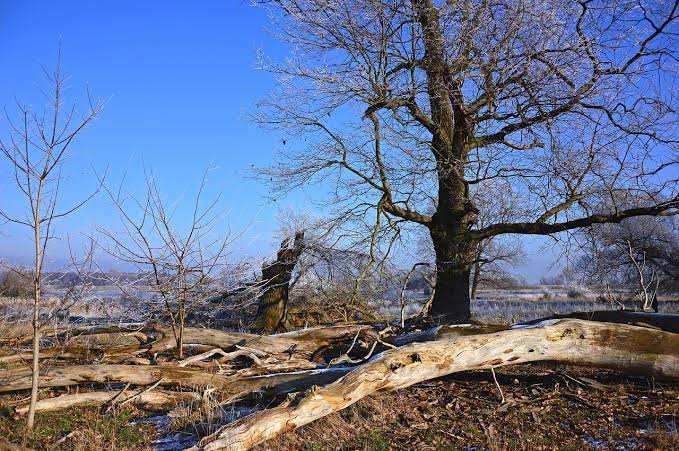
Yes. Some problems are visible immediately, while others become more apparent after the tree has had time to respond.
A crack may widen. A branch that initially remained attached may shift. Damaged foliage may decline later in the growing season.
Broken bark can also expose wood to future decay, although a wound does not mean the entire tree will necessarily deteriorate.
We recommend watching for changes after the first inspection, especially when major branches were lost or the tree’s loading has changed.
The monitoring schedule should depend on what was found. A tree with an active structural defect should not be left unaddressed simply to see whether it improves.
Can You Assess Storm Damage From Photos?
Photographs can help explain what happened, but they have limitations.
A wide image can show the tree’s position relative to the house. A closer view taken from a safe location may reveal a broken branch or damaged trunk.
Photos cannot reliably show how deeply a crack extends into the wood or whether roots have broken below the soil.
They also cannot establish how a suspended branch is loaded.
We recommend using photos to document the problem and provide context before a visit, not as proof that a damaged tree is safe.
Our tree consultation services can help property owners discuss tree concerns and determine the next steps for an on-site evaluation.
What Should Homeowners Photograph After a Storm?
If the area is safe and you can remain outside the possible fall zone, photographs may help document the condition of the tree.
Useful views include the full tree, the damaged area, nearby structures, and visible soil movement around the base.
Previous photographs can also help show whether a lean or trunk defect existed before the storm.
Do not move a branch, enter a damaged structure, or stand beneath a cracked trunk to get a better picture.
If you expect to contact your homeowners insurance company, retain your photographs and the relevant service documents.
Insurance coverage depends on the policy and what was damaged. An inspection or removal estimate does not establish that the insurer will pay for the work.
How Much Does a Storm Damage Tree Inspection Cost in Derry?
The cost depends on the scope of the service requested.
Evaluating one visibly damaged tree is different from assessing multiple mature trees across a commercial property.
A basic site evaluation may also differ from a formal written risk assessment that requires additional documentation or specialized testing.
Technical Tree Service advertises free estimates. That should not be interpreted as confirmation that every specialized arborist inspection or formal report is available at no charge.
When contacting us, explain how many trees are involved, what damage you can see, and whether you need a service estimate or a particular type of written assessment.
We can clarify the scope of the evaluation before scheduling.
How Do Storm Inspections Differ From Routine Tree Health Assessments?
A routine health assessment may focus on gradual changes such as thinning foliage, declining growth, root-zone stress, or signs of insects and disease.
A post-storm inspection gives particular attention to sudden structural changes.
We look for breaks, splits, shifted roots, and branches whose position has changed under wind, snow, or ice loads.
Tree health still matters. A stressed or decaying tree may respond differently to a storm than a tree with sound structural wood.
Our guide to the types of tree service and when you need them explains how inspections, pruning, removal, and cleanup address different property needs.
Arborist Services in Derry and Windham, NH
Technical Tree Service works with homeowners and commercial property owners across southern New Hampshire.
We provide tree inspections, trimming, removal, storm damage cleanup, and other tree maintenance services in Derry, Windham, Londonderry, Salem, Bedford, Manchester, and surrounding communities.
For property owners near the town line, our arborist services in Windham, NH cover tree health concerns, structural observations, root-zone conditions, and maintenance planning.
Our tree service in Derry, NH includes removal, trimming, storm cleanup, and other work based on the condition of the property.
We recommend an on-site assessment when a storm leaves damage that cannot be evaluated safely from the ground.
Request a Storm-Damaged Tree Inspection in Derry, NH
If a recent windstorm, snowstorm, or ice event left a tree leaning, cracked, or carrying large broken branches, keep the affected area clear until it can be evaluated.
At Technical Tree Service, we examine tree condition and surrounding property features before recommending pruning, removal, or continued monitoring.
Call us at (603) 438-5956 to discuss an arborist storm damage inspection in Derry, NH.
Tell us which tree is affected, what changed during the storm, and whether branches are near a house, driveway, or electrical lines. If wires are down or touching the tree, contact the utility and emergency authorities first.
We can discuss the appropriate next step and arrange an assessment of the tree and the work needed on your property.