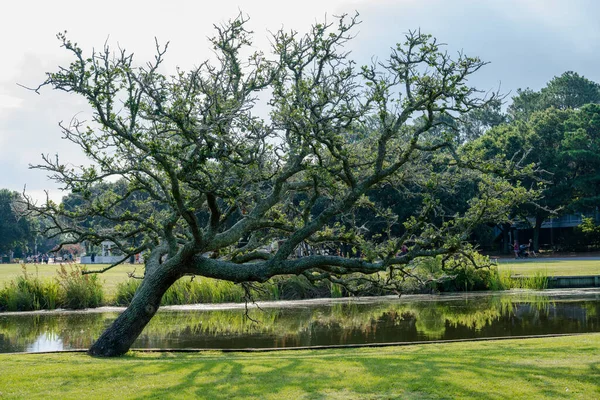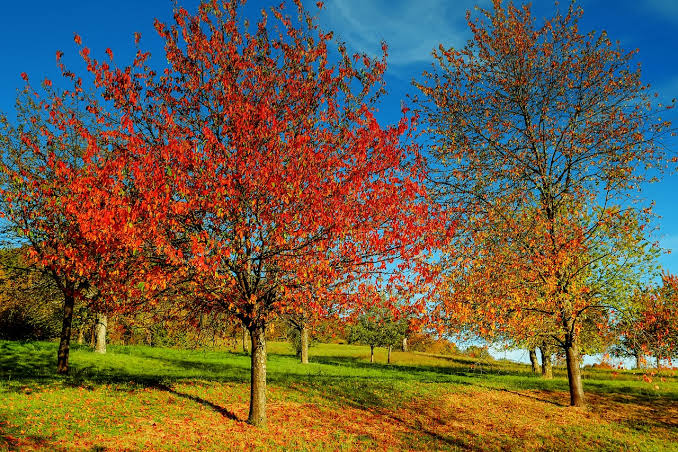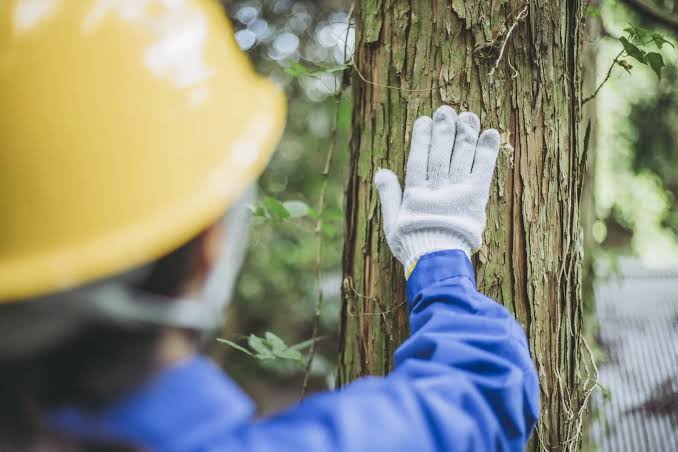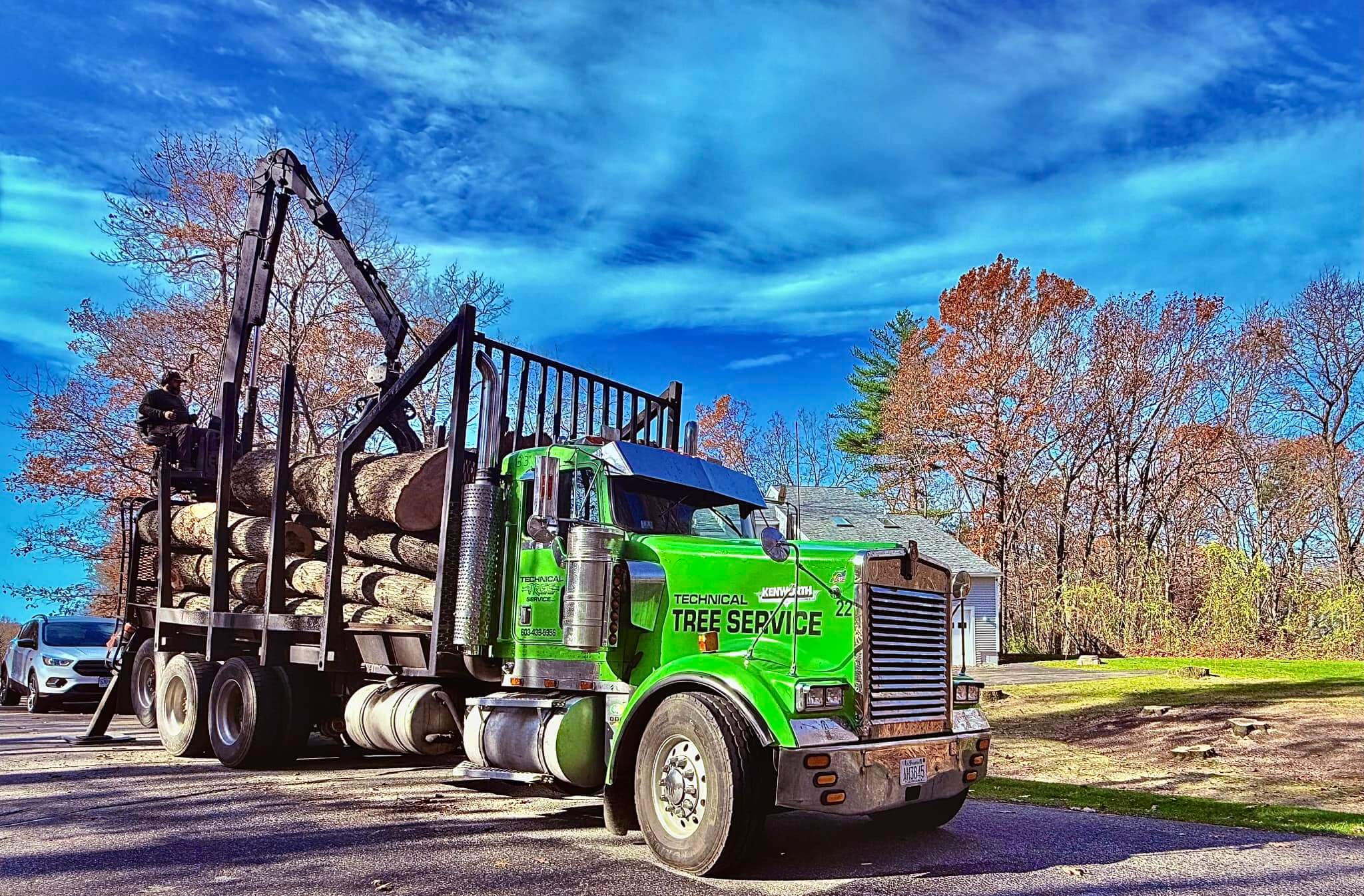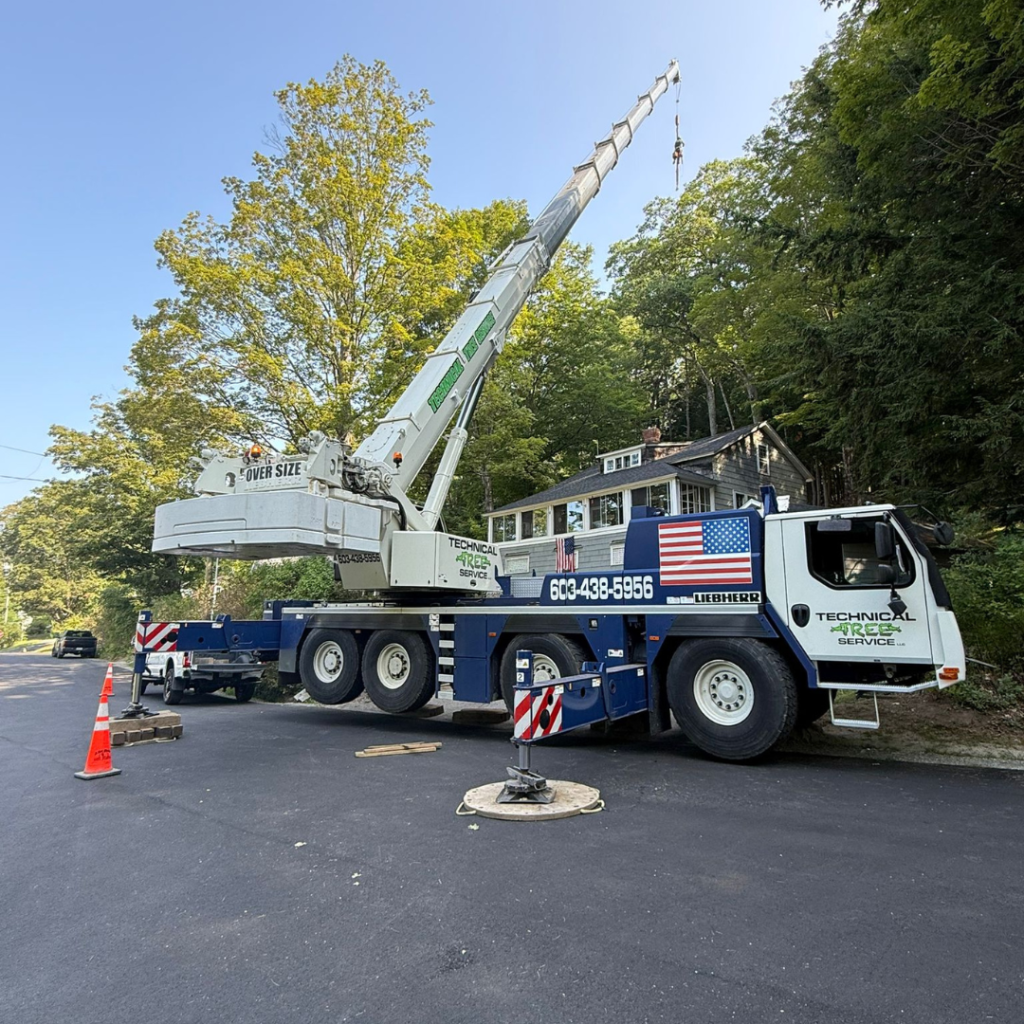
A tree with sparse leaves may have a soil problem. A heavy branch may need a targeted pruning cut rather than removal of the whole tree. A tree near planned construction may need its root zone protected before equipment arrives.
The arborist’s role is to connect what is visible above ground with the condition of the rest of the tree and the property around it.
1. An Arborist Looks at More Than the Canopy
Homeowners naturally notice leaves and branches first.
An arborist looks farther down.
The trunk, major branch unions, root flare, surrounding soil, drainage, previous construction, nearby structures, and changes in the tree’s growth can all influence what is happening in the canopy.
Technical Tree Service’s arborist services in Bedford, NH include inspection of dead or broken branches, weak branch unions, canopy thinning, trunk wounds, visible decay, fungal growth, root damage, soil compaction, drainage, insect activity, and clearance around the property.
That wider inspection can prevent a simple symptom from being mistaken for a diagnosis.
Yellowing leaves are a good example.
They can occur when nutrients are limited, but root injury, excess water, drought, soil compaction, planting depth, disease, and insect activity can produce similar symptoms.
Adding fertilizer before identifying the cause can miss the actual problem.
2. Tree Health Assessments Help Decide What Happens Next
A tree health assessment is useful when something has changed but the cause is unclear.
Maybe part of the crown looks thinner than it did last year.
Maybe leaves are dropping earlier than expected.
Maybe mushrooms appeared around the base.
Maybe a tree that seemed stable before a storm now has a crack between two large stems.
Technical Tree Service’s tree health assessment starts with the tree’s history and the property owner’s concern, followed by an on-site evaluation from the roots through the canopy.
When the situation calls for more information, the company says the assessment may include soil sampling, pest identification, or laboratory testing.
The result is a recommendation rather than an automatic removal order.
Depending on what the arborist finds, the next step could involve pruning, soil care, monitoring, pest management, fertilization, or removal.
That is one of the bigger differences between an arborist consultation and simply requesting a price to cut down a tree.
3. Professional Pruning Starts With a Reason for the Cut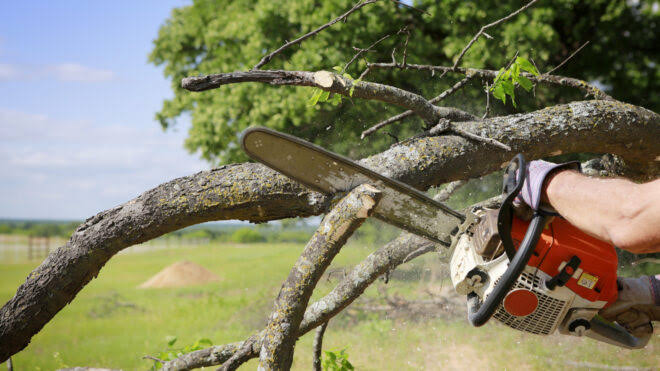
A tree can be over-pruned just as easily as it can be neglected.
The useful question is what each cut is supposed to accomplish.
Structural pruning can improve branch relationships as a young or maturing tree develops.
Crown cleaning focuses on selected dead, broken, damaged, or diseased branches.
Clearance pruning creates room around roofs, driveways, walkways, signs, or buildings.
Crown reduction can shorten selected limbs when that approach fits the tree and the objective.
Those operations are different from simply cutting the outer canopy back until the tree looks smaller.
Technical’s tree trimming service is supported by a certified arborist on staff, and its Bedford arborist guidance specifically warns against excessive pruning and indiscriminate topping.
A mature oak beside a driveway and a young ornamental tree near a walkway should not receive the same pruning prescription.
Species, age, branch size, attachment, tree condition, and the reason for the work all change the plan.
4. Root and Soil Problems Can Show Up in the Crown
Not every declining tree has a branch problem.
Roots live in a part of the property homeowners rarely see, yet changes there can appear later as sparse foliage, poor growth, dieback, early fall color, or general decline.
Compaction is one common example.
Repeated vehicle traffic, construction equipment, grading, or heavy foot traffic can reduce pore space in soil. That affects how water and oxygen move through the root zone.
Drainage creates a different problem. Roots sitting in chronically saturated soil do not respond the same way as roots in soil that dries too quickly.
Technical’s Bedford arborist service includes root-zone evaluation and soil-condition assessment. The company also offers fertilizer recommendations and deep-root fertilizer applications when the condition of the tree and soil support that approach.
Deep-root fertilization should not be treated as a vitamin shot for every tree that looks tired.
If construction damaged major roots, fertilizer does not put those roots back.
If drainage is keeping the soil saturated, adding nutrients does not correct the water problem.
The arborist first needs to decide what the tree is responding to.
5. An Arborist Can Help Before Construction Damages the Tree
Tree care becomes harder after roots have already been cut.
That makes an arborist consultation useful before certain property projects begin.
Driveway expansion, trenching, grading, excavation, new landscaping, and construction can all change conditions around established trees.
The roots that support a mature tree extend beyond the trunk, often into areas a homeowner may think of as open lawn or construction space.
Once equipment compacts that soil or excavation cuts through roots, the effects may not appear in the canopy immediately.
A tree can continue leafing out while losing part of its support or water-absorbing system below ground.
Technical’s consultation and preservation guidance includes reviewing important trees before construction and limiting unnecessary disturbance in their root zones.
Sometimes the recommendation changes the project layout.
Sometimes it identifies an area where equipment traffic should be restricted.
Sometimes the tree already has enough problems that preserving it through construction is unlikely to be practical.
It is easier to make those decisions before the excavator arrives.
6. Arborists Evaluate Structural Risk Without Assuming Every Defect Means Removal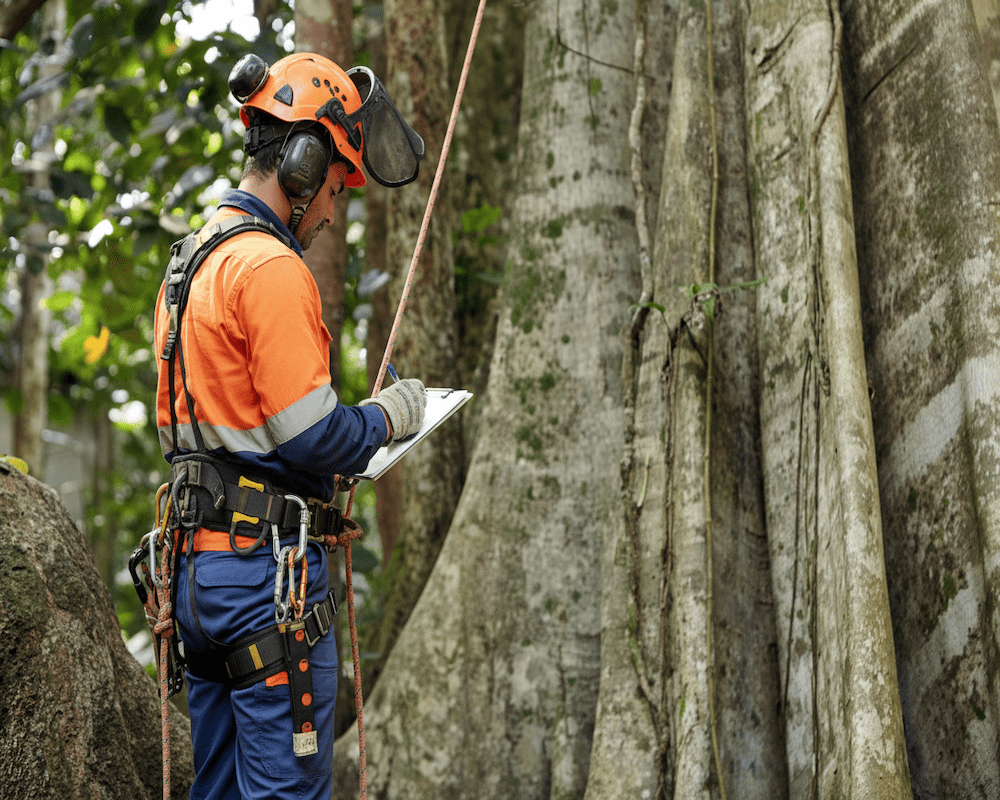
Trees are not manufactured structures.
They grow around wounds, change direction toward available light, develop large branch unions, and respond to storms over decades.
That means an unusual shape is not automatically a dangerous shape.
An arborist looks at the defect in context.
A large cavity matters differently depending on where it is, how much sound wood remains, the size and orientation of the tree, and what is nearby.
A lean that has existed for decades tells a different story from a lean that appeared after saturated soil and strong wind.
A dead branch over woodland presents a different exposure from the same branch over a front walkway.
Technical’s assessment process considers both the condition of the tree and potential targets if part of the tree were to fail.
That helps determine whether the reasonable response is monitoring, pruning, support, or removal.
Some Technical Tree Service local pages also list cabling or bracing among possible recommendations for selected structural weaknesses. Because the current company sitemap does not list a separate cabling-and-bracing service, homeowners should confirm the specific scope during the site evaluation rather than assuming every support option is available for every tree.
7. Storm Work Starts With Stabilizing the Property
New Hampshire weather can turn an ordinary tree-care question into an urgent one.
Snow, ice, saturated soil, and strong wind can break branches, split stems, or bring whole trees down.
After that happens, an arborist is looking at a structure that may already be under unusual load.
A partially uprooted tree can shift while it is being cut.
A broken limb can remain suspended in another branch.
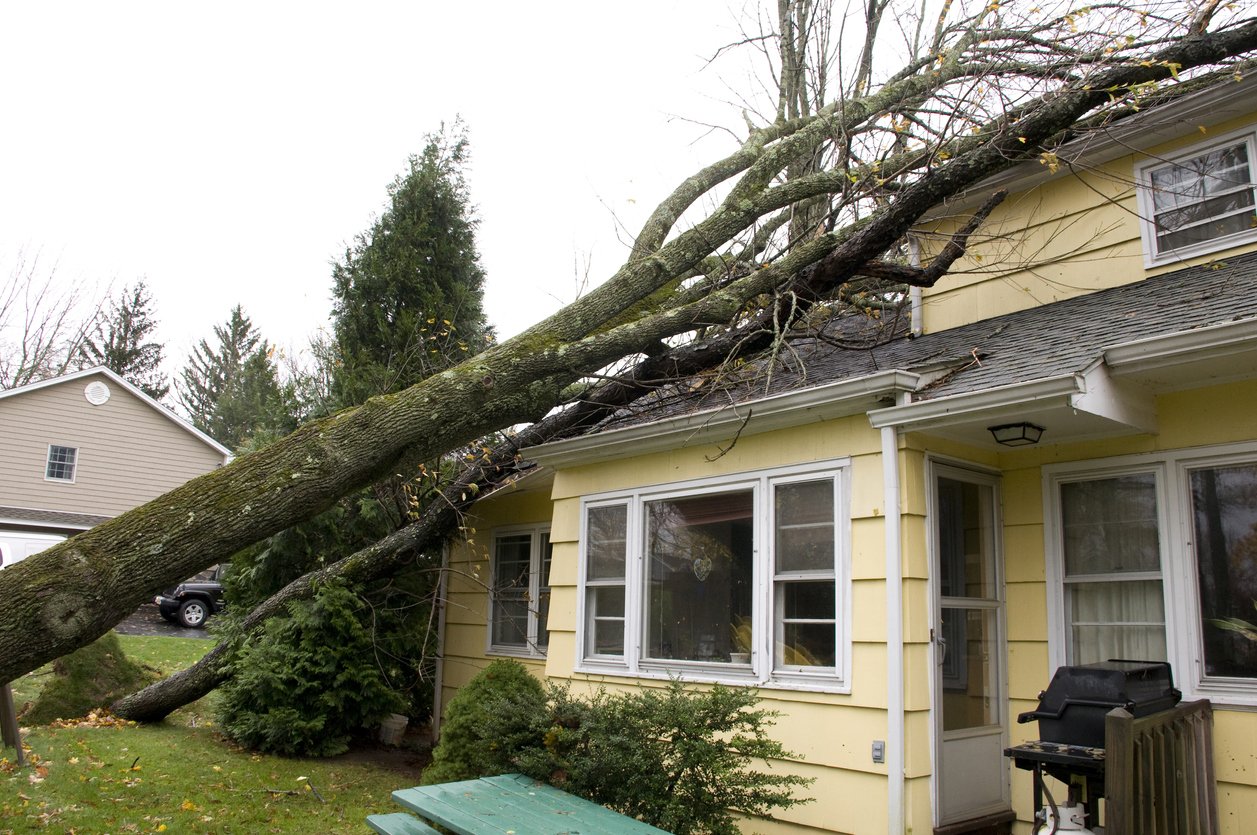
A trunk resting on a roof may transfer weight as sections are removed.
Technical Tree Service provides storm damage cleanup and 24/7 emergency tree service for fallen trees, hanging limbs, unstable trees, blocked access, and other urgent conditions.
The company also owns crane equipment, which gives the crew another option for selected removals where lifting and controlling sections is more practical than allowing them to fall.
Crane use is not automatically required because a tree is large.
Access, tree condition, surrounding structures, usable rigging points, and the available work area determine the method.
8. Tree Removal Is One Possible Outcome of an Arborist Assessment

Sometimes removal is the appropriate recommendation.
A tree may have extensive decay, severe root failure, major structural damage, or a location where the remaining risk cannot reasonably be reduced.
Other trees are simply dead.
Technical’s tree service in Bedford, NH includes removal of hazardous and unwanted trees, including controlled work near homes and other property features.
The arborist’s involvement matters because removal should follow an assessment of the whole situation.
A declining tree may still have reasonable management options.
A structurally compromised tree may not.
The answer depends on what is wrong, how much of the tree is affected, and what would be exposed if failure occurred.
This is also why Technical Tree Service requires an on-site evaluation before preparing an estimate in Bedford.
Photos can show a tree.
They usually cannot show enough of the root zone, access, surrounding targets, internal structural concerns, and equipment setup to answer every question.
9. Stump Grinding Solves a Different Problem After Removal
Tree removal and stump grinding are related, but they solve different problems.
Once the tree is down, the stump may interfere with mowing, landscaping, foot traffic, or future use of that part of the yard.
Technical offers stump grinding as a separate service to reduce the remaining stump and restore usable space.
Whether grinding makes sense depends on what happens next.
A stump in a wooded edge may not interfere with anything.
A stump in the middle of a lawn, near a planned walkway, or inside a future planting area may need to be addressed.
This is another place where an arborist or tree-service consultation can help define the actual scope before the job begins.
10. Arborist Services Can Include Shrubs and Ornamental Trees
Arboriculture is not limited to the largest trees on the property.
Technical’s Bedford arborist page also includes shrub and ornamental-tree care.
These plants often require a different pruning approach from mature shade trees.
A flowering shrub may bloom on old wood, which means timing affects whether the homeowner gets flowers the following season.
Repeated shearing can also create a dense exterior while the interior becomes sparse.
Selective pruning may be more appropriate when the objective is renewal, deadwood removal, size control, or maintaining the plant’s natural form.
The same diagnostic principle still applies.
Before treating discoloration, poor flowering, dieback, or insect symptoms, the arborist needs to identify what is causing the change.
11. Arborist Services in Merrimack Follow the Same Assessment-First Approach
Technical Tree Service also provides arborist services in Merrimack, NH.
The service scope follows the same basic process used in Bedford: inspect the tree and site, identify health and structural concerns, then decide whether pruning, root-zone care, monitoring, fertilization, or another response fits the condition.
That approach matters across southern New Hampshire because the same species can behave differently from one property to another.
A white pine growing in an open area has different wind exposure from one protected within a group of trees.
A maple beside an undisturbed woodland edge has a different root environment from one surrounded by driveway pavement and compacted lawn.
Tree care becomes more useful when the recommendation responds to the actual site rather than the ZIP code alone.
When Is an Arborist Consultation Worth Scheduling?
You do not need to wait until a tree looks close to failure.
An arborist consultation makes sense when you notice a change you cannot explain, especially dead branches, new cracks, cavities, unusual leaning, fungal growth near the base, root damage, thinning foliage, or early leaf loss.
It can also be useful before construction, grading, driveway work, or a major landscape change near established trees.
After severe weather, an inspection can help separate superficial damage from structural problems that need work.
If you are debating whether a mature tree needs pruning or removal, getting the assessment before choosing the service gives you a better starting point.
Technical Tree Service’s service list reflects that full sequence. The company provides arborist consultations and health assessments, pruning, tree removal, stump grinding, storm cleanup, 24/7 emergency response, and crane-assisted work when the site requires it.
For a Bedford property owner who is unsure what a tree actually needs, that first evaluation is often the useful place to begin. Technical Tree Service can inspect the tree on site and discuss the options at (603) 438-5956.