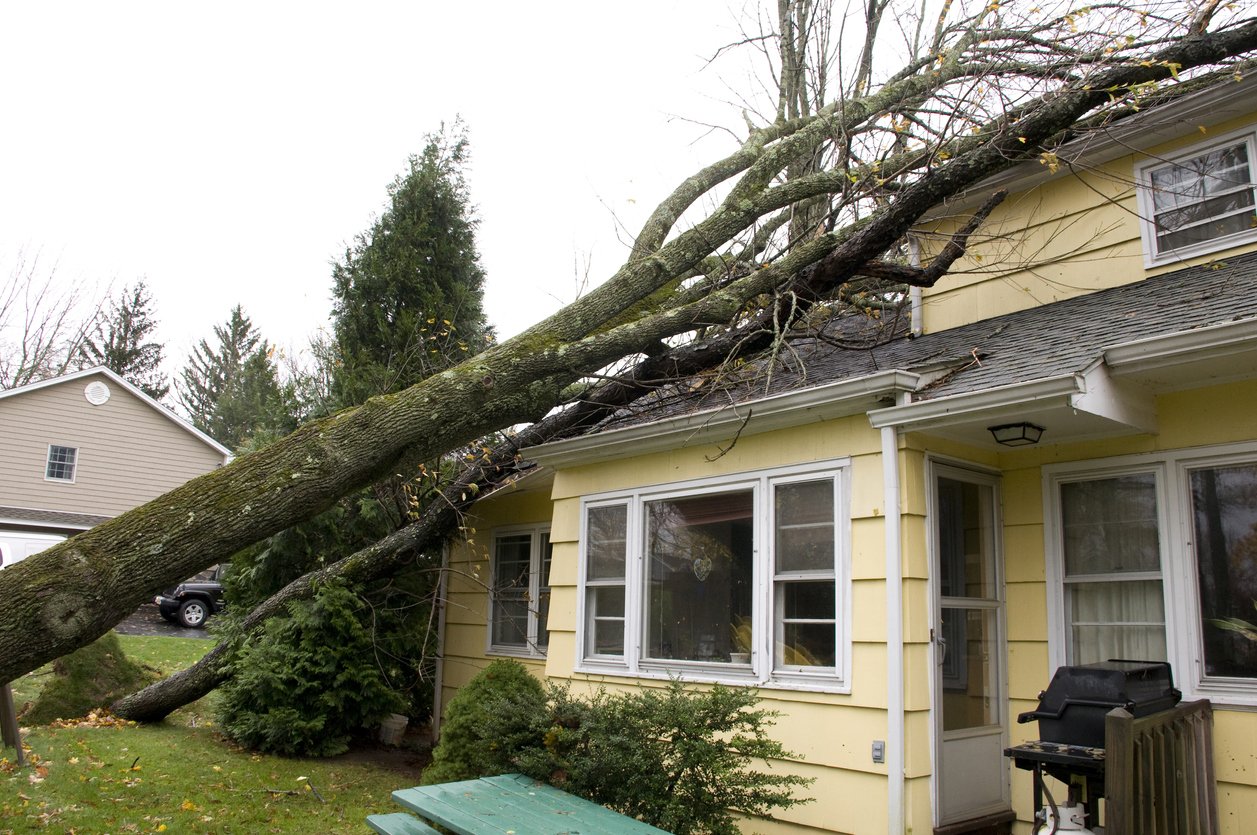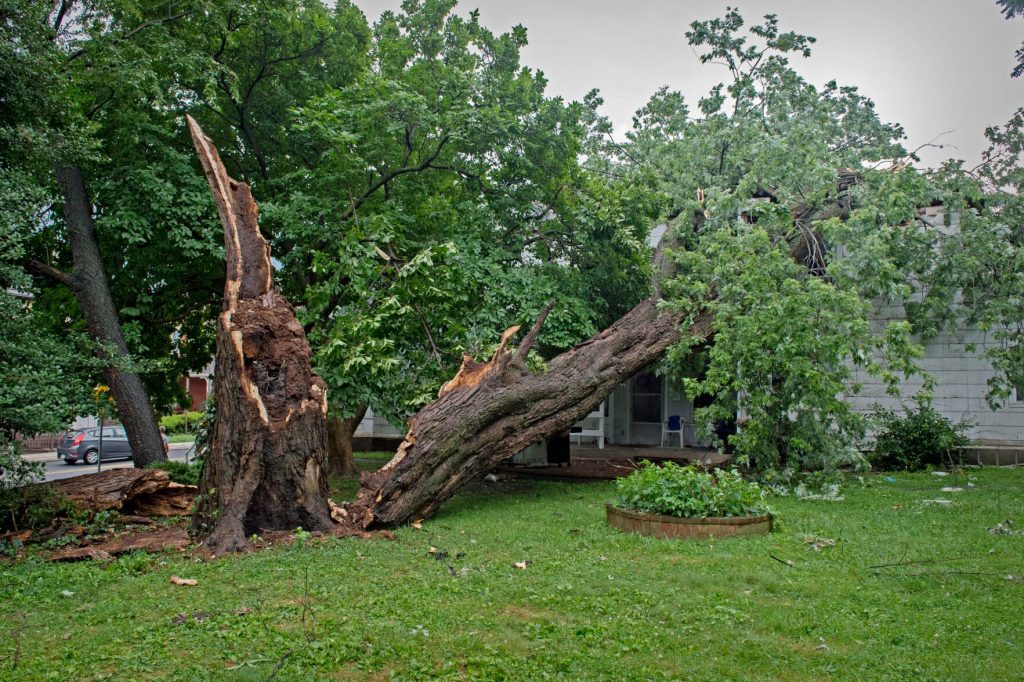
A storm damage tree assessment in Concord, NH should answer more than whether a branch broke. After high wind, ice, wet snow, or saturated ground, an arborist looks at what moved, what remains attached, whether the root system shifted, how much usable crown remains, and what the damaged tree could reach if another part fails.
Some storm damage is obvious. A limb may be lying across the driveway or part of a tree may already be on the ground. Other problems stay in the standing tree: a root plate that lifted slightly, a branch split hidden above the roofline, a cracked union, or broken wood lodged in the canopy.
Those conditions are why cleanup and assessment are not quite the same job.
Start From the Ground, Not Under the Tree
After a storm, the safest first inspection is from a location where nothing overhead can reach you.
Look at the entire tree before walking toward the trunk.
A branch can remain partially attached high in the crown after the weather clears. Broken wood may also be resting on another branch rather than hanging freely, which can make it look more stable than it is.
Partially uprooted trees deserve the same caution. Roots and stems can remain under stored tension, and cutting or moving one part can change how the rest of the tree is supported.
If something looks unstable, there is little benefit in getting closer for a better photograph.
Power Lines Change the Situation Immediately
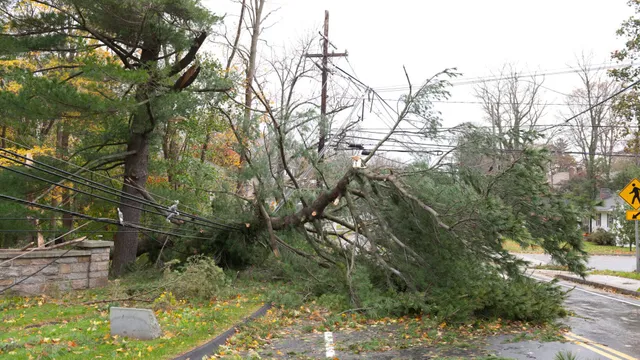
Do not approach a branch or tree that is touching, resting on, or close enough to have affected an electrical line.
That includes lines that appear to be down.
Storms can leave branches across service drops, conductors, utility poles, and nearby trees. Electricity can also travel through tree tissue or wet material in ways that are not obvious from the ground.
Contact the utility or emergency services as appropriate and keep other people away from the area.
Tree work around electrical conductors requires the correct utility coordination and training. It is not something to investigate by moving the branch with a pole, rope, ladder, or saw.
Look for Fresh Movement Around the Roots
A standing tree can suffer serious storm damage below ground.
Wind acts on the crown like a lever. When the force is high enough, roots can break or the entire root plate can rotate in the soil.
One of the more useful signs is fresh soil movement around the base.
Look from a safe distance for newly lifted soil, cracks that radiate around the root area, gaps between the trunk and soil, or roots that appear to have pulled upward.
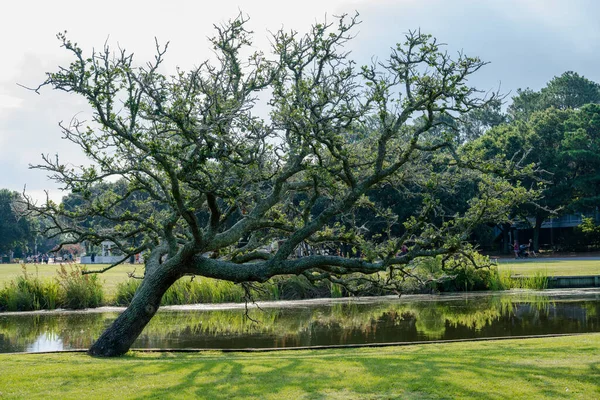
A tree may also have developed a new lean.
That does not prove the tree will fall, but a lean that appeared during the storm means the anchoring system deserves attention. It carries different information from a lean that has remained unchanged for many years.
Technical Tree Service’s arborist services in Concord, NH include root-zone assessment along with trunk, branch, canopy, and site observations.
Saturated Soil Can Matter Even When the Tree Looks Intact
Heavy rain before or during a wind event can change how well soil holds roots.
The crown may still look normal afterward.
The trunk may still be upright.
That does not mean the root system experienced no movement.
This is especially worth checking around large trees in low areas, recently disturbed soil, restricted rooting spaces, or places where drainage has changed.
An arborist reviewing the tree after a storm is interested in the combination of conditions, not simply whether roots are visible above ground.
Check the Trunk for New Cracks and Splits
Storm loading can expose weaknesses that were already developing inside a trunk or major union.
A new crack may appear between two stems, along an old wound, near a cavity, or where a large limb joins the trunk.
There is no universal crack length or percentage that determines whether the tree stays or goes.
Location matters.
Depth matters.
Whether the crack is opening under load matters.
The amount and distribution of remaining wood matter.
A crack at the union of two major stems can have a very different consequence from a superficial bark injury elsewhere on the trunk.
Photographs taken before the storm can help establish whether a crack or separation is new.
A Split Branch Does Not Need to Be Huge to Matter
Branch diameter is only one part of the assessment.
A relatively modest broken limb hanging over a front entry can require quicker action than a larger branch lying safely on open ground.
The same applies to a split branch under tension.
Its height, remaining attachment, location, weight distribution, and what lies underneath determine how the problem should be handled.
That is why fixed rules such as “anything under two inches is DIY” are unreliable.
A small branch near a utility line, high overhead, or caught under tension is still a poor homeowner project.
Look for Hanging Wood and Branches Caught in the Crown
One of the easiest hazards to miss after a storm is a branch that broke but never reached the ground.
It may be suspended by another limb, bark fibers, vines, or neighboring branches.
Sometimes the wood stays in the canopy through the storm and falls days or weeks later under calm conditions.
Scan upward from several angles without standing beneath suspect branches.
Look for pale fresh wood where a branch tore, limbs sitting at unfamiliar angles, broken ends caught in neighboring branches, or pieces that move independently from the surrounding crown.
If the tree is large enough that you cannot confidently see the upper canopy from the ground, that is another reason for professional inspection.
Storm Damage Is Sometimes Easier to See After the Leaves Return
Not every problem shows up the morning after a storm.
A branch can retain enough connection to remain in place but later droop as leaves add weight.
Root injury can show up later as thinning, dieback, reduced growth, or declining sections of canopy.
A crack can also become more visible as the damaged part moves through later weather.
For trees that are retained after the initial cleanup, follow-up matters.
The tree may need another look during the growing season if the canopy changes, branches begin dying, or the lean appears to increase.
A Green Crown Does Not Prove the Tree Is Structurally Sound
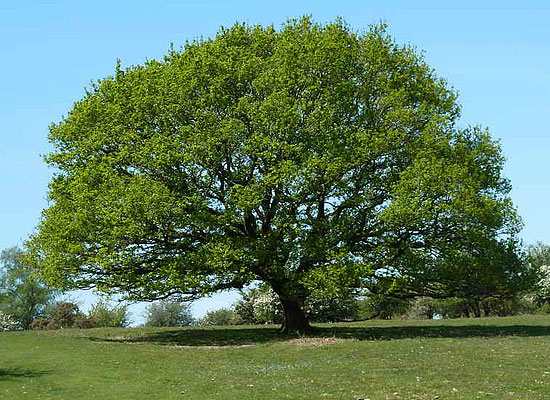
Leaves tell you that part of the tree is biologically functioning.
They do not certify its structure.
A tree can leaf out normally while having root movement, a cracked union, internal decay, or a large damaged limb.
The reverse is also true. A storm-damaged tree with visible branch loss may still have enough sound structure and live canopy to remain.
A tree-health assessment considers both biology and structure.
That is why Technical Tree Service’s Tree Health Assessment looks beyond foliage and includes the roots, trunk, branches, canopy, visible stress, and site conditions.
How Much Crown Loss Is Too Much?
There is no percentage that works for every landscape tree.
Crown loss helps an arborist understand the severity of damage, but the location of that loss can matter as much as the amount.
A tree that lost several peripheral limbs may still have a workable crown and good main structure.
Another tree may have lost one major leader that tore through a central union and left a severe trunk defect.
Species, maturity, prior condition, root damage, remaining architecture, and nearby targets all affect the recommendation.
This is why a storm-damaged tree should not be removed solely because somebody estimates that a certain percentage of foliage disappeared.
Previous Defects Matter After a Storm
A storm does not always create the entire problem.
Sometimes it reveals one.
A branch may break where decay had already reduced the wood.
A codominant union may begin separating after years of included bark.
A tree may start leaning after roots were previously cut for construction.
A cavity that seemed uneventful during normal weather may become more relevant after a large part of the crown shifts.
An arborist therefore looks for both fresh damage and the condition that existed before the weather event.
That history helps explain why the tree responded the way it did.
Targets Change the Urgency
Tree risk is partly about what can be hit.
A cracked branch over an unused wooded section of a property creates a different situation from the same branch over a bedroom, driveway, sidewalk, parking area, patio, or entrance.
After storm damage, the assessment includes the direction and reach of the damaged tree part along with how often the area beneath it is occupied.
A branch does not become structurally stronger because nobody normally stands beneath it.
The difference is in the consequence if it fails.
That distinction helps determine what needs immediate work and what might reasonably be monitored or scheduled.
Does Storm Damage Always Mean Tree Removal?
No.
Many storm-damaged trees can remain after appropriate pruning and follow-up.
If the main trunk and roots are stable and enough sound crown remains, the arborist may recommend removing broken wood, correcting torn branch stubs, reducing selected damaged limbs, or monitoring the tree.
A large healthy branch should not automatically be removed simply because another part of the crown failed.
The goal is to retain useful live canopy where doing so makes sense.
When Removal Becomes More Likely
Removal becomes a stronger possibility when the damage affects the parts responsible for supporting the whole tree.
Major root-plate failure is one example.
Severe trunk splitting is another.
A tree may also have very little viable structure left after multiple large leaders fail.
Pre-existing decay can further reduce the amount of sound wood available to support the remaining crown.
Location matters again. A damaged tree with uncertain structural capacity next to an occupied building creates different management options from the same tree in an area where nothing would be struck.
The decision is based on the whole condition, not one symptom viewed alone.
Can Cabling or Bracing Save a Storm-Damaged Tree?
Sometimes supplemental support is part of a preservation plan.
It is not a universal repair.
Cabling or bracing may be considered for certain stems or branch unions when there is a defined structural reason for installing support and the remaining tree is suitable for retention.
It does not reconnect broken roots.
It does not reverse decay.
It does not make an extensively failed trunk whole again.
Support systems also require appropriate design, installation, inspection, and future maintenance.
An arborist should first determine what failed and whether supplemental support has a realistic role.
Pruning After the Storm Should Address the Damage, Not Punish the Tree
Storm cleanup can easily turn into excessive pruning.
Once several branches are broken, there is a temptation to shorten the entire crown heavily so the tree “matches.”
That can remove useful live foliage at the same time the tree is trying to respond to injury.
The immediate pruning objective is usually more specific: deal with broken, torn, hanging, or badly damaged branches and preserve sound structure where practical.
Topping is not storm repair.
Large indiscriminate cuts create additional wounds and can lead to poor future structure.
Technical Tree Service’s Complete Guide to Professional Tree Service similarly separates pruning decisions from tree removal and bases recommendations on an on-site evaluation.
Do Trees Need Wound Paint After Storm Damage?
Generally, no.
Trees respond to injury by compartmentalizing damaged tissue rather than healing a wound the way human skin does.
Proper pruning cuts preserve the branch collar and allow the tree’s normal biological response to proceed.
Routine wound paint or tree dressing does not restore torn wood.
If storm damage created a large trunk wound, the more useful question is whether the remaining structure is acceptable and how the tree should be monitored.
Document Damage Before Cleanup When It Is Safe to Do So
If a tree damaged a house, vehicle, fence, shed, or other insured property, photographs can be useful before debris is removed.
Take them only from a safe location.
Do not climb onto a damaged roof or stand beneath unstable wood for documentation.
Photograph the tree, visible point of failure, affected structure, and wider site where practical.
Then contact the insurer according to the policy requirements.
Emergency work should still move forward when a tree creates an immediate safety problem. Documentation should never require remaining in a hazardous area.
What a Professional Post-Storm Assessment Looks At
A professional inspection connects the visible damage to the rest of the tree.
The arborist may examine the crown for broken or hanging limbs, branch unions for cracking or separation, the trunk for new defects, the root flare for movement, and the surrounding soil for lifting or disturbance.
The site matters too.
Nearby buildings, utility lines, driveways, pedestrian areas, previous excavation, drainage conditions, and the direction of any new lean can all affect the recommendation.
Technical Tree Service’s Concord arborist service specifically includes dead or broken branches, weak unions, trunk wounds and cavities, fungal indicators, root disturbance, soil conditions, and storm damage within its assessment scope.
Emergency Work and Tree Health Assessment Are Different Decisions
A storm may create one branch that has to come down now while the rest of the tree can be evaluated afterward.
It can also create a whole-tree stability problem that makes the assessment itself urgent.
That distinction affects how the job is approached.
Emergency tree work focuses first on controlling an immediate hazard and restoring safe access.
A tree-health and structural assessment asks what should happen to the remaining tree once that immediate problem is controlled.
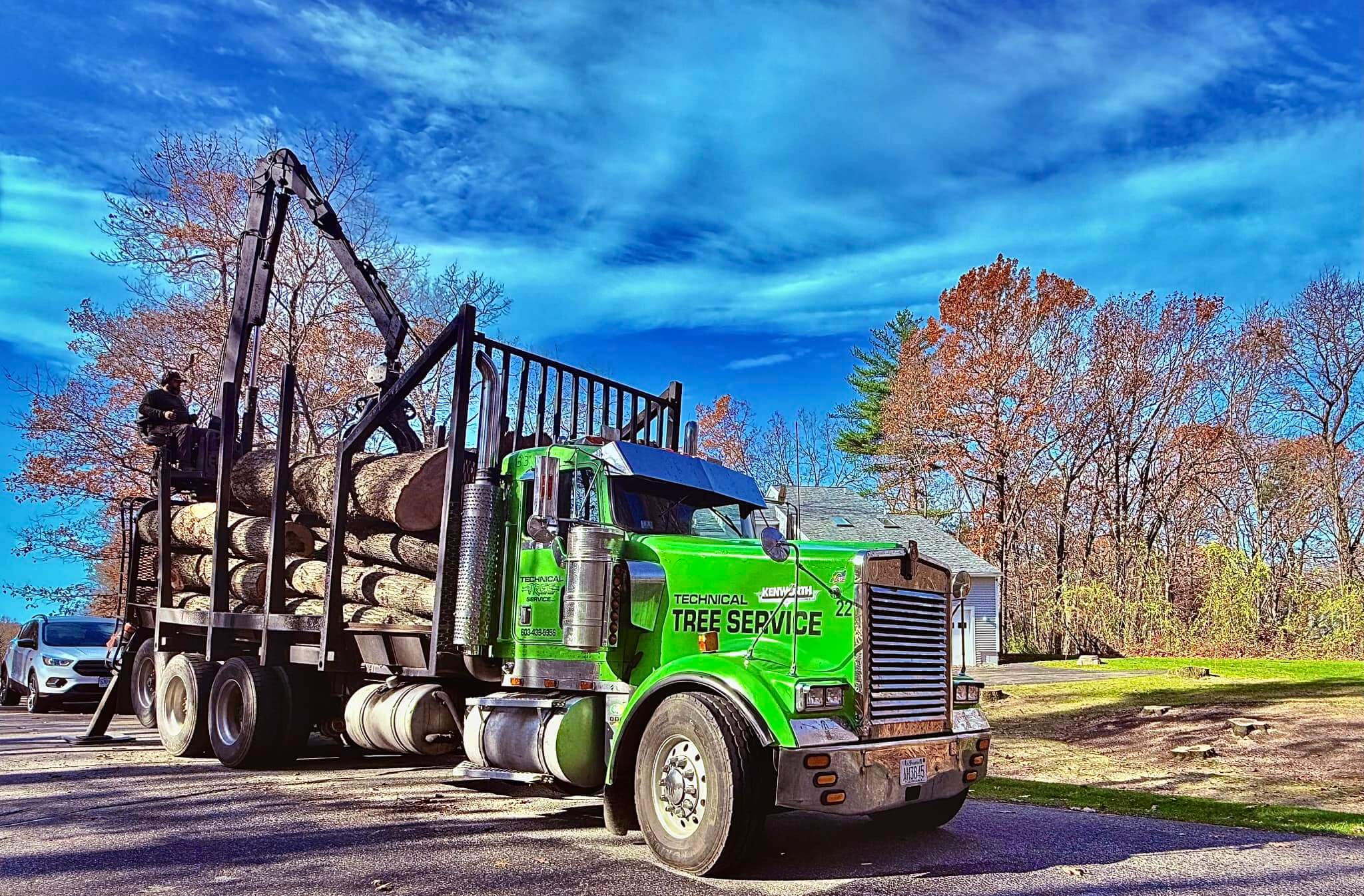
Technical Tree Service’s tree service in Concord, NH includes both storm cleanup and tree-health and risk evaluations, as well as 24/7 emergency response when a tree creates an urgent hazard.
When to Call Right Away
Some conditions should not wait for a normal maintenance visit.
Call promptly when a tree has newly shifted at the roots, a large part of the trunk or major union is actively splitting, heavy broken wood is suspended over an occupied area, or a tree is resting on a building or another tree.
Utility involvement also changes the response, as does damage that blocks a road, entrance, or other required access.
For damage that appears stable but still raises concern, a scheduled assessment can determine whether pruning, monitoring, preservation work, or removal is appropriate.
A Storm Assessment Can Lead to Monitoring Instead of Immediate Work
Sometimes the useful result of an inspection is that no major intervention is needed that day.
The arborist may document the condition and recommend watching a crack, lean, crown response, or damaged branch union through future seasons.
That is still a management decision.
Monitoring works better when there is a baseline.
Photographs from the same location, notes on changes in lean, canopy dieback, new cracks, or soil movement can make future comparisons more meaningful.
A tree that does not require removal today can still deserve another inspection after substantial weather or a visible change.
Tree Health Assessment After a Storm in Concord, NH
Concord trees can experience high winds, heavy snow, ice, saturated soils, and rapid weather changes during different parts of the year. The visible debris after a storm is only one part of the picture.
If a tree changed position, roots or soil moved, major branches split, or broken wood remains in the crown, an on-site assessment can determine whether the damage is limited to pruning work or affects the tree’s larger structure.
Technical Tree Service provides arborist services in Concord, NH, tree-health evaluations, pruning, storm cleanup, removal, and 24/7 emergency response. The company also provides arborist services in Bow, NH and serves other communities throughout southern New Hampshire.
If the storm left a standing tree that no longer looks the way it did before, Technical Tree Service can evaluate it on site before the next pruning or removal decision is made. Call (603) 438-5956 to request an assessment.