Crown cleaning in Hudson, NH makes sense when a tree has selected dead, broken, damaged, diseased, or weak branches that should be removed without thinning healthy canopy or changing the tree’s overall size. It is especially useful when deadwood hangs over a house, driveway, walkway, patio, parking area, or another place people regularly use.
The important part is the word selected.
A mature tree does not need every small dead twig removed simply to qualify as maintained. The arborist looks at the size and location of the deadwood, what caused it, what lies below it, and whether other parts of the tree show a larger problem.
That is where crown cleaning fits into a broader maintenance plan rather than becoming a standing order to cut branches every year.
What Crown Cleaning Actually Means
Crown cleaning is a pruning objective focused on compromised branches within the canopy.
Depending on the tree, that may include dead limbs, broken branches, storm-damaged sections, diseased branches, poorly attached growth, or branches that are rubbing badly enough to create damage.
It is different from removing healthy branches simply because the crown looks dense.
Technical Tree Service describes crown cleaning within its tree maintenance in Hudson, NH as selective removal of dead, broken, damaged, or diseased branches.
That distinction matters on mature trees.
Healthy foliage is doing work for the tree. Removing live branches without a reason reduces leaf area and creates pruning wounds. A crown-cleaning job should solve a defined problem while leaving useful canopy in place.
Crown Cleaning Is Not Crown Thinning
The two terms are sometimes mixed together, but they describe different work.
Crown cleaning targets compromised branches.
Crown thinning selectively removes live branches to reduce density in parts of the crown.
A tree with several dead limbs over a driveway may need cleaning without needing any thinning at all.
This distinction also matters when someone says a tree needs to be “opened up for air.”
A dense canopy is not, by itself, a reason to remove healthy interior branches. Mature trees naturally carry a large leaf surface because those leaves produce the energy used for growth, defense, and normal biological function.
If thinning is appropriate for a particular tree and objective, that should be a separate pruning decision.
Crown cleaning should not quietly turn into broad live-canopy removal once the crew is in the tree.
Deadwood Over a Driveway Deserves More Attention Than Deadwood Over the Woods
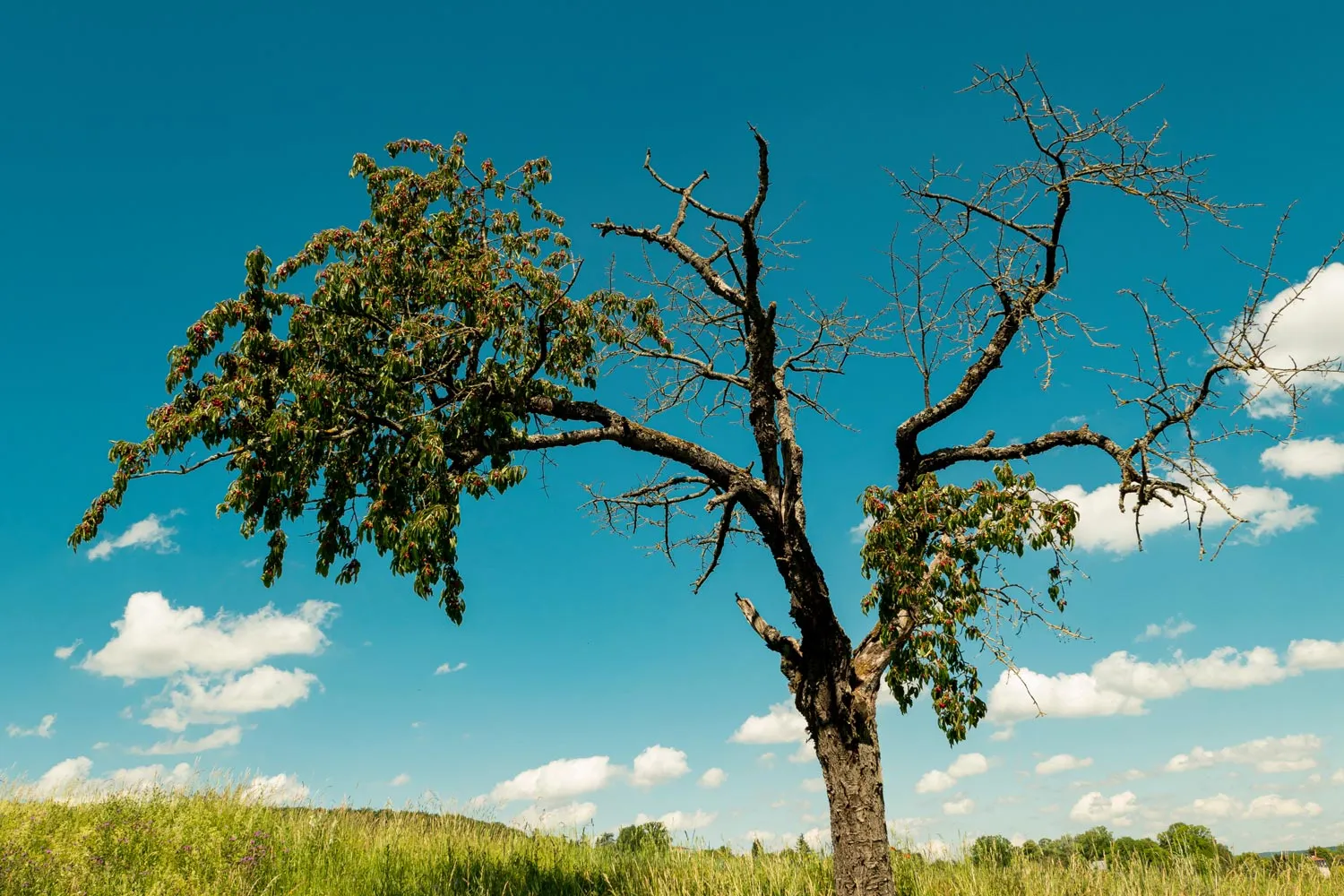
Deadwood becomes a maintenance priority partly because of what is underneath it.
A three-inch dead limb over a driveway where cars are parked every day creates a different situation from the same branch over an unused back corner of a wooded lot.
Arborists often refer to people, buildings, vehicles, walkways, and other things that could be struck as targets.
The branch condition matters, but so does target exposure.
On a Hudson residential property, common targets include roofs, decks, patios, children’s play areas, parked vehicles, sidewalks, entrances, and areas where people spend time outdoors.
This does not mean every branch over a target is unsafe. It means dead or damaged wood in those locations deserves a closer look when maintenance priorities are being set.
Small Dead Twigs Are Not the Same as Large Dead Limbs
Trees shed branches naturally.
Small interior twigs may die as the canopy changes and light conditions shift. Mature trees can contain some dead material without the whole tree being unhealthy.
The maintenance concern changes as branch size increases.
A small twig dropping into the lawn has little in common with a large dead scaffold limb over the garage.
That is why a pruning specification may include a minimum deadwood size rather than asking a crew to remove every dead twig visible in the crown.
Removing tiny deadwood throughout a large mature tree can add substantial climbing and cutting without providing the same benefit as addressing larger branches that can cause damage if they fall.
The appropriate threshold depends on the tree, property use, and maintenance objective.
When Deadwood May Point to a Larger Problem
A dead branch is sometimes the problem.
Other times it is evidence of another problem.
If one limb was broken during a storm and died afterward, the cause may be straightforward.
If several major branches are dying in different parts of the canopy, the arborist has more to investigate.
Possible contributors can include root damage, construction activity, drought stress, excessive soil moisture, trunk injury, insects, disease, restricted rooting space, or broader decline.
That distinction affects the recommendation.
Removing a dead branch can address the immediate overhead concern. It does not repair damaged roots or correct the underlying reason that a large part of the crown is declining.
Technical Tree Service includes canopy condition, trunk defects, roots, soil, drainage, insect activity, disease symptoms, and nearby targets within its local tree-assessment work.
Deadwood Does Not Automatically Mean the Tree Is Dying
One dead branch should not be used to diagnose the entire tree.
Large trees lose branches for many reasons. A limb may have been shaded out, injured years earlier, damaged in a storm, affected by a local defect, or simply lost during the tree’s normal development.
The rest of the tree may still have a functioning crown and root system.
The opposite is also true.
A tree can still carry green leaves while developing structural problems elsewhere.
An arborist therefore looks at the deadwood in context rather than using it as a yes-or-no test for tree removal.
Crown cleaning is often appropriate precisely because the tree is being retained.
Does Removing Deadwood Stop Disease?
Sometimes pruning is part of disease management.
That does not mean all deadwood is spreading disease or that cutting a dead branch stops a problem from moving through the tree.
Certain cankers and other branch diseases may call for removal of affected tissue. Other conditions originate in roots, vascular tissue, or the main trunk, where deadwood removal alone does not address the cause.
Timing can matter as well. Some diseases have pruning windows intended to reduce the chance of infection through fresh cuts.
If disease is suspected, the useful sequence is to identify the pattern first, then decide whether pruning belongs in the management plan.
Cutting first and diagnosing later can remove evidence that would have helped explain why the branch died.
Deadwood Can Have Wildlife Value When It Is in the Right Place
Dead wood is part of a natural tree and forest system.
Standing dead branches, snags, cavities, and fallen wood provide habitat for birds, mammals, insects, fungi, and other organisms.
That does not mean a large dead limb should remain over a patio for habitat.
Location changes the decision.
On the wooded edge of a large property with little human activity, some deadwood may reasonably remain. Around a house, driveway, parking area, or gathering space, the acceptable amount may be much lower.
A thoughtful maintenance plan can account for both property use and ecological value instead of treating every dead branch exactly the same way.
When Crown Cleaning Fits Before Winter
Fall is a useful time to look at tree condition before snow and ice return, but crown cleaning does not have to be tied to one calendar date.
If inspection reveals a large dead branch over the driveway or roof, addressing it before winter loading can make sense.
The reason is straightforward.
A branch that is already dead or broken has less remaining structural capacity than the live branch it once was. Snow, ice, and wind add load and movement that can expose that weakness.
Crown cleaning removes the compromised branch.
It should not be described as stripping the crown to make the whole tree catch less wind.
That would be a different pruning objective, and aggressive thinning can create its own problems.
Deadwood Removal Does Not Make a Tree Storm-Proof
No pruning job can guarantee that a mature tree will withstand a severe storm.
A cleaned crown can still experience branch failure.
Healthy branches can break under unusual snow or wind loads. A root system can move in saturated soil. A hidden defect can become apparent only after weather changes the load.
Crown cleaning addresses branches that already have an identifiable reason for removal.
That is a useful risk-management step, but it is not a promise about every future storm.
For Hudson properties, this is one reason tree maintenance works better when pruning is combined with periodic inspection rather than treated as a one-time cure.
Post-Storm Crown Cleaning Is Often More Specific
After heavy wind, wet snow, or ice, the pruning objective may change quickly.
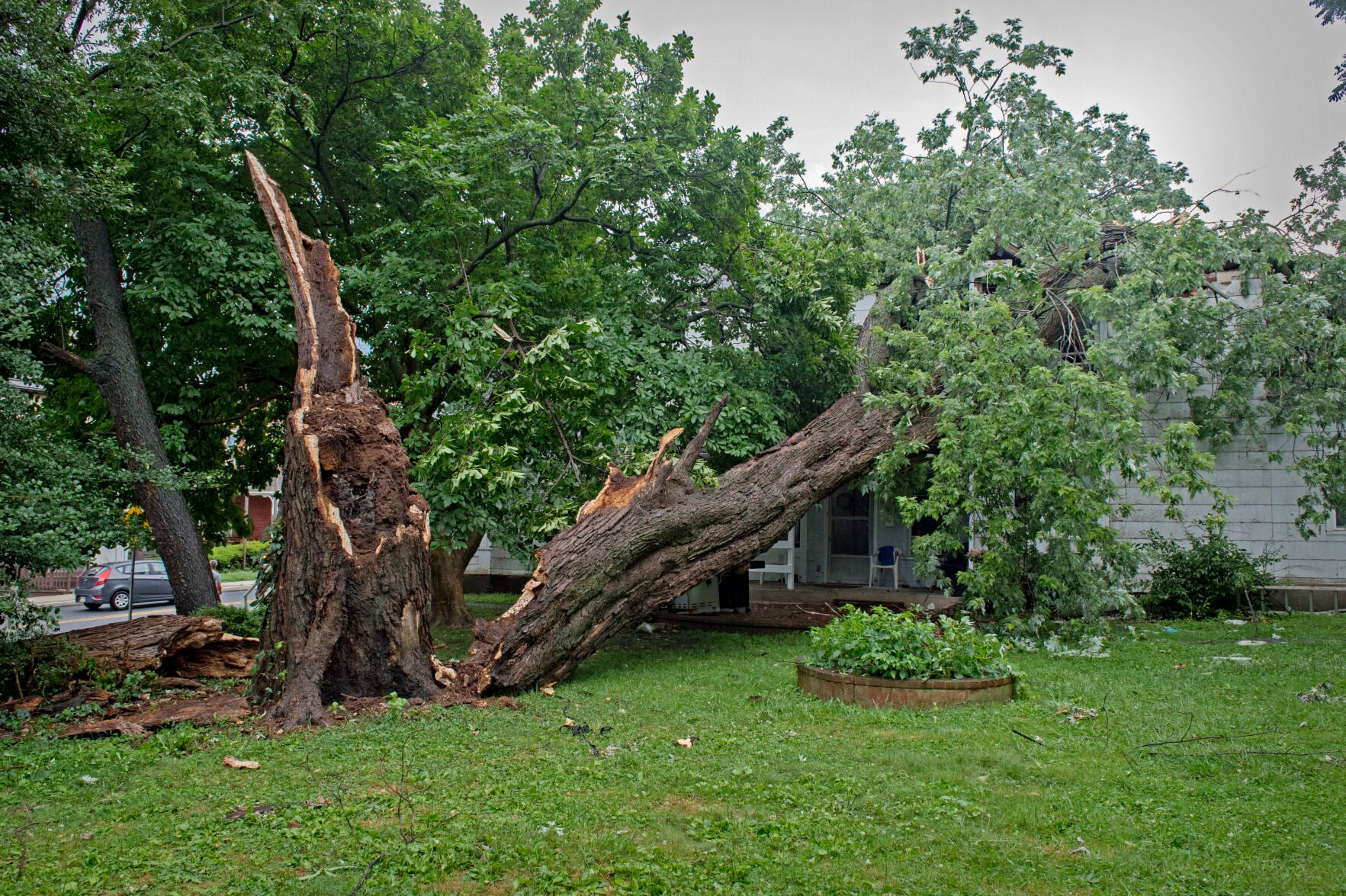
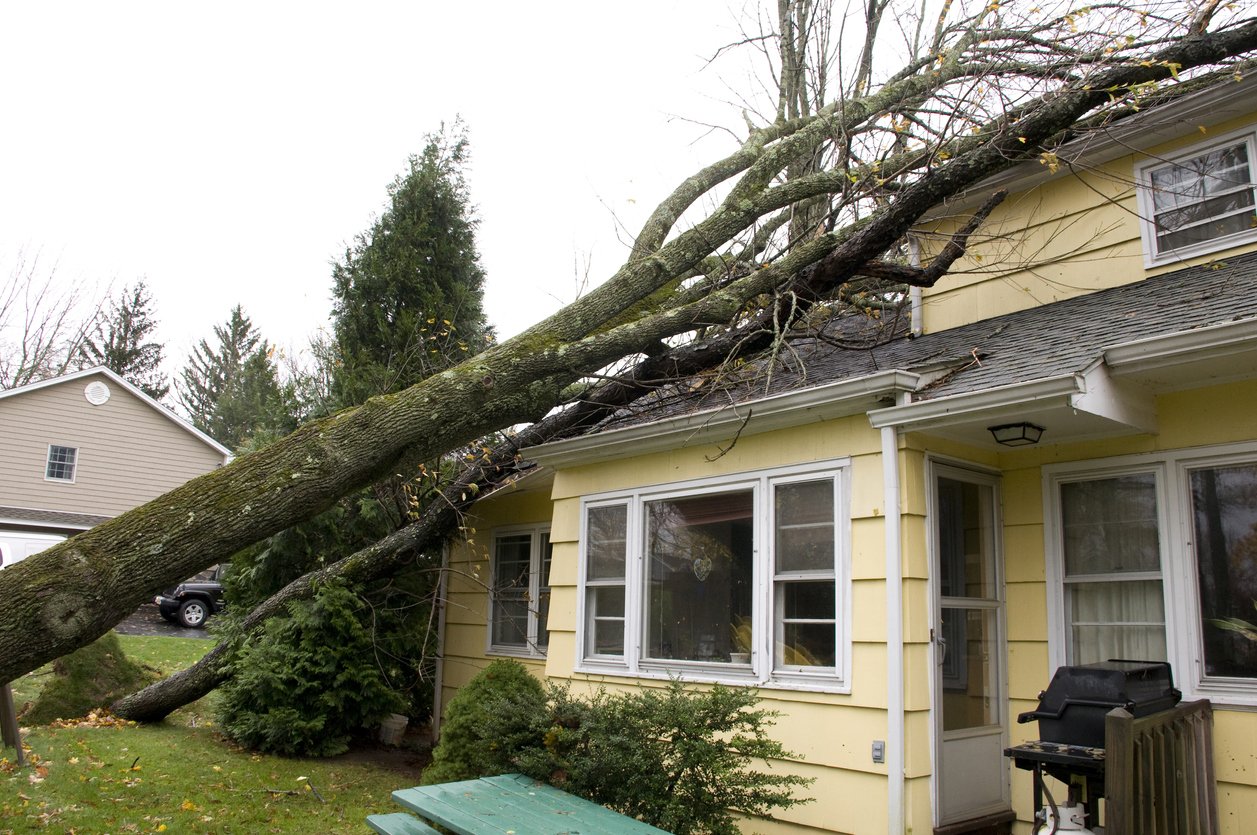
A previously acceptable tree may now have a snapped branch, cracked union, hanging limb, broken top, or partially attached section suspended in another branch.
That work should not wait for a routine seasonal pruning appointment when the damaged wood can reach an occupied area.
From the ground, look for newly exposed wood, branches hanging at unusual angles, split attachments, or fresh debris beneath the tree.
Do not stand underneath a hanging limb to inspect it more closely.
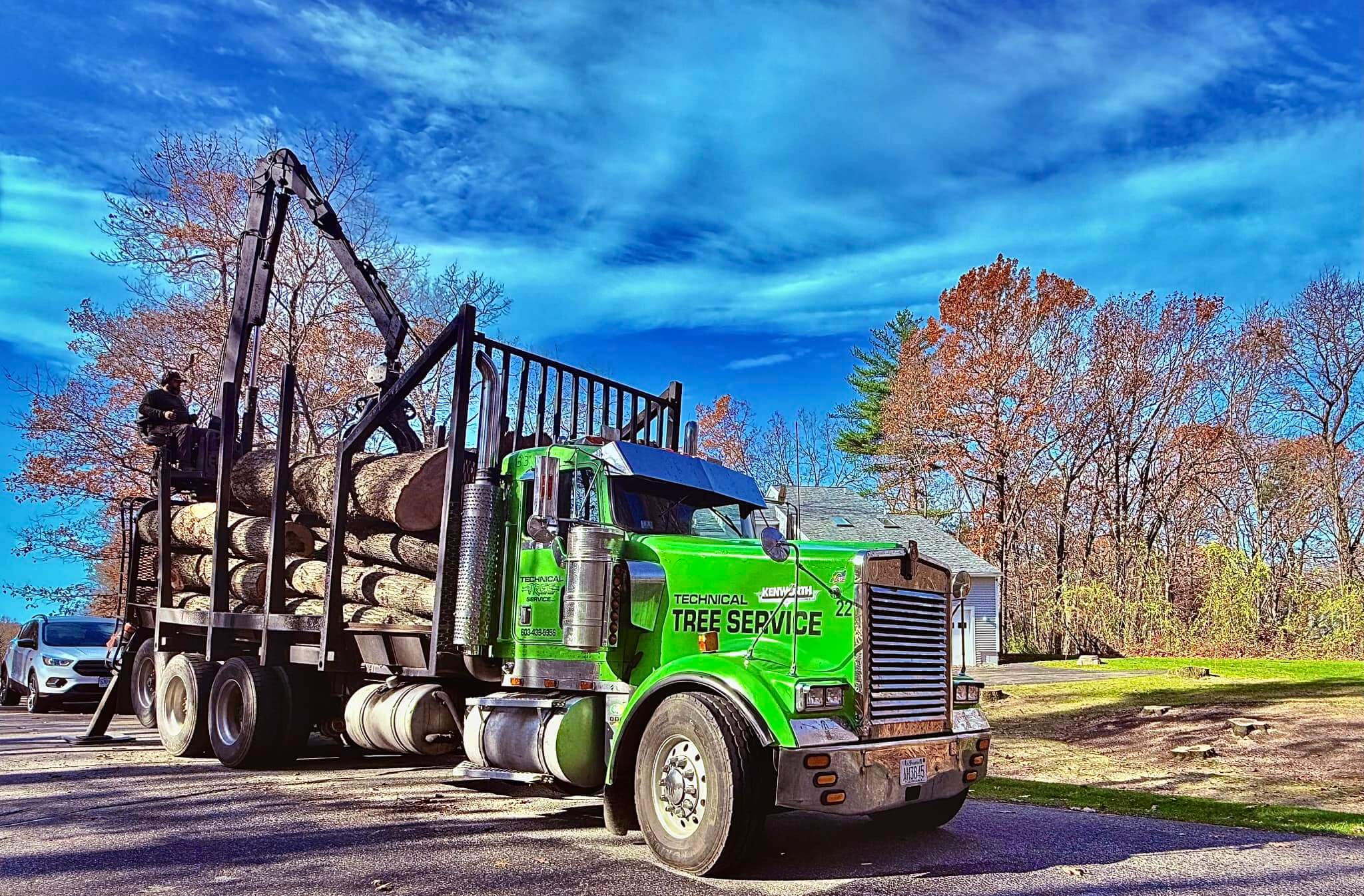
Technical Tree Service provides tree service in Hudson, NH that includes pruning, storm cleanup, tree assessment, and emergency response when storm damage creates a more immediate problem.
Planned Crown Cleaning Often Fits the Dormant Season
For many deciduous trees, the dormant season gives arborists a clearer view of branch structure because leaves are absent.
It can be easier to trace dead branches back to their attachment, identify crossing limbs, and see how the crown is organized.
That makes dormant-season work a practical option for planned maintenance.
There are exceptions.
Species, flowering cycle, disease concerns, tree condition, and pruning objective may affect timing. Hazardous broken or hanging branches also do not need to wait for dormancy simply because routine maintenance was planned for winter.
The pruning schedule should follow the tree and the problem.
Crown Cleaning, Clearance Pruning, and Reduction Solve Different Problems
A dead branch over a roof may be handled through crown cleaning.
A healthy branch growing against the roof may need clearance pruning.
A long, heavy limb that is structurally sound but extends too far over a target may call for carefully planned reduction.
Those are different objectives even if all three jobs involve a saw.
Technical Tree Service’s Hudson maintenance program separates crown cleaning, structural pruning, clearance pruning, and crown reduction for this reason.
Using the right objective helps avoid removing more canopy than the situation requires.
Why “Take a Little Off Everywhere” Is Usually a Poor Specification
A vague request to trim the whole tree can lead to unnecessary cuts.
A better pruning plan describes what the work is meant to accomplish.
For example:
“Remove selected deadwood above the driveway and front walk.”
That tells the arborist where the concern is and what the objective should be.
Compare that with:
“Thin everything out before winter.”
The second request gives little information about what problem is actually being solved.
Professional pruning works better when each cut has a reason.
Technical Tree Service’s professional tree trimming page separates crown cleaning from thinning, reduction, and clearance work rather than treating all branch removal as the same service.
Does Crown Cleaning Need to Be Done Every Year?
Not necessarily.
A young tree with few defects may go for a long period without meaningful deadwood.
An older tree over a commercial parking area may deserve more frequent inspection.
A tree that has recently been through construction or severe storm damage may also need closer follow-up than one growing in a stable site.
The inspection schedule should reflect the condition of the tree and the consequences if a branch fails.
Trees around high-use areas may justify more frequent review.
An additional inspection also makes sense after major storms or when the homeowner notices a visible change.
This condition-based approach is more useful than putting every tree on an automatic annual pruning schedule.
What an Arborist Looks for During a Crown-Cleaning Inspection
The inspection is broader than looking for gray branches.
An arborist may evaluate where the deadwood is located, its diameter, whether it is firmly attached or hanging, the condition of the branch union, whether nearby branches are rubbing, and whether decay is visible around the attachment.
The rest of the canopy matters too.
Multiple dead branches concentrated on one side of a tree can tell a different story from scattered small interior deadwood.
The arborist may also look at trunk wounds, cavities, fungal growth, soil conditions, root-zone changes, construction history, and signs of storm damage.
That context helps determine whether the job remains simple crown cleaning or needs a broader tree-health or structural assessment.
Large Mature Trees May Need More Than a Pole Saw
Deadwood high in a mature oak, maple, or pine can involve substantial branch weight and limited drop space.
Access changes the work.
A limb above open lawn may be handled differently from one above a roof, fence, driveway, ornamental planting, or neighboring property.
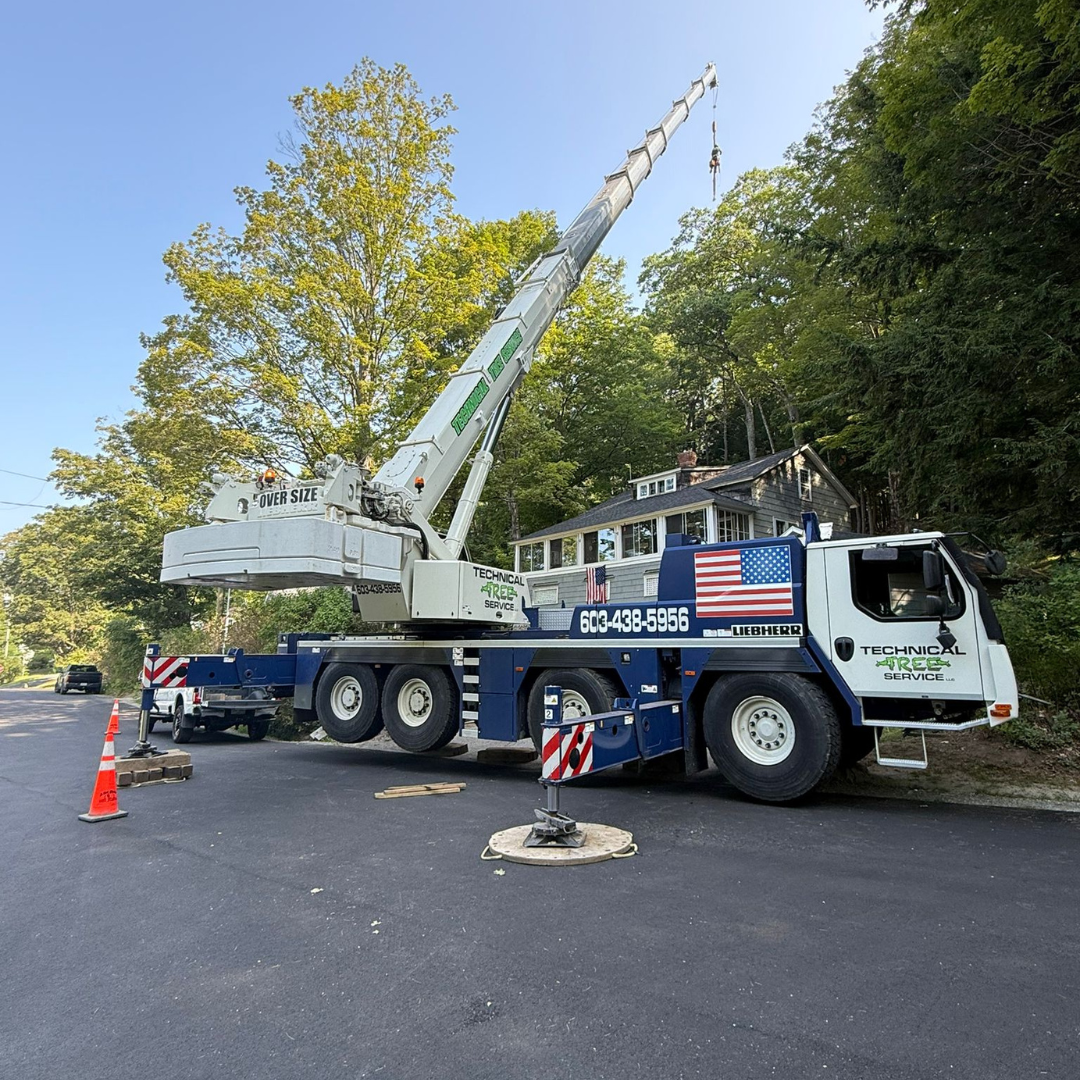
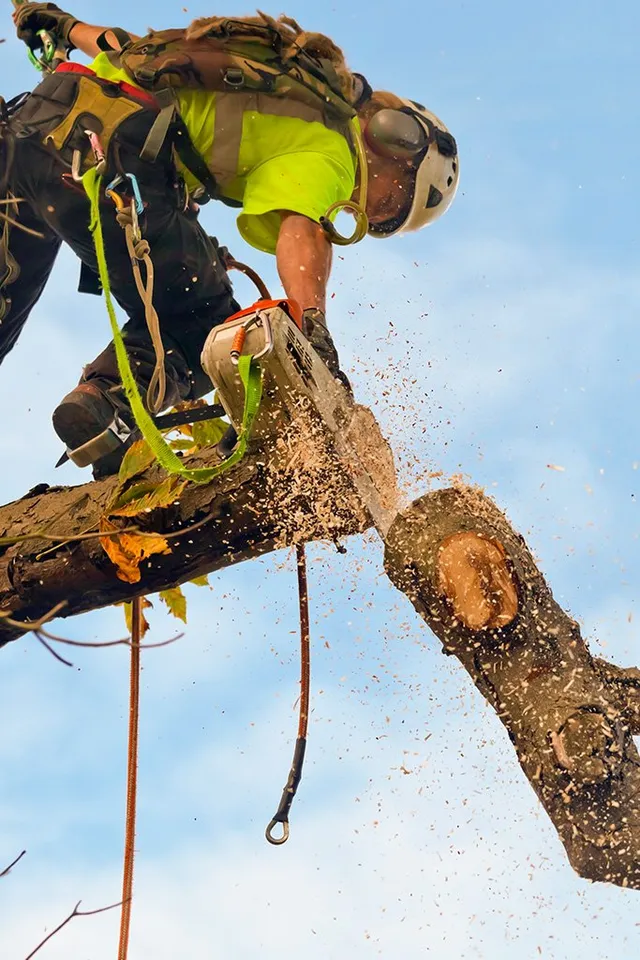
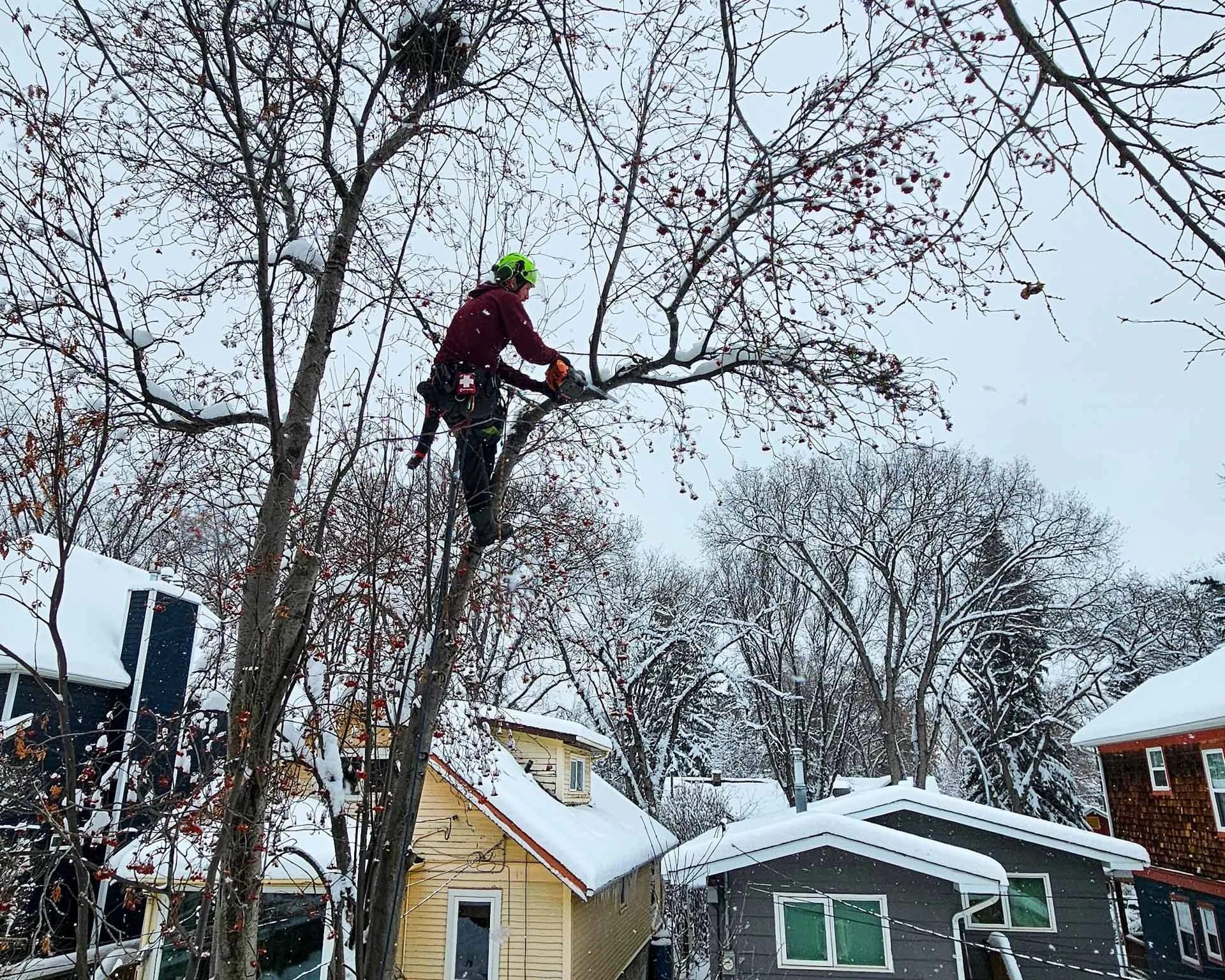
Depending on the tree and site, professional pruning may involve climbing systems, aerial equipment, rope rigging, or other methods that allow branches to be removed in controlled sections.
This is one reason high-canopy deadwood is different from pruning a small ornamental tree from the ground.
Homeowners should not climb into a mature tree or work near utility conductors to remove dead limbs.
Maintenance Should Preserve the Tree You Intend to Keep
Crown cleaning usually makes the most sense when the objective is to retain a mature tree while dealing with specific compromised branches.
That argues for restraint.
Removing dead and broken wood does not require stripping out healthy interior growth.
A properly cleaned tree may not look dramatically smaller when the job is finished.
That is often a good sign.
The goal was to address the selected branches, not redesign the tree.
Technical Tree Service makes the same distinction in its article on why tree trimming matters for homeowners, where pruning is tied to branch condition, clearance, structure, and property use rather than indiscriminate cutting.
Crown Cleaning as Part of Tree Maintenance in Hudson, NH
For Hudson homeowners, crown cleaning is most useful when it answers a specific maintenance need: deadwood above an occupied area, broken branches after weather, selected diseased or damaged limbs, or compromised branches identified during an inspection.
It can be combined with other maintenance when those objectives are actually present, but it should not automatically become thinning, reduction, or heavy canopy removal.
Technical Tree Service provides tree maintenance in Hudson, NH, including crown cleaning, pruning, tree-health evaluation, structural observations, and maintenance planning. The company also provides tree maintenance in Litchfield, NH and serves communities throughout southern New Hampshire.
If you can see large dead branches over a roof, driveway, walkway, patio, or other frequently used part of the property, an on-site inspection can establish which branches should be removed and whether the deadwood is an isolated maintenance issue or part of a larger change in the tree.
Technical Tree Service can be reached at (603) 438-5956.