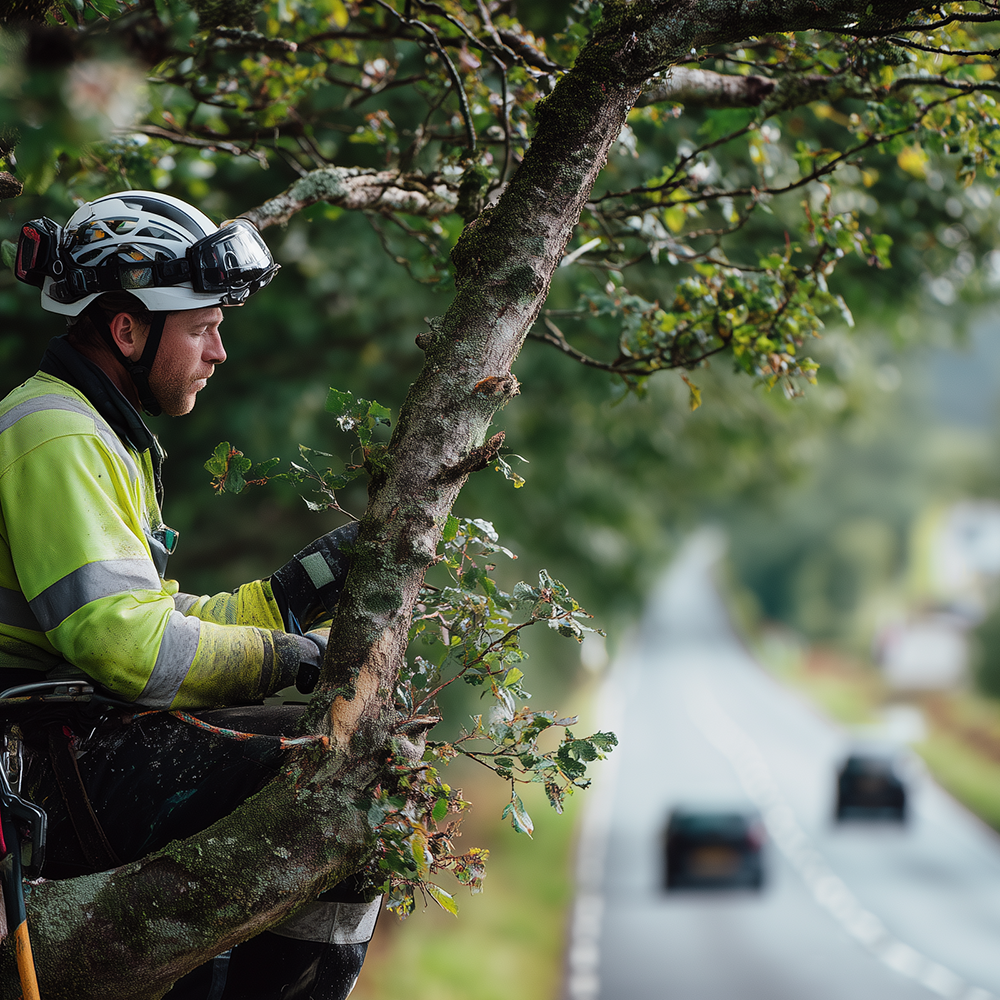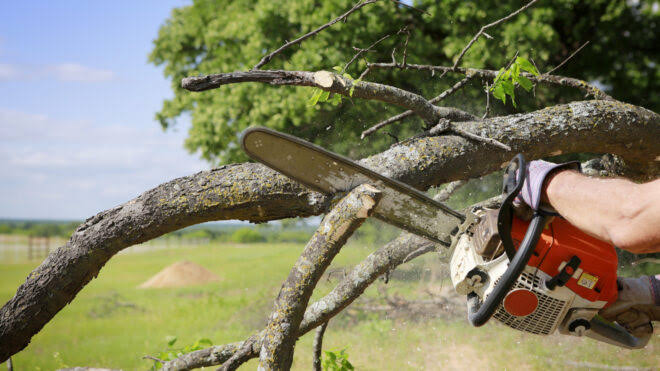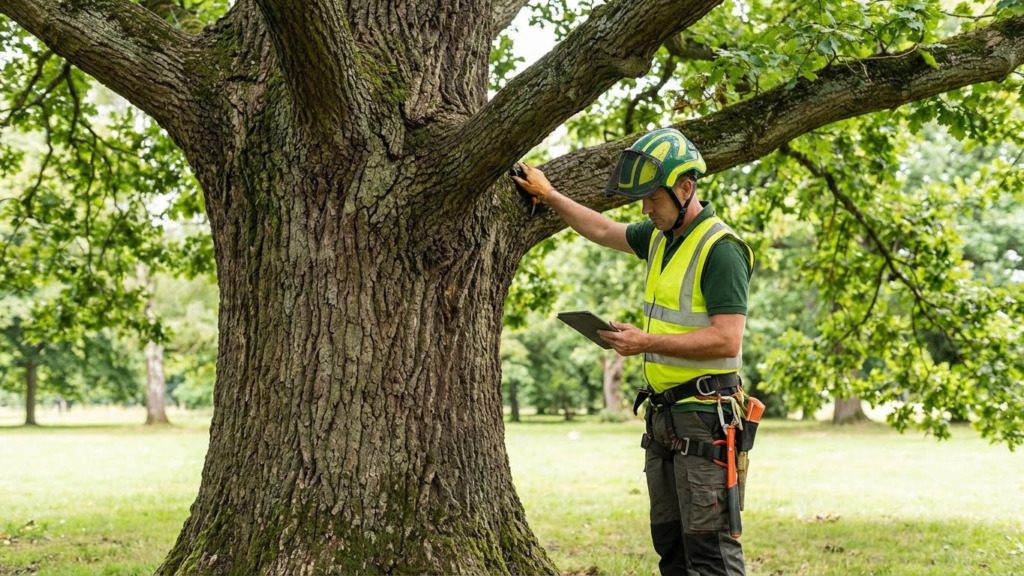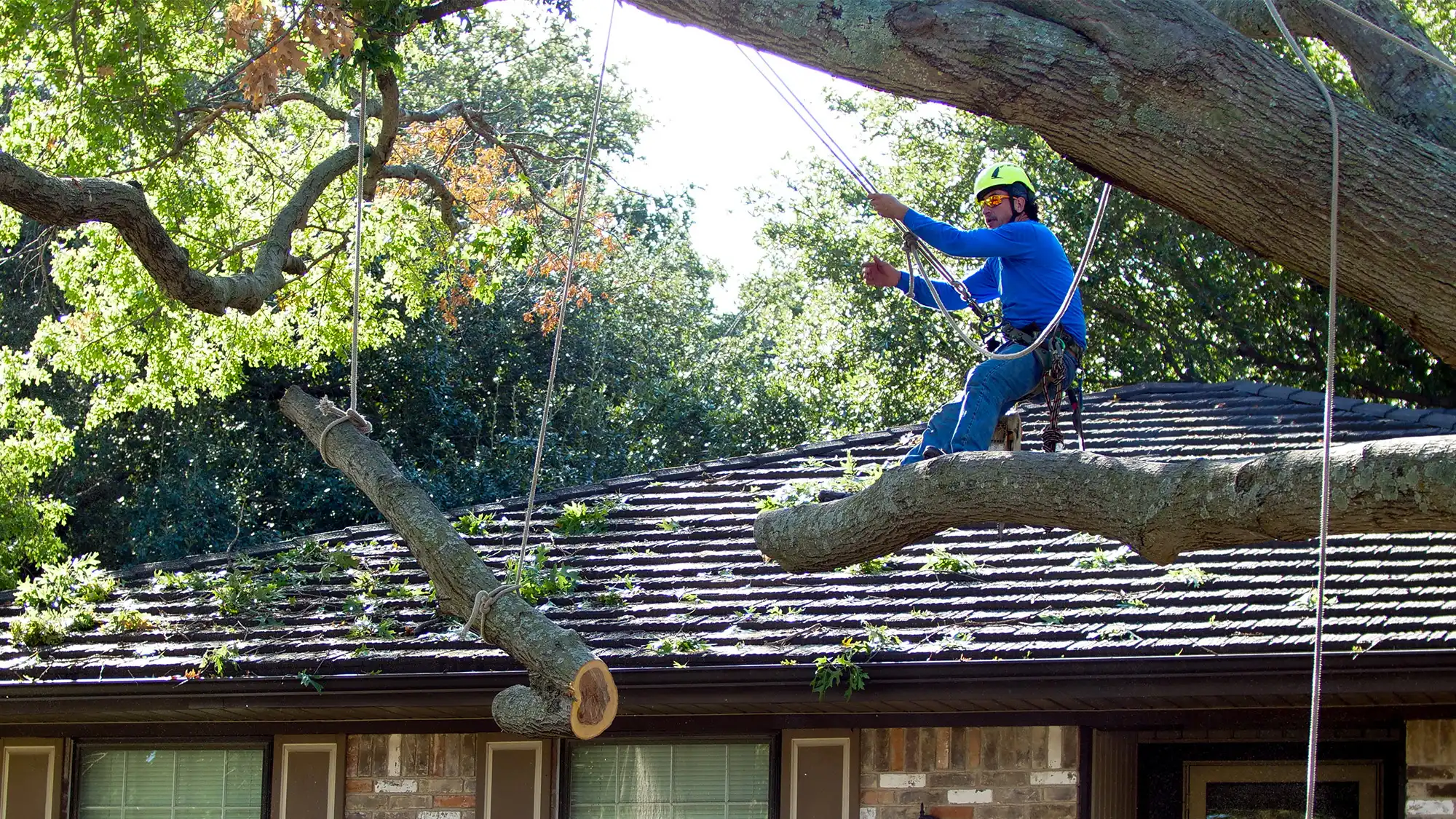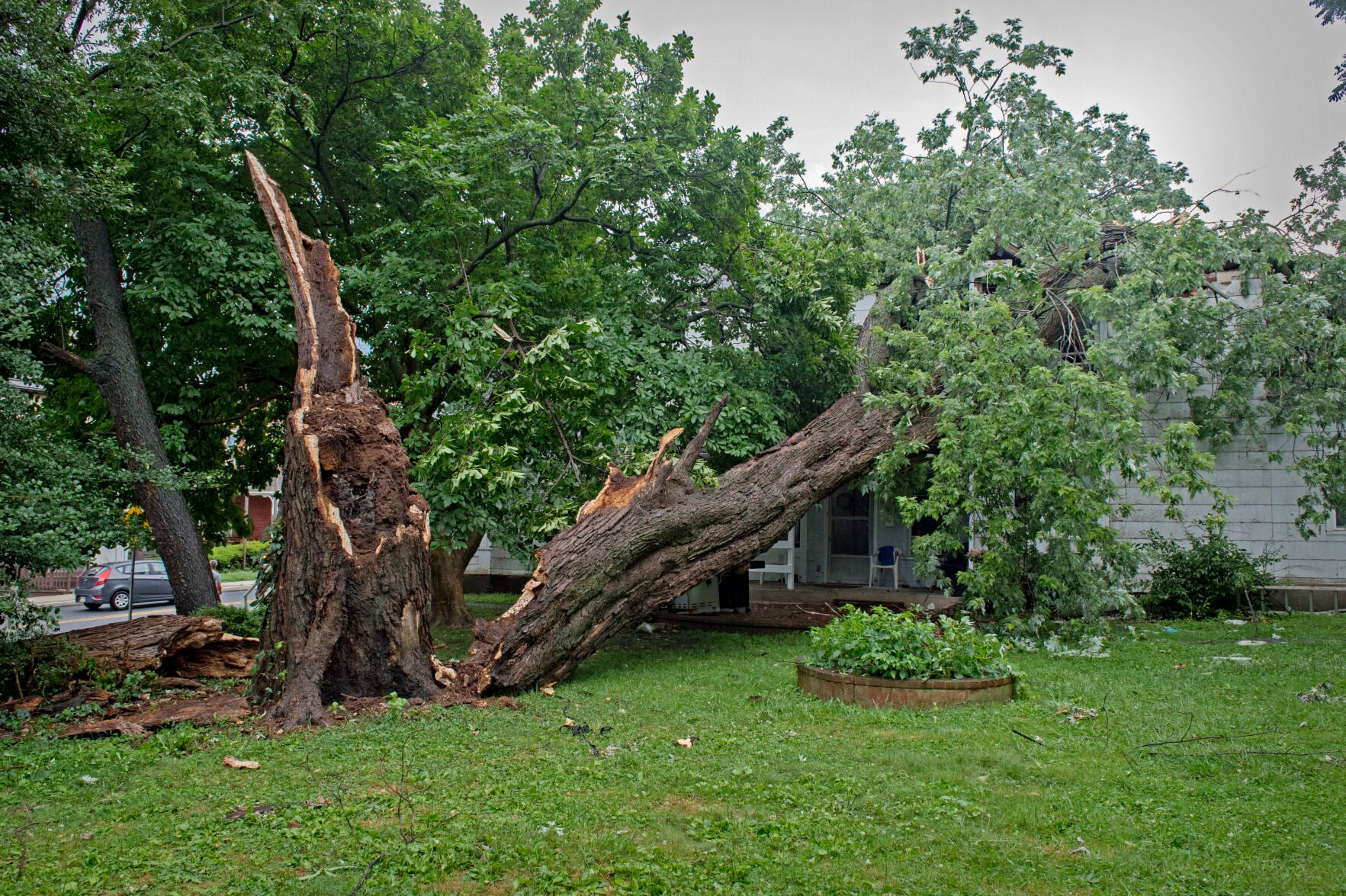
If you spot a dead or hanging branch, call an arborist promptly when the branch is broken and suspended over a house, driveway, walkway, parked vehicle, entrance, or another area people use.
Electrical wires make the situation more urgent. Stay away from a branch that is touching, resting on, or close enough to fall into a power line and contact the utility rather than trying to move it yourself.
A dead branch that remains firmly attached away from people and property may be scheduled for normal pruning instead of emergency response.
That distinction matters when you are searching for an arborist in Goffstown, NH.
The useful question is not simply whether a branch is dead.
We want to know how it is attached, what could be hit if it falls, whether the condition changed recently, and what the rest of the tree is telling us.
Dead and hanging are not the same condition
A dead branch has stopped producing living tissue.
It may remain attached for a considerable period.
A hanging branch has already experienced some form of failure or displacement. It may be partially attached, peeled from a union, lodged in neighboring branches, or suspended after breaking.
That changes how we approach the area beneath it.
Tree risk assessment looks at dead branches separately from broken or hanging branches, then considers branch size, fall distance, targets, likelihood of failure, and consequences.
So when you call us, “There is a dead branch” and “There is a branch hanging by a strip of wood over my driveway” describe two different calls.
A dead branch does not automatically make the whole tree dangerous
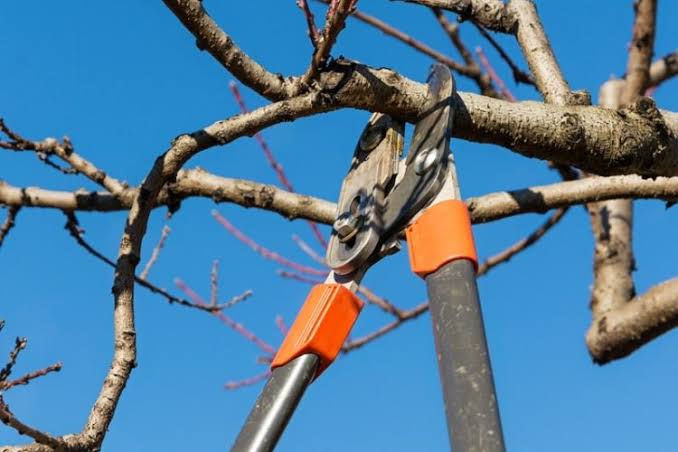
Trees shed branches for many reasons.
A branch may die because it was shaded out.
It may have been damaged during an earlier storm.
There may be localized decay, an old pruning injury, insect damage, drought stress, or a larger health issue.
Finding one dead branch does not tell us which explanation applies.
It also does not automatically mean the tree should be removed.
Our arborist services in Goffstown, NH include inspecting the branch along with the canopy, trunk, major attachments, root flare, surrounding soil and nearby targets.
Sometimes the recommendation is deadwood pruning.
Sometimes another condition elsewhere in the tree deserves more attention.
Where the branch can land matters
A branch over an open wooded corner and the same branch over your front steps do not create the same exposure.
The potential for damage or injury from dead branches depends partly on branch size and distance from potential targets.
Targets around a Goffstown home may include:
- the roof;
- parked vehicles;
- a driveway;
- a walkway;
- a deck or patio;
- children’s play areas;
- a garage;
- the neighbor’s property;
- a public road;
- electrical or communication lines.
This is why two branches that look similar in a photograph can receive different work priorities after an on-site assessment.
A branch hanging over the driveway deserves a closer look
Driveways are easy to underestimate because nobody stands in them all day.
People still walk beneath the tree.
Cars remain parked there for hours.
Delivery drivers use the space.
Snow removal equipment passes beneath the canopy.
A damaged branch may also block the only vehicle access to the house if it falls.
If heavy broken wood is suspended directly over that area, keep vehicles and people out from underneath it until the condition can be evaluated.
Do not park under it because the weather seems calm.
Broken branches can remain lodged in the canopy
A storm does not always drop the damaged branch to the ground.
A broken limb can catch in another branch.
From below, it may look as though it is still attached to the tree.
Look for a fresh break, exposed wood, hanging bark, an unnatural angle, or a branch that moved after a storm and no longer follows the surrounding canopy.
Do the inspection from a safe location.
Do not shake the tree, pull the branch with a rope, or stand underneath it to get a better photograph.
A lodged branch can move when the supporting limb moves.
Fresh cracks deserve attention before the branch breaks
Sometimes the branch is still alive and fully attached, but the union has started separating.
Look where the large limb joins the trunk or another major stem.
A new crack, opening seam, fresh exposed wood, or visible movement at that attachment deserves an arborist evaluation.
The canopy can remain green while that structural problem develops.
Leaves tell you that tissue is functioning.
They do not prove the attachment is sound.
Included bark can matter at a weak union
Some trees develop two stems or large branches that grow tightly together.
Bark can become enclosed between those stems instead of forming a stronger wood connection across the union.
That does not make every codominant tree an emergency.
It gives the arborist another structural feature to examine, especially when a crack is developing or one side carries a large amount of canopy over a target.
Technical Tree Service’s Goffstown arborist service includes evaluation of weak branch unions and included bark when those conditions are present.
Previous branch failure is useful evidence
If one limb recently broke, look at the rest of the tree from a safe distance.
Are there several branches with the same attachment pattern?
Has this tree dropped large limbs before?
Did the break expose decay?
Is the remaining canopy now heavily weighted toward one side?
The fallen branch is sometimes the whole problem.
In other cases, it points toward a pattern worth investigating.
Deadwood throughout the crown is different from one dead branch
A mature tree with one shaded-out dead branch may need straightforward pruning.
When dead branches appear throughout the canopy, we want to look farther.
Widespread dieback can accompany root injury, drought stress, soil problems, pests, disease, construction damage, or broader decline.
That is where an arborist consultation becomes more useful than simply ordering the visible branch removed.
The branch may be the symptom you noticed first.
The root cause may be somewhere else.
Look at the branch collar and attachment, not just the tip
Homeowners usually notice dead leaves or bare twigs at the end of a limb.
An arborist also looks back toward the attachment.
We may be looking for:
- cracking;
- peeling or loose bark;
- cavities;
- discolored or decayed wood;
- fungal fruiting bodies;
- previous pruning wounds;
- weak unions;
- abnormal swelling or response growth.
The condition where the limb connects to the tree can tell us more than the appearance of the outer twigs.
A mushroom does not automatically mean the branch or tree needs removal
Fungal fruiting bodies can be associated with wood decay.
Their meaning depends on the fungus, its location and what tissue is affected.
A mushroom growing from mulch should not be interpreted the same way as a conk emerging from a major branch attachment.
The presence of fungal growth is information for the assessment.
It is not a complete diagnosis.
The same applies to cavities.
A cavity deserves evaluation in the context of the remaining wood, surrounding defects, tree architecture and targets.
A hollow-looking area is not a removal decision by itself
Some competitor articles reduce this to “hollow tree equals unsafe tree.”
That skips most of the assessment.
Trees can remain standing with cavities and internal decay.
The location and extent of that decay matter.
So do cracks, root conditions, remaining sound wood, canopy architecture and what would be struck if failure occurred.
If you find a cavity near the attachment of the dead branch you are concerned about, show it to the arborist.
Do not probe deeply into decayed wood or climb the tree to inspect it.
A new lean changes the call
Some trees have leaned for decades.
Their trunks may have developed that way while the root system adapted.
A tree that suddenly shifts after wind, saturated soil, excavation, or another event deserves a different response.
From a safe distance, look for:
- newly lifted soil;
- cracks in the ground;
- exposed roots;
- a root plate beginning to move;
- a visible change in trunk angle;
- branches suddenly resting against a structure.
When root movement accompanies a new lean, keep the potential fall area clear and call for an assessment promptly.
Snow and ice are part of the Goffstown context
Hillsborough County has a long history of winter storms capable of loading trees heavily.
Snow and ice can expose weak attachments that were less obvious during calm summer weather.
That does not mean every tree needs aggressive fall pruning.
It means known deadwood and visible defects are worth reviewing before they receive another season of snow, ice and wind.
Do not wait for winter if the branch is already hanging
Fall is a sensible time to review canopy structure.
It is not a deadline for every problem.
If the branch has already broken and is suspended above an occupied area in July, waiting until November adds no benefit.
Dead or diseased limbs can often be pruned outside a narrow seasonal window when the condition calls for it.
Scheduling depends on the tree, pruning objective and urgency.
Broken hazardous wood is handled according to the condition in front of us, not according to a generic pruning calendar.
Check trees after substantial wind, ice or snow
You do not need to climb the tree after every storm.
Walk the property once conditions are safe.
Look from several angles.
Compare the crown with how it looked before the weather event.
Things worth noting include:
- freshly exposed wood;
- broken limbs;
- branches hanging at a new angle;
- newly split unions;
- new trunk lean;
- lifted soil near roots;
- branches now contacting a structure;
- debris below the canopy that shows a recent break.
Take photographs from a safe location if the condition is visible.
Those images can help explain what changed even if the branch later moves.
A branch can break without falling immediately
This is one reason post-storm inspection matters.
The initial wind or snow load may fracture a limb without sending it to the ground.
The branch can remain caught in the canopy.
Later movement can come from ordinary wind, snow shedding, movement of the supporting branch, or continued separation at the break.
Do not assume that a damaged branch is stable because it survived the first night after the storm.
Look for the condition and control access underneath it.
Power lines change the response
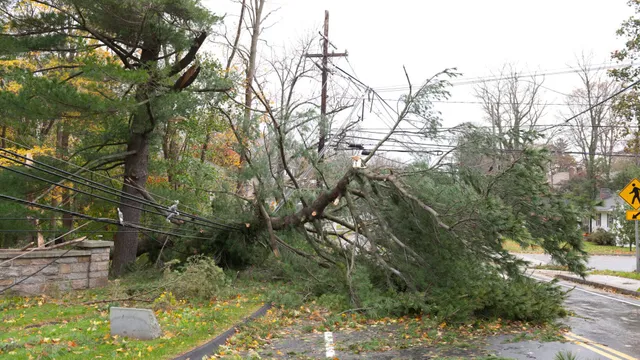
If a branch is contacting an electrical conductor, resting on a wire, or positioned where you would need to work close to the line, stop treating it like normal homeowner pruning.
Do not:
- pull the limb with a rope;
- use a pole saw;
- place a ladder against the tree;
- touch the branch to see whether it is energized;
- assume an insulated handle makes the job safe.
Electrical contact can occur through branches, tools, ropes and equipment.
Contact the electric utility for guidance when energized equipment is involved.
If a power line is down or the situation presents an immediate public hazard, keep people away and use the appropriate emergency channel.
Utility pruning and residential pruning are different work
Tree work around energized conductors has its own safety requirements.
For a homeowner, the practical lesson is simple.
Do not hire somebody with a chainsaw and assume ordinary tree experience qualifies that person to work around energized conductors.
Utility interaction should be identified before the cutting starts.
What can a homeowner reasonably prune?
There is no honest answer based only on a 15-foot tree height or a two-inch branch diameter.
For a small dead twig or branch that you can reach comfortably from the ground with ordinary hand pruning tools, homeowner pruning may be reasonable if there are no electrical, structural, or overhead hazards involved.
Once the work requires climbing, a ladder, aerial access, power equipment, controlling a heavy limb, or working underneath suspended wood, the risk changes.
The point is not to see how high you can reach.
It is to keep a simple maintenance cut from becoming an aerial tree-work operation.
A ladder does not turn elevated tree work into ground pruning
A ladder can put you close to the branch.
It does not control what the branch does after the cut.
Branches can swing, roll, split, peel, or strike the ladder.
Your position may also change as the limb’s weight is released.
Professional tree work uses climbing, aerial access, rigging and work-positioning systems selected for the particular tree and cut.
If the branch can only be reached from a ladder, that is a good point to reconsider DIY.
Be cautious with pole saws beneath deadwood
A pole saw lets you reach higher while remaining on the ground.
It also puts you beneath or close to the wood being cut.
If the branch is substantial, partially broken, tangled with other limbs, under tension or close to conductors, reach alone does not make the operation controlled.
Where will the branch move when the final fibers release?
Can it swing toward you?
Is another branch supporting it?
Does the cut change tension elsewhere in the crown?
Those are rigging and work-position questions, not simply reach questions.
Do not work underneath a suspended branch
If a limb is visibly broken and hanging overhead, create distance.
Move cars if you can do so without passing beneath the branch.
Keep children, pets, visitors and contractors away from the fall area.
Do not stand directly below it to point out the defect when the tree crew arrives.
You can show us from a safer angle.
The closer view can wait until the work zone is controlled.
When does a dead branch become an emergency call?
A useful way to judge urgency is to combine branch condition with exposure below it.
Call promptly when:
- a large broken section is suspended over an occupied area;
- the branch is actively separating;
- the branch or tree has landed on the house;
- required access is blocked;
- a tree has newly shifted at the roots;
- a major stem is opening at a crack;
- electrical lines are involved;
- storm damage continues to move or worsen.
Technical Tree Service provides 24/7 emergency tree service in Goffstown, NH for urgent tree hazards.
When can it usually be scheduled instead?
A branch can deserve professional pruning without creating a middle-of-the-night emergency.
A scheduled visit may make sense when deadwood remains attached, the area below can be kept clear, no electrical conductors are involved, and there are no signs of active structural movement.
We can then inspect the tree and plan the pruning rather than responding under emergency conditions.
If you are unsure which category your branch fits, describe where it is, what lies beneath it and whether the condition is new.
Photographs can help with the initial conversation.
Dead branch removal has a specific pruning objective
Professional pruning should start with a reason for each cut.
Crown cleaning can include selected removal of dead, dying, diseased, broken or weakly attached branches.
Technical Tree Service’s Goffstown arborist service similarly includes crown cleaning when dead, broken, damaged or diseased branches need attention.
The goal is not to make every tree canopy look thin.
It is to address the branches that have a reason to be removed.
Removing deadwood does not guarantee the tree cannot lose another branch
No pruning job can make a mature tree immune to future storms.
Wind can exceed previous loading.
Ice can accumulate.
Healthy live branches can fail.
Trees change as they grow.
That is why follow-up inspection matters when a tree has known structural conditions or the site has high target exposure.
One broken branch may be repairable without removing the tree
Storm damage often looks worse immediately after the event.
The tree may still have a stable trunk, viable roots and enough sound canopy to remain.
The arborist may recommend removing the broken limb and making an appropriate pruning cut.
Another tree may have a break that extends into a major stem or reveals decay at a central union.
Those are different outcomes.
Do not order whole-tree removal solely because one branch broke.
Let the remaining structure be evaluated.
A branch tear can affect the cut that comes next
When a heavy branch breaks naturally, it may peel bark and wood down the parent stem.
That leaves a different pruning problem from a clean branch break.
The remaining stub may need to be removed at a suitable pruning point while retaining as much sound tissue as the situation allows.
Cutting flush with the trunk is not the goal.
Neither is leaving an unnecessarily long damaged stub.
Professional pruning accounts for branch attachment and tree biology rather than making the easiest saw cut.
Repeated dead branches may justify a tree health assessment
If the canopy keeps developing new deadwood, ask why.
A tree health assessment can expand the inspection beyond the individual limb.
Technical Tree Service’s assessment process reviews the roots, trunk, canopy, growth, disease symptoms and site conditions, with additional diagnostic work when warranted.
A declining canopy can have several possible causes.
Removing dead branches addresses the deadwood.
It does not automatically address the reason those branches died.
Root damage can show up in the canopy later
Recent construction is useful history.
Tell the arborist if the property recently had:
- driveway excavation;
- trenching;
- septic work;
- grade changes;
- heavy equipment around the tree;
- soil added around the trunk;
- roots cut for utilities.
Root loss and soil compaction can affect water uptake, stability and canopy condition.
Dead branches may appear after the disturbance rather than on the day the roots were damaged.
The timeline can help connect what you see above ground with what happened below it.
The tree base deserves a look after branch failure
Do not stop the inspection at the broken limb.
From a safe distance, look around the trunk base.
New soil cracking, lifting roots, fungal growth, cavities, damage from equipment, or a buried root flare can change the recommendation.
A branch failure and a root problem in the same tree tell a different story from an isolated dead limb.
That is one reason our Goffstown arborist assessments include root-zone and soil conditions as well as canopy structure.
A dead tree and a tree with deadwood are different calls
A tree may contain dead branches while most of its crown remains alive.
A fully dead tree no longer has living canopy tissue and will be managed differently.
Even then, the urgency still depends partly on location.
A dead tree beside a house, driveway or road has different consequences from a snag standing deep in an unused woodland area.
The arborist considers condition and targets together before recommending the work sequence.
A brown branch is not always dead
Leaf color alone can be misleading.
Drought, insect feeding, disease, transplant stress, root damage or a broken vascular connection can all change foliage.
Conifers add another complication because normal needle shedding can be mistaken for widespread dieback.
If you cannot tell whether the branch is dead, do not start cutting simply to find out.
An arborist can examine buds, twigs, bark, branch structure and the rest of the canopy in context.
Fall inspection is useful before snow arrives
Goffstown’s winters give homeowners a practical reason to look up before the first major snow or ice event.
If you already know there is deadwood over the driveway, this is a sensible time to have it evaluated.
Fall inspection can also reveal old storm damage that disappeared behind foliage during summer.
Leaf drop may make branch architecture easier to see.
The purpose is planning.
It does not mean every healthy tree needs annual aggressive pruning before winter.
Spring is useful for finding winter damage
When snow and ice are gone, look for what changed.
Broken branch ends may be obvious.
Other signs are quieter.
A limb may sag lower than before.
An old crack may have widened.
One stem may now sit against another.
A hanging branch can be caught above the leaf canopy and become easier to see before spring foliage fills in.
If anything looks newly displaced, an arborist assessment can determine whether the tree needs pruning, monitoring, or more substantial work.
Summer tells you more about canopy response
During leaf-out, dead sections often become easier to separate from living canopy.
A branch with no foliage while surrounding branches are fully leafed may deserve inspection.
Sparse foliage across a larger portion of the crown raises a different question from one isolated dead limb.
This is where deadwood management and tree-health evaluation begin to overlap.
Do not assume the branch fell because the tree is diseased
Weather can break healthy wood.
Mechanical damage can break branches.
Poor attachments can fail.
Heavy end weight can contribute.
Decay and disease are other possibilities.
The cause matters because it influences what should happen to the rest of the tree.
An arborist should be able to explain what was observed rather than assigning every branch failure to “disease.”
Do not assume pruning automatically saves a defective union
Some structural problems can be managed through selective reduction, monitoring, or support systems.
Others cannot be corrected adequately with pruning.
A large crack through a major union requires evaluation of the whole structure.
Removing a little end weight may be part of a management plan in selected situations.
It does not repair separated wood.
The recommendation should match the defect.
Cabling and bracing are not substitutes for inspection
A homeowner may see two stems separating and ask whether they can simply be cabled together.
Support systems have specific applications.
They do not reverse decay or turn damaged wood back into intact wood.
Before discussing support, the arborist needs to understand the union, remaining structure, canopy, targets and expected loading.
Some trees may be candidates.
Others may need a different approach.
A hanging branch after a storm can contain stored tension
Storm-damaged wood does not always sit neutrally.
Bent limbs and partially supported branches can be loaded by their own weight or by neighboring branches.
Cutting one point can release that load and move the branch in a direction that was not obvious beforehand.
This is one reason storm cleanup is different from ordinary yard debris cutting.
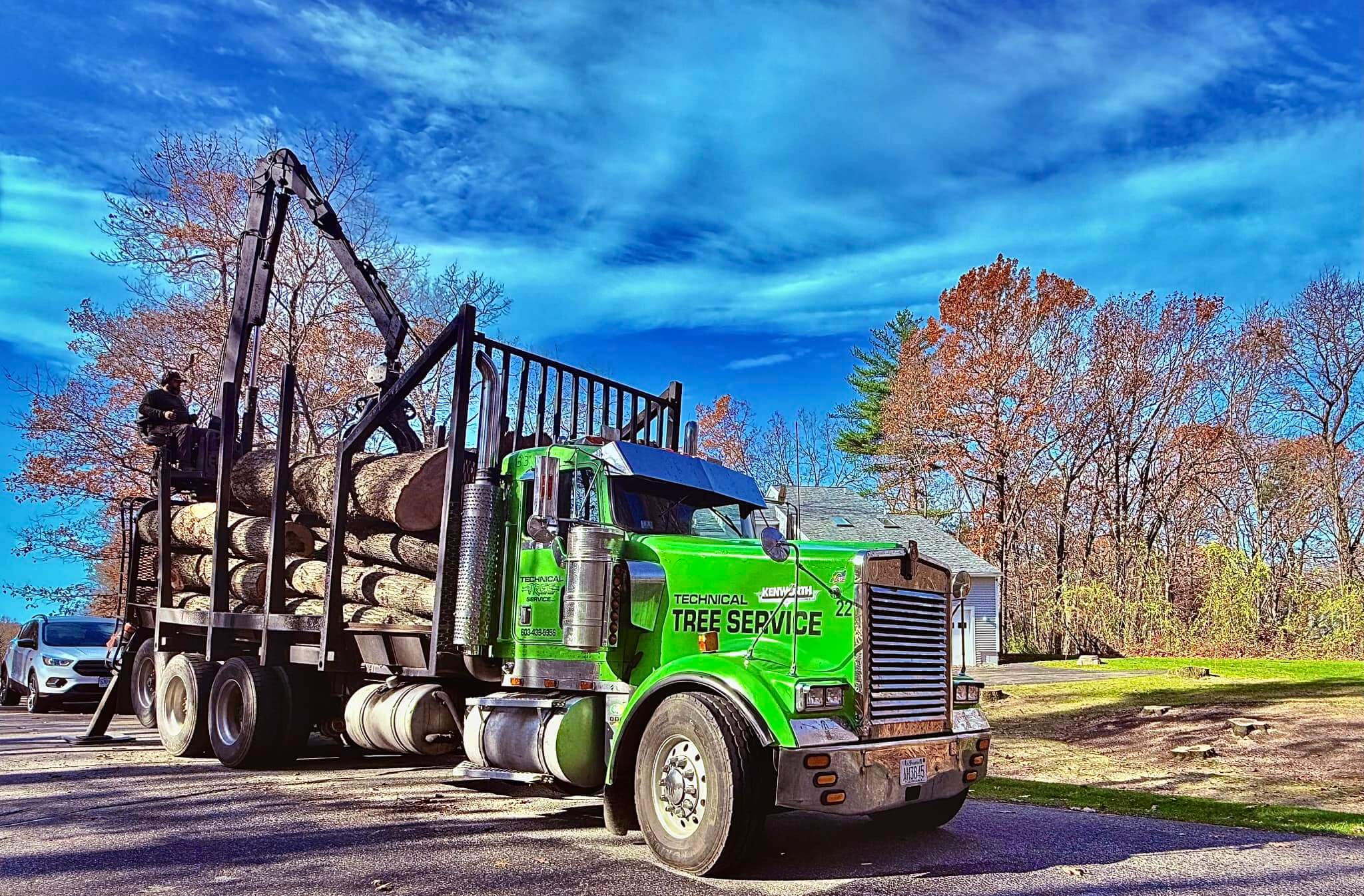
Technical Tree Service uses rigging, cranes and other equipment when a storm-damaged tree requires controlled removal.
Crane use is a job-specific choice
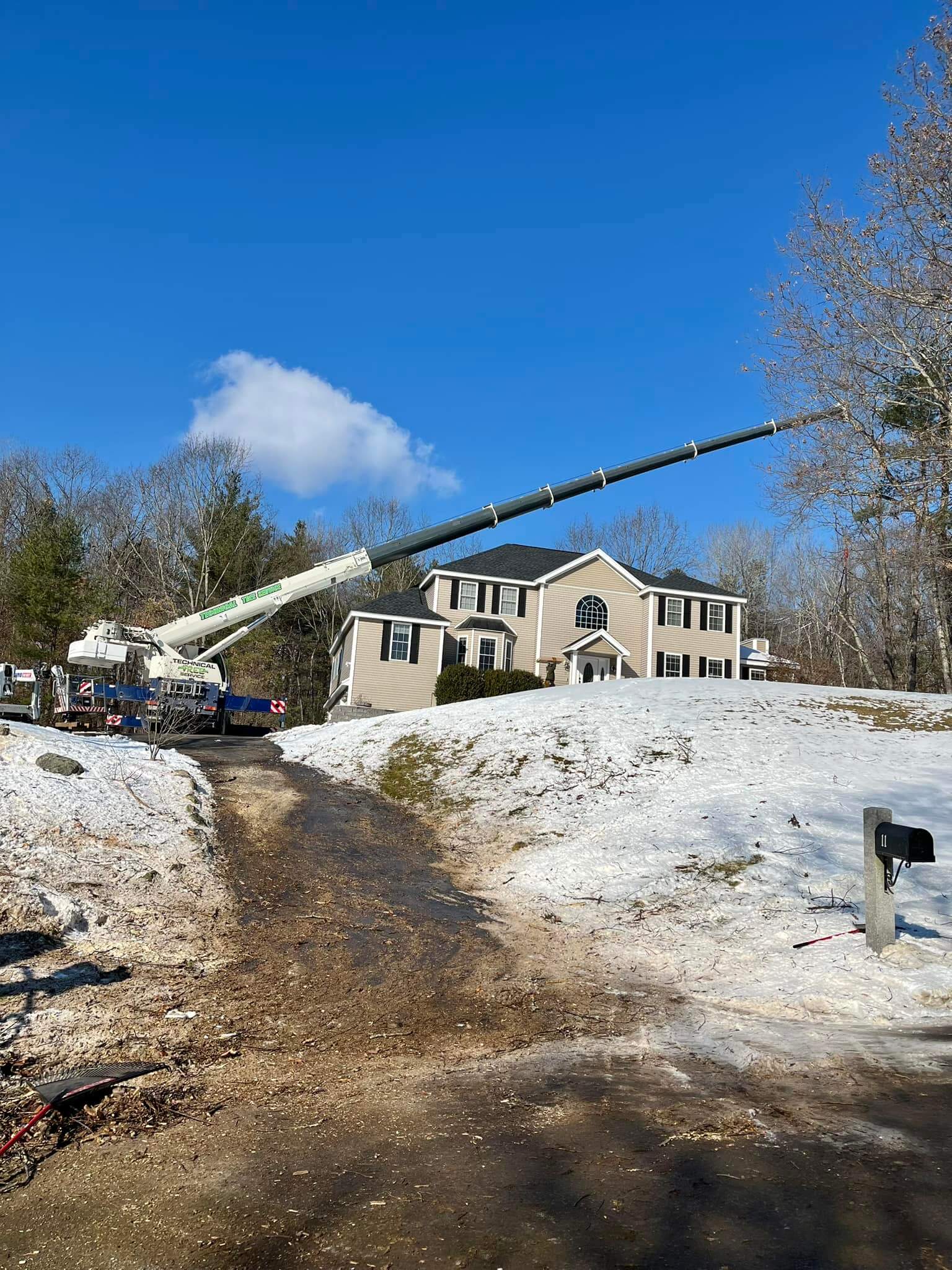
A crane can help control heavy tree sections when access, tree condition, surrounding structures and load handling make that approach appropriate.
Technical Tree Service publishes company-owned crane capability for tree work in Goffstown.
That does not mean every hanging branch needs a crane.
Some can be handled by climbing or aerial equipment.
Others require rigging.
The equipment comes after the tree and site assessment.
Bucket access depends on the property too
A bucket truck can create a stable work position for many pruning operations.
It still needs access and setup room.
Soft ground, septic areas, slopes, narrow driveways, fences and landscaping can affect where equipment can go.
Sometimes a climber is better suited to the tree.
Sometimes a crane or aerial lift changes the work plan.
An on-site look answers that better than selecting equipment from a photograph alone.
What should you photograph before calling?
If you can take photographs without entering the fall area, send a few different views.
Useful photos show:
- the whole tree;
- the broken or dead branch;
- where the branch attaches;
- what is underneath it;
- the trunk base;
- nearby buildings;
- overhead wires;
- driveway or equipment access.
One close-up of dead bark may show the defect.
A wide photo shows the consequences if the branch moves.
Both are useful.
Tell us when the condition appeared
Timing changes the assessment.
Let us know whether:
- the branch has been dead for several years;
- it broke last night;
- you noticed it after snow melted;
- the tree was recently struck by another falling tree;
- the lean changed after rain;
- excavation occurred near the roots last month.
Tree condition is easier to interpret when we know what changed and when.
You do not need to diagnose the problem before calling
Homeowners often feel they need to know whether the tree has rot, disease, a weak union, or root failure before contacting an arborist.
You do not.
Describe what you can see.
“There is a large branch with no leaves over the garage.”
“A limb cracked in the ice storm and is still caught in the tree.”
“The branch moved lower after the wind.”
“There are mushrooms near the trunk.”
“The whole tree started leaning after the storm.”
Those descriptions are useful starting points.
An arborist consultation can come before a quote for tree removal
If you are not sure whether the branch problem means pruning or removal, start with the decision rather than the removal estimate.
Our arborist consultation service is designed for property owners who need guidance before deciding on tree work.
The recommendation can then follow what is found on site.
That may be deadwood pruning, structural pruning, monitoring, a health assessment, storm cleanup, or removal.
Why professional tree service includes more than cutting
A branch problem involves at least two decisions.
First, what work should be done?
Second, how can that work be performed around the house, vehicles, landscape and other tree parts?
Our guide to what homeowners should know about professional tree service explains how assessment, pruning, removal, equipment and site protection fit together.
The saw cut is one part of the operation.
Planning where the wood will go matters too.
When tree removal enters the discussion
A dead branch alone does not establish that the tree needs removal.
Removal becomes more relevant when the arborist finds a larger condition that cannot reasonably be managed through pruning, monitoring, support, or other measures.
Examples can include severe structural failure, extensive decline, major root instability, or damage that compromises the remaining tree.
The recommendation should be tied to what was observed.
“Tree has a dead limb” is not enough reasoning for removing an otherwise retainable tree.
Bedford homeowners can use the same assessment approach
Technical Tree Service also provides arborist services in Bedford, NH.
The same questions apply there.
What failed?
What remains?
What could be struck?
Did the condition change recently?
Can the problem be addressed through pruning or does the tree need a broader evaluation?
Those questions are more dependable than choosing a service from the appearance of one branch.
When to call Technical Tree Service in Goffstown
Call when you see dead, broken, cracked, or hanging branches and are uncertain about the appropriate next step.
Tell us sooner when the branch is suspended over people or property, the tree changed after a storm, a major union is opening, roots have shifted, or required access is threatened.
For electrical involvement, stay clear and contact the utility as appropriate before approaching the tree.
Technical Tree Service serves Goffstown and surrounding southern New Hampshire communities with arborist assessments, pruning, tree health evaluations, storm cleanup, removal, company-owned crane capability, and 24/7 emergency tree service.
Call (603) 438-5956 to discuss what you are seeing.
You do not need to decide whether the tree needs pruning or removal before you call.
Start with the branch, what changed, and what is underneath it.