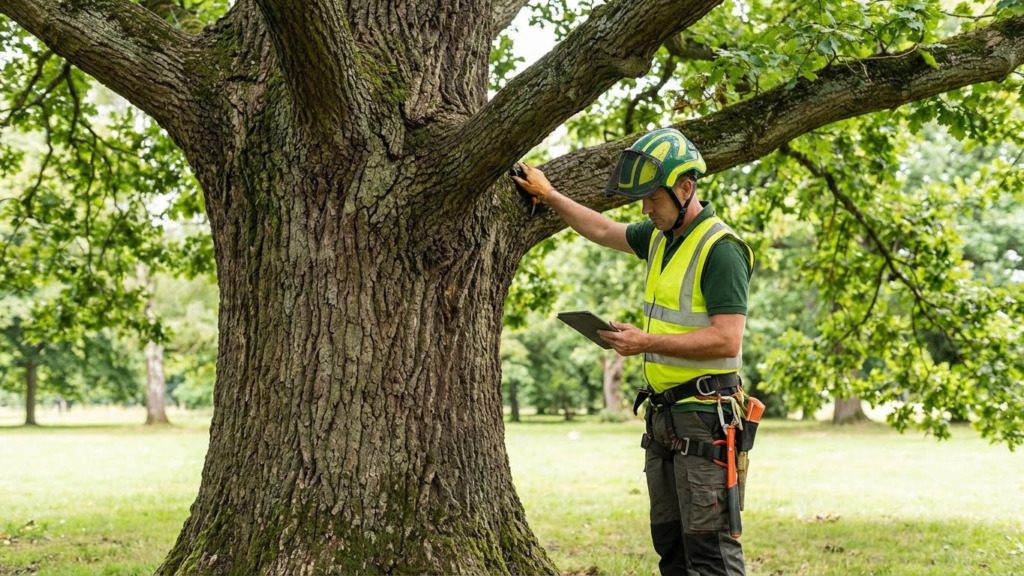
Clearance pruning near a roof starts by defining what needs to change, not by choosing an arbitrary number of feet and cutting everything inside that zone. An arborist looks at the branch that is approaching or contacting the house, the roof and gutter layout, the tree’s structure, available pruning points, expected regrowth, and anything else that affects how the branch will move or develop.
For clearance pruning in Hudson, NH, the objective should describe the separation the work needs to create while preserving as much sound tree structure as the situation allows.
Technical Tree Service treats clearance pruning as a separate pruning objective rather than another name for general trimming. Its professional tree trimming service distinguishes clearance work from crown cleaning, thinning, and crown reduction, while its arborist services in Hudson, NH include clearance around roofs and other property features.
The First Question Is What the Branch Is Actually Doing Near the Roof
A branch touching shingles presents a different problem from one that is several feet above the house but moves heavily in wind. A dead branch over the roof is different again.
That distinction determines the pruning objective.
If healthy live growth is extending toward the house, selective clearance or branch reduction may be appropriate. If the concern is deadwood suspended over the structure, the objective may be crown cleaning. A long limb with excessive extension over the roof may need reduction to a suitable lateral rather than complete removal.
Technical Tree Service makes the same distinction in its Hudson tree-care material: crown cleaning addresses selected dead or damaged branches, while clearance pruning addresses branches interfering with property features. Its Hudson crown-cleaning guide also separates deadwood removal from clearance and reduction instead of treating every branch over a roof as the same job.
This matters because a vague instruction such as “cut everything away from the house” gives the crew very little information about the desired finished tree.
Roof Clearance Is a Target, Not a Universal Number
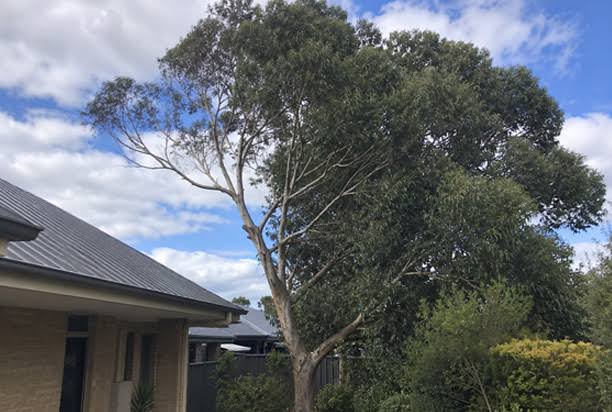
A homeowner may reasonably want a specific distance between branches and the shingles, fascia, gutters, chimney, siding, or another part of the house. That requested clearance becomes one input into the pruning plan.
It should not automatically become the pruning prescription.
The arborist still has to see where sound lateral branches are located. A branch cannot always be shortened to the exact point where an imaginary clearance line falls. Moving the cut several feet farther back may be necessary to reach an appropriate branch union. In another tree, taking the limb that far back could remove far more live foliage than the problem justifies.
Current ANSI A300 guidance supports an objective-based approach. Instead of treating one percentage of canopy removal as a universal limit, the pruning dose should account for the objective, tree species, vigor, health, structure, and expected response.
That is why two branches sitting the same distance from two roofs may receive very different prescriptions.
An Arborist Plans for Tomorrow’s Branch, Not Only Today’s Gap
Fresh clearance can look generous on the day the crew leaves and disappear faster than expected if the tree is vigorous or the selected cuts stimulate unwanted regrowth.
Species and growth habit matter. So does the orientation of the branch.
A long limb extending horizontally toward a roof creates a different maintenance problem from upright growth that has only begun entering the same space. The arborist can look at where the branch is likely to continue growing, how much movement it has under wind or snow loading, and whether suitable laterals allow the branch to be redirected away from the structure.
The goal is usually to create useful separation without repeatedly pushing the same limb back with poor cuts.
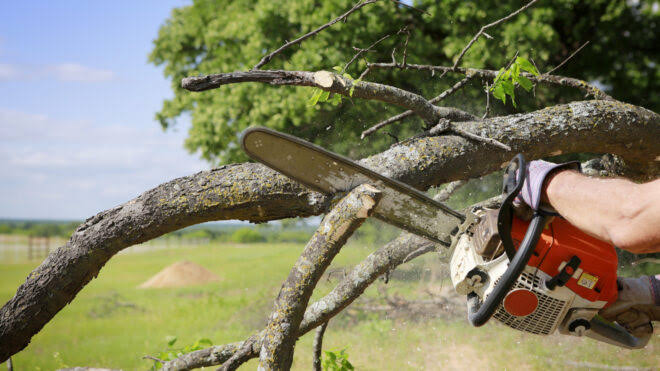
This is where reduction differs from topping. A proper reduction cut shortens a branch to a live lateral capable of continuing growth. Topping or indiscriminate heading leaves a very different structure and may trigger vigorous sprouts near the cuts.
When a branch is removed completely, the cut should also preserve the branch collar rather than cutting flush into the parent stem.
Homeowners looking specifically at local options can also review Technical Tree Service’s tree trimming in Hudson, NH.
Sometimes the Right Objective Is Less Pruning Than the Homeowner Expects
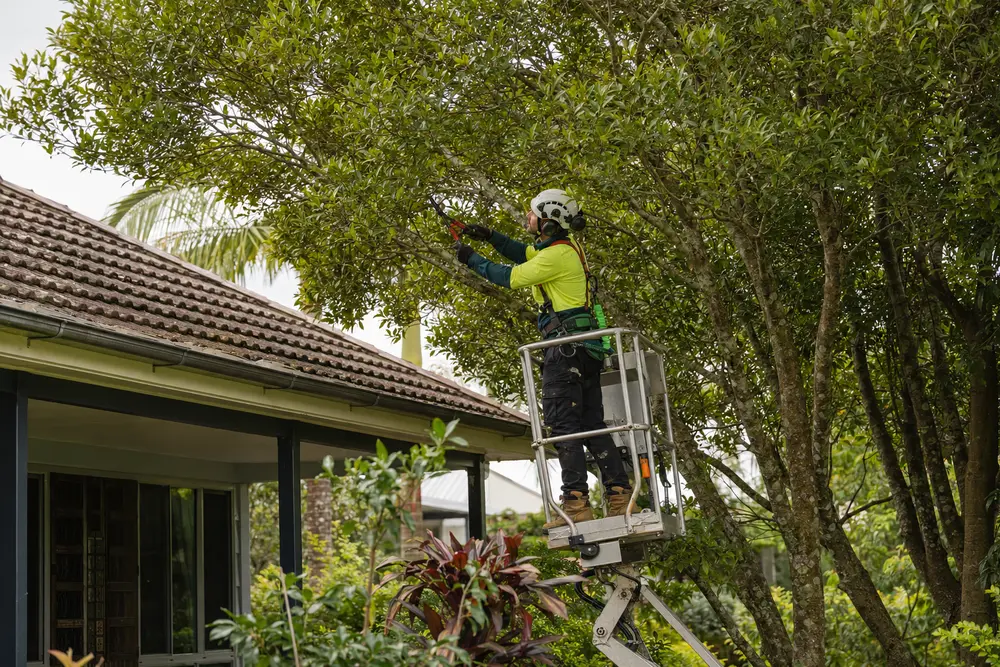
A tree does not have to be pulled far away from the entire house simply because several twigs are close to the roof.
If the conflict is limited to one portion of the crown, the better specification may be a small number of targeted reduction or removal cuts. The rest of the canopy can remain alone.
This is one reason “thin the whole tree” is a poor substitute for identifying the actual problem. Interior thinning does not automatically create durable building clearance. Removing too much interior foliage can also leave long branches concentrated toward their ends, the pattern commonly described as lion-tailing.
For roof clearance, the arborist should be able to explain what part of the crown is being changed and why, rather than treating overall canopy removal as the measurement of a successful job.
If the tree shows decay, unusual dieback, cracks, weak attachments, or other concerns beyond encroachment, a broader tree health assessment can help determine whether simple clearance pruning still makes sense.
Power Lines Can Change the Job Before the First Cut Is Made
A branch near a roof may also be near the electrical service to the home. At that point, the work is no longer only about tree structure and roof protection.
Electrical clearance follows a different set of safety requirements from ordinary roof clearance. Workers who are not qualified for line-clearance work must maintain required minimum approach distances from energized conductors, and specialized tree workers operate under additional training and work-practice requirements.
The familiar 10-foot electrical safety distance that applies in certain situations should not be confused with a universal recommendation for how far every tree should be pruned from a roof.
Hudson properties are served by Eversource for electric service. When branches are interacting with energized conductors or the service connection to the house, utility coordination may need to happen before pruning begins.
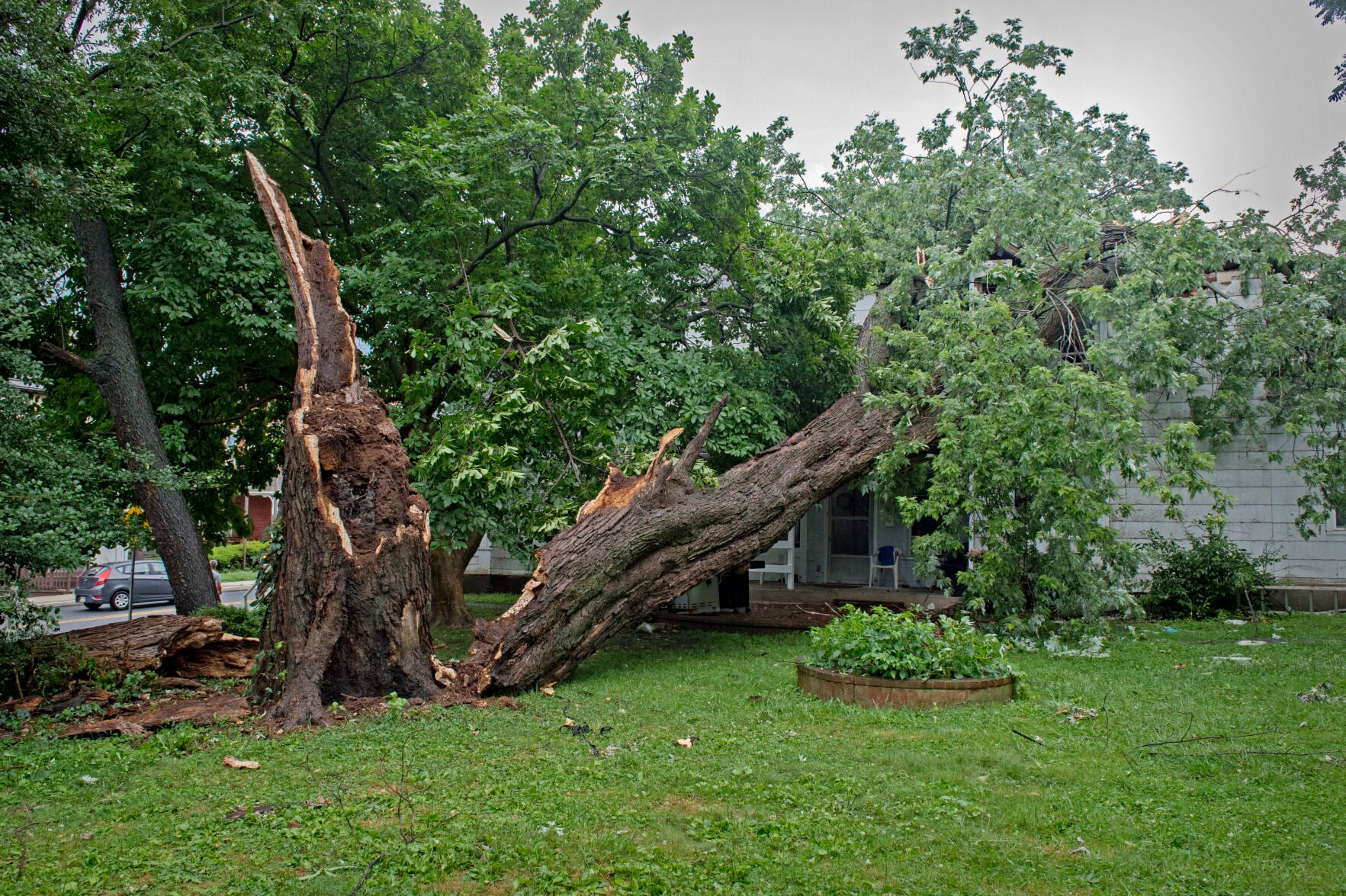
If a branch has already failed onto a structure or electrical equipment, the situation may belong under emergency tree service rather than routine clearance pruning.
Access and Rigging Affect Which Pruning Plan Is Practical
The tree may tell the arborist where the preferred cuts are. The property determines how those cuts can be reached and controlled.
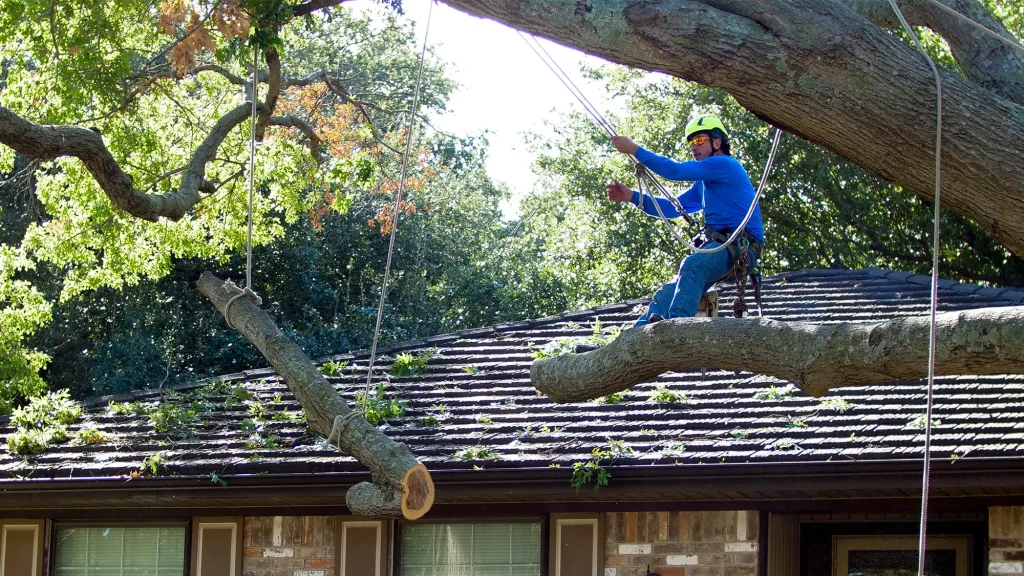
A large branch directly over shingles cannot simply be allowed to fall after it is cut. The crew may need climbing, aerial access, ropes, controlled lowering, or another setup appropriate to the branch and property.
That planning can affect the pruning specification itself. A technically possible cut may require a different access method because of the roof pitch, driveway, landscaping, neighboring property, fences, or limited equipment positioning.
Technical Tree Service states that it evaluates the tree and surrounding environment before trimming. When roof access or multiple objectives complicate the job, a tree-care consultation can establish the scope before work begins.
A Useful Pruning Specification Should Describe the Finished Condition
“Trim tree away from roof” leaves several decisions unanswered.
A clearer scope identifies the tree, the side of the crown involved, the structure requiring clearance, whether the objective is reduction, removal of selected branches, cleaning, or a combination, and the expected finished relationship between the remaining crown and the house.
The specification should also account for whether enough suitable pruning points exist to reach that objective without creating poor cuts.
That last point matters. Sometimes the requested amount of clearance cannot be produced responsibly in one pruning cycle while retaining the desired branch structure. The arborist may recommend a more moderate reduction, staged work, monitoring, or a different long-term decision.
If recurring roof interference is only one part of a larger structural problem, the discussion may eventually move beyond pruning. It still begins with inspection rather than assuming removal.
Technical Tree Service’s broader tree service in Hudson, NH includes pruning, tree evaluations, removal, and storm-related work, allowing the recommendation to follow the condition found on site instead of forcing every roof conflict into the same service.
What Homeowners Should Show the Arborist During the Inspection
The most useful starting point is the exact conflict.
Show where the branch touches or approaches the roof. Point out repeated gutter problems, visible rubbing, branches that move toward the house in wind, past pruning cuts, and any portion of the canopy that has returned quickly after earlier trimming.
Mention overhead conductors before work is scheduled.
The arborist can then inspect the branch from its point of origin through its available laterals instead of looking only at the last few feet over the shingles. That produces a better answer to the real question: where can this branch be shortened or removed while leaving a defensible tree structure behind?
Technical Tree Service also provides arborist services in Litchfield, NH for nearby properties facing similar tree-structure and clearance decisions.
For broader homeowner information about pruning needs, its guide explaining why tree trimming is important for homeowners in Manchester, NH covers warning signs that include limbs over roofs and branches near electrical lines.
Get the Objective Right Before Anyone Starts Cutting
Good clearance pruning leaves a measurable improvement around the house without creating a new structural problem in the tree.
That takes more than deciding that a branch looks too close. The arborist has to connect the clearance target to branch architecture, appropriate pruning points, tree response, access, electrical hazards when present, and the amount of work the tree can reasonably support.
Technical Tree Service provides professional tree trimming and arborist evaluations in Hudson and throughout its Southern New Hampshire service area. If branches are approaching your roof, request an on-site assessment so the pruning objective can be established from the actual tree, house, and site conditions before cuts are specified.