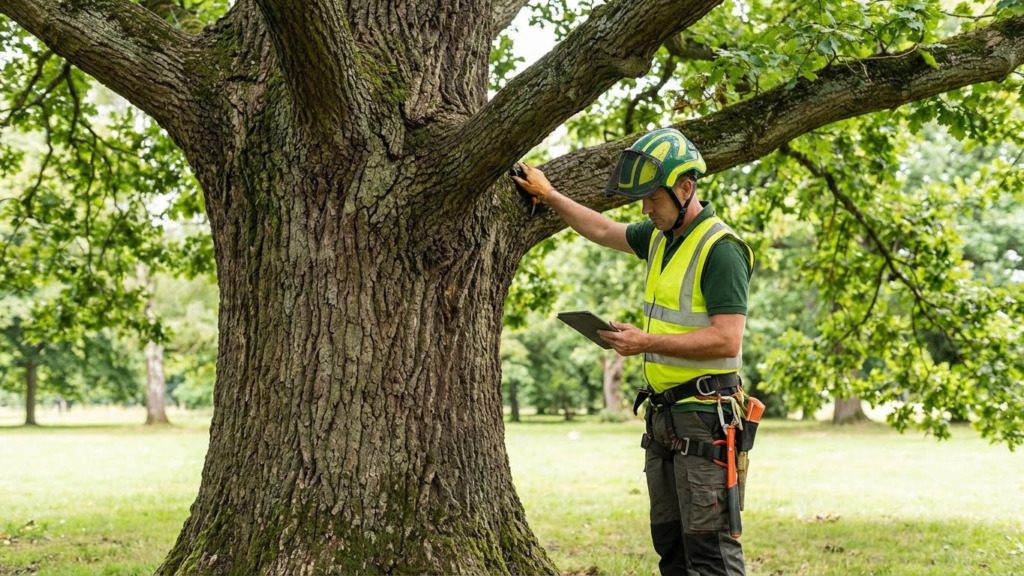
When an arborist evaluates a weak branch union on a tree in Bow, NH, the decision is based on more than whether the fork looks narrow. The inspection usually considers how the stems are attached, whether bark is trapped inside the union, the relative size of the branch and supporting stem, visible cracking or decay, the amount of weight carried by the branch, and what could be struck if the attachment failed.
Snow, ice, and strong winds add another reason to pay attention to structure in New Hampshire. A questionable union may remain unchanged for years, then be loaded differently during wet snow, freezing rain, or wind. That does not mean every V-shaped fork needs to be cut out. It means the union needs to be judged in the context of the whole tree and the property around it.
Technical Tree Service provides arborist services in Bow, NH for property owners who want a closer look at branch attachments, cracks, storm damage, tree structure, and other conditions that are difficult to judge from the ground.
What is a weak branch union?
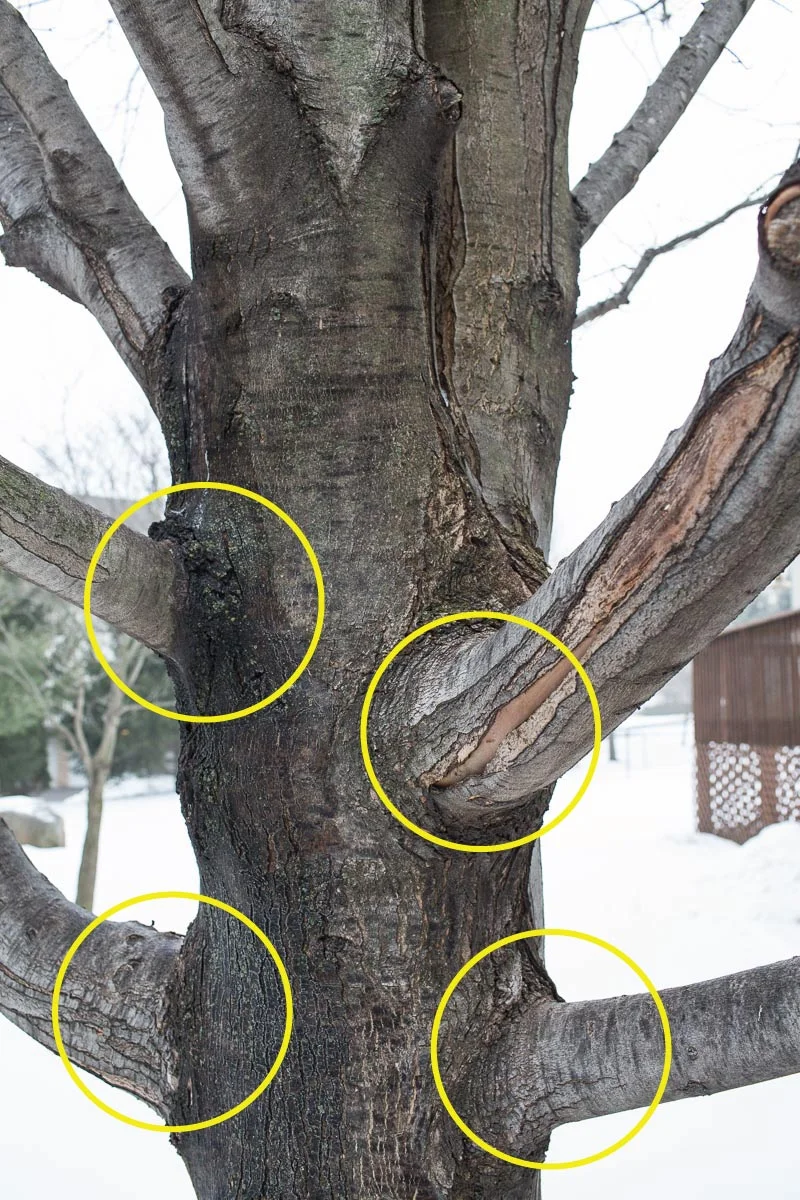
A branch union is the point where a branch joins a larger stem or where two stems meet. Some attachments develop strong wood connections that distribute loads well. Others develop structural features that make separation more likely under enough force.
Included bark is one of the conditions arborists watch closely. Instead of forming a clean wood-to-wood connection, bark becomes trapped between two expanding stems. As those stems continue to grow, the bark remains inside the junction rather than contributing structural wood to the attachment.
Codominant stems are another common concern. These are stems that originate near the same point and are close to one another in diameter. They are not automatically defective, but the combination of similar stem size, a narrow attachment, included bark, cracking, or heavy loading deserves closer evaluation.
Branch angle is a clue, not the final diagnosis
Property owners are often told that a U-shaped union is strong and a V-shaped union is weak. That rule can be useful as a first visual clue, but it is too simple to make the decision by itself.
Wide branch attachments often have more favorable structure, while very narrow forks are more likely to develop included bark. Still, an arborist wants to see what is actually happening inside and around the attachment rather than judging the tree from the letter shape alone.
A narrow union without visible cracking may call for monitoring or structural pruning. A similar-looking union with a deep bark inclusion, an opening seam, decay, and a large branch over a roof creates a different situation.
Included bark changes how the two stems are connected
Included bark can appear as a narrow seam running down into the fork. In some trees, the stems press tightly against one another as they enlarge, trapping bark between them.
The concern is mechanical. Bark does not create the same structural connection as interlocking wood. If a large portion of the union contains bark instead of connected wood fibers, the attachment can be less resistant to forces pulling the stems apart.
An arborist may also look for unusual swelling or ridges around the junction. Those growth patterns can show how the tree has been adding wood around an area under repeated mechanical stress. Swelling by itself does not prove that failure is about to occur, but it helps build the structural picture.
Arborists compare branch diameter with the supporting stem
The size relationship between a branch and its supporting stem is called the branch aspect ratio. For structural pruning, branches that remain substantially smaller than the stem supporting them generally develop stronger attachments than branches that become nearly equal in diameter.
A commonly used structural-pruning goal is to keep permanent branches at about half the diameter of the supporting trunk or less when possible. That is particularly useful when training younger trees.
It should not be treated as a rule that says every branch above a certain percentage must be removed. Mature trees can have large branches or codominant stems that require a more careful assessment before deciding whether pruning, support, monitoring, or removal is appropriate.
Nearly equal stems deserve a closer look
When two large stems rise from the same point and have similar diameters, neither one has developed as a clearly subordinate branch. Arborists refer to this arrangement as codominance.
The arrangement becomes more concerning when the stems also have included bark or a narrow union. Wind, snow, and ice can load the two stems in different directions, concentrating force at the attachment between them.
This is one reason structural pruning is easier when a tree is young. A small competing stem can often be shortened early so the main leader continues developing without requiring a large cut later.
Fresh cracks change the priority of the inspection
A visible crack at a main branch union is different from a tight union that has shown no sign of movement.
An arborist will look at where the crack begins, how far it extends, whether the two sides appear to be separating, and what part of the crown is supported by the damaged attachment. Fresh exposed wood or a seam that opened after a wind or ice event can indicate that the union has already started to move.
A large cracked union above a driveway, roof, patio, or frequently used part of the yard deserves more immediate attention than the same defect in an area where nobody normally goes.
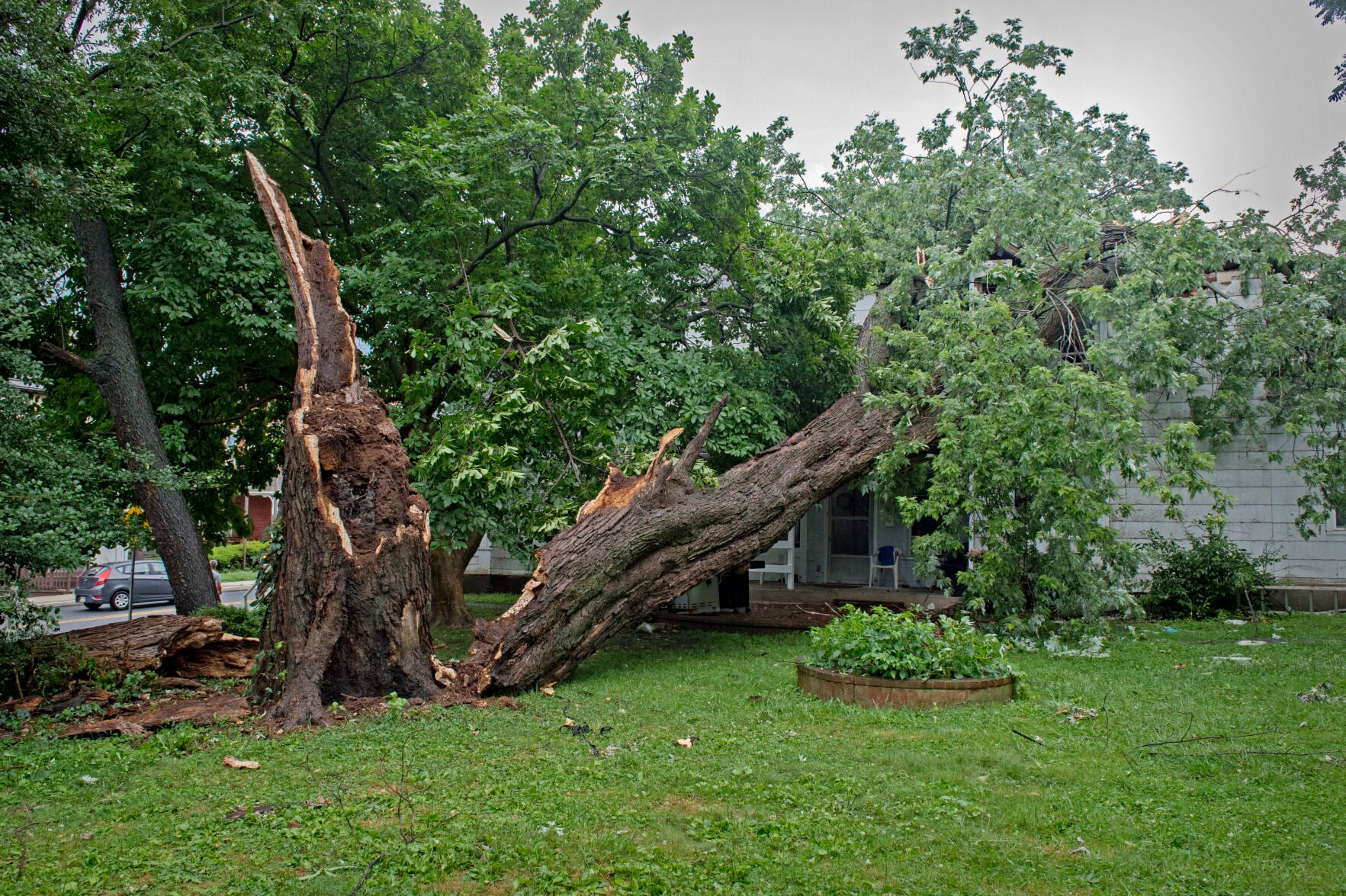
After severe weather, Technical Tree Service also provides storm damage cleanup for broken branches, fallen trees, and other tree hazards that cannot be handled as routine maintenance.
Decay near the union needs context
Decay can weaken the wood surrounding an already questionable attachment, but it is not always visible from the outside.
An arborist may look for cavities, soft or degraded wood, old wounds, fungal fruiting bodies, bark loss, or changes in the shape of the union. Mushrooms or conks near a branch attachment can be evidence that decay fungi are present, but finding fungal growth does not automatically tell you how much sound wood remains.
This is where a broader tree health assessment can help. The branch union should be considered together with the trunk, crown, roots, previous injuries, tree vigor, and site history.
The weight and length of the branch matter too
Two branches with similar unions may place very different loads on the tree.
A long horizontal limb with considerable weight near its outer end creates more leverage at the attachment than a shorter, lighter branch. A branch carrying a broad canopy can also accumulate additional load during wet snow or ice.
An arborist looks at how much branch mass the union supports and how far that mass extends from the attachment. Sometimes the management goal is to reduce that leverage rather than remove the entire limb.
New Hampshire snow and ice can expose structural problems
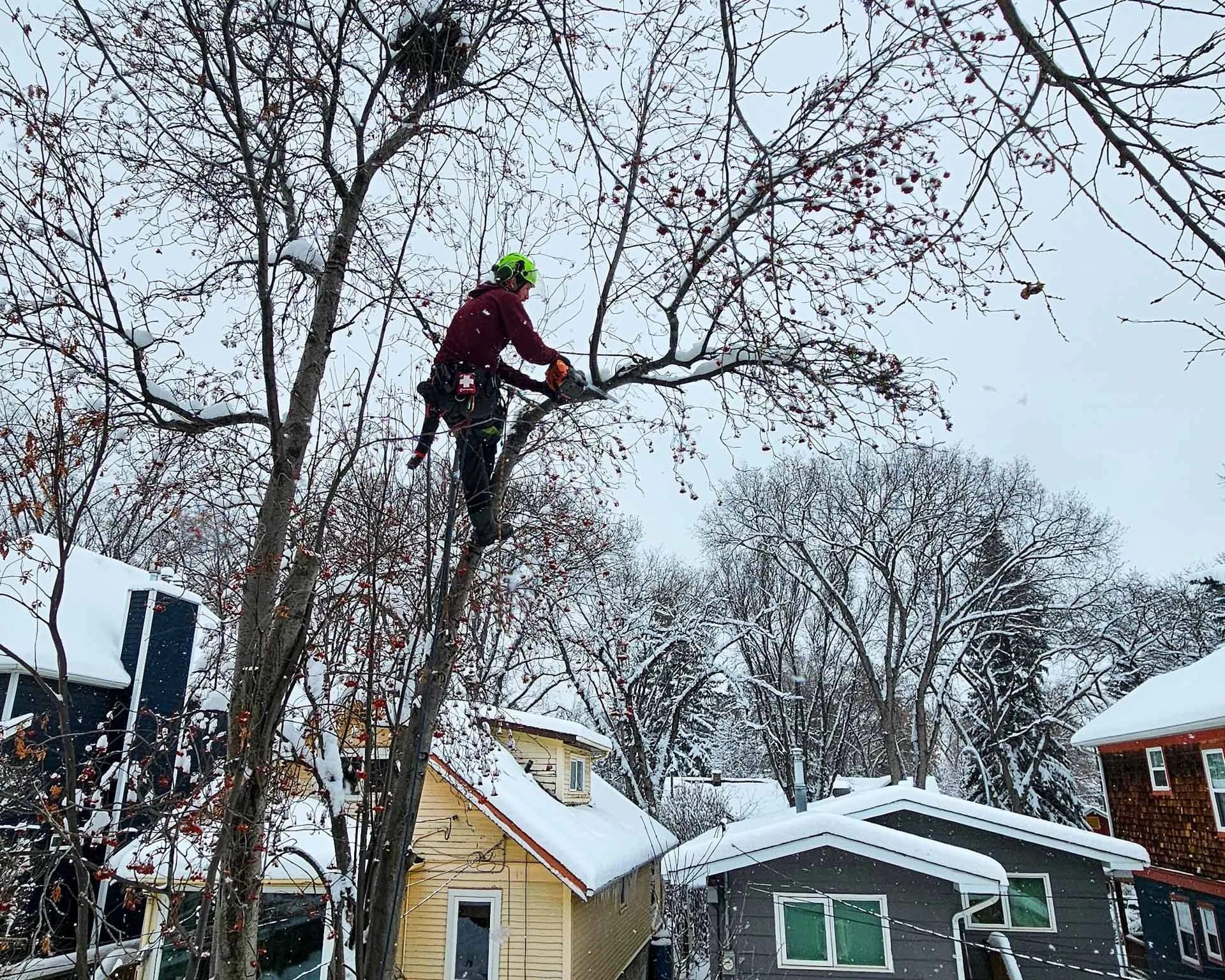
New Hampshire trees regularly experience wind, snow, ice, freeze-thaw cycles, and saturated soil conditions. UNH Extension notes that winter weather can produce broken branches, frost cracks, and other structural damage, and that snow and ice place additional strain on branch attachments.
A weak union may be more noticeable after a winter storm because the loading exposes a defect that had already been developing. That does not necessarily mean the storm created the entire problem.
Technical Tree Service discusses similar weather-related pruning concerns in its guide to tree trimming for Manchester, NH homeowners. The same general reason for checking structure applies in Bow: branches need to be evaluated according to the forces they are likely to carry on that particular property.
What the branch could hit changes the risk
A structural defect and a tree risk are related, but they are not the same thing.
A large weak union over a bedroom, driveway, playground, sidewalk, parking space, or commercial entrance has consequences that the same union over an unused section of woodland may not have.
Arborists consider these people, structures, vehicles, and occupied areas as targets. They also consider how often the target is present. A parking space used every day is different from a back corner of a yard that is rarely entered.
This part of the assessment can change the recommendation. In some situations, relocating a target or limiting access beneath a questionable limb can reduce exposure while the tree is monitored or other work is planned.
A weak union does not automatically mean tree removal
Finding included bark or codominant stems does not by itself mean the tree has to come down.
The arborist still needs to consider branch size, species, tree age, crack development, decay, crown condition, target location, and how much the defect can realistically be reduced through pruning or support.
Technical Tree Service’s tree consultations are designed for situations where the property owner needs a recommendation before choosing between maintenance, monitoring, or larger corrective work.
Structural pruning works best before the competing stem becomes large
Young and developing trees give arborists more options.
If one branch is beginning to compete with the main leader, pruning can slow that branch while allowing the leader to become dominant. The goal may be to reduce the competing stem over several pruning cycles rather than remove a large portion of the canopy in one visit.
Selective pruning can also improve branch spacing and keep permanent branches smaller relative to the trunk. This approach deals with the architecture of the tree while cuts are still relatively small.
Technical Tree Service provides professional tree trimming for structural pruning, crown cleaning, clearance work, and other pruning objectives based on the tree and site.
Large mature branches require a different pruning decision
Once a branch or codominant stem becomes large, simply cutting it off may create another problem.
A large removal wound exposes a considerable area of wood and can remove a substantial portion of the tree’s live crown. Depending on species, branch size, condition, and location, an arborist may prefer reduction pruning or subordination instead of taking the entire limb at once.
Reduction pruning shortens a selected branch back to a suitable lateral branch. In the right situation, it can reduce leverage on a weak attachment while preserving more of the crown.
The amount removed matters. Aggressive pruning or indiscriminate topping can create poor regrowth and additional structural problems rather than solving the original defect.
Cabling can reduce movement, but it does not repair the union
Cabling and bracing may be considered for some mature trees when a valuable tree has a weak union that cannot be corrected reasonably through pruning alone.
A support system can reduce movement between stems or provide supplemental support. It does not turn included bark into a normal wood connection, and it does not guarantee that the tree cannot fail.
The decision to install support depends on the tree’s condition, the location of the defect, the size of the supported stems, and whether the rest of the tree is sound enough to justify retaining it.
Support systems also need follow-up inspection. They should not be installed and then forgotten for the remaining life of the tree.
Sometimes monitoring is the reasonable choice
Some weak unions show no active cracking, support manageable loads, and are located where the consequences of failure are limited.
An arborist may document the condition, recommend pruning, and establish a reasonable reinspection interval rather than recommend immediate removal.
Monitoring becomes more useful when there is something specific to compare over time. Changes in a crack, new bark separation, altered branch position, storm damage, or new decay can then be distinguished from a feature that has remained stable.
Technical Tree Service’s tree maintenance services in Bow include inspection and structural-pruning considerations for trees that need ongoing management rather than one-time corrective work.
When does removal become more reasonable?
Removal becomes more likely when a major structural defect cannot be reduced to an acceptable level through pruning, support, monitoring, or changes around the tree.
A deep crack through a main union, extensive decay, continuing separation between major stems, previous failure at the same junction, or a large compromised stem positioned over an occupied target can narrow the available options.
The condition of the rest of the tree matters. Installing a support system in one weak fork makes little sense if the trunk, roots, or other major stems are also seriously compromised.
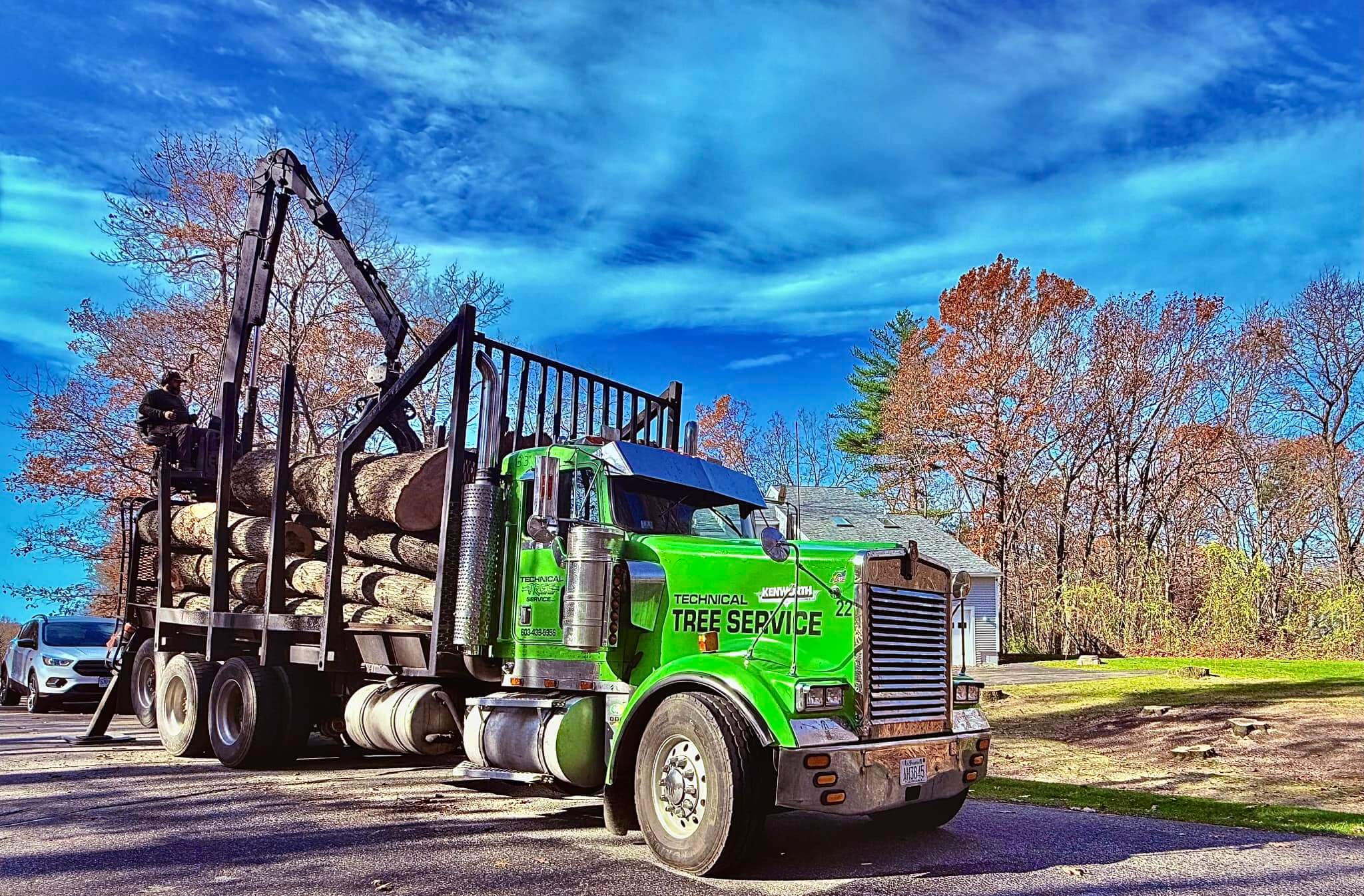
When retention is no longer a reasonable management option, Technical Tree Service provides tree removal in Bow, NH for trees affected by structural problems, storm damage, decay, and other conditions that warrant removal.
Healthy leaves do not prove the branch union is strong
A tree can have a full green canopy and still have a structural defect.
Leaf color tells an arborist something about physiological condition. It does not show how well two large stems are mechanically connected.
This is one reason weak branch unions can be easy to overlook from a window or driveway. The tree may appear vigorous while included bark, an old crack, or poor branch architecture is developing lower in the crown.
Structural inspection and tree-health evaluation overlap, but they answer different questions.
A small crack after a storm should not be dismissed as cosmetic
When a narrow seam changes after high wind, heavy wet snow, or ice, the change itself matters.
A fresh crack shows that the wood or attachment has moved under load. The tree may still be standing normally, but the branch union should be kept clear until it can be examined if the affected limb is large or positioned over an occupied area.
Do not climb into the tree or pull on a questionable limb to see whether it moves. A partially separated branch can hold substantial weight and may release when the load shifts.
The arborist should inspect more than the fork
A weak union can be the most visible concern without being the only one.
The rest of the inspection may include the root flare, soil around the tree, trunk, other major branch unions, deadwood, old pruning wounds, cavities, previous storm damage, and the distribution of the crown.
A tree with one questionable union and otherwise good structure is a different management problem from a tree with multiple defects, root damage, and significant decay.
This whole-tree approach is also part of the arborist services in Concord, NH offered by Technical Tree Service for nearby properties with similar structural and tree-health concerns.
What should a Bow homeowner look for from the ground?
You do not need to diagnose the union yourself, but a few observations can make the service call more useful.
Notice whether two stems are similar in size, whether there is a deep seam between them, and whether the junction appears to have opened recently. Look for visible cracking, broken wood, cavities, mushrooms or conks, bark loss, or a branch that changed position after a storm.
Then look below the branch. A defect over a roof, driveway, walkway, play area, or parked vehicle deserves a different level of attention from one over an unused part of the property.
Photos taken safely from the ground can help document changes, especially before and after storms.
Do not make a large corrective cut based on branch angle alone
A mature codominant stem can contain a large percentage of the tree’s foliage. Removing it without considering wound size, remaining crown balance, decay response, and the load transferred to the rest of the tree can create new problems.
The same caution applies to reducing a heavy limb. Cut location and the amount of foliage removed should match the pruning objective.
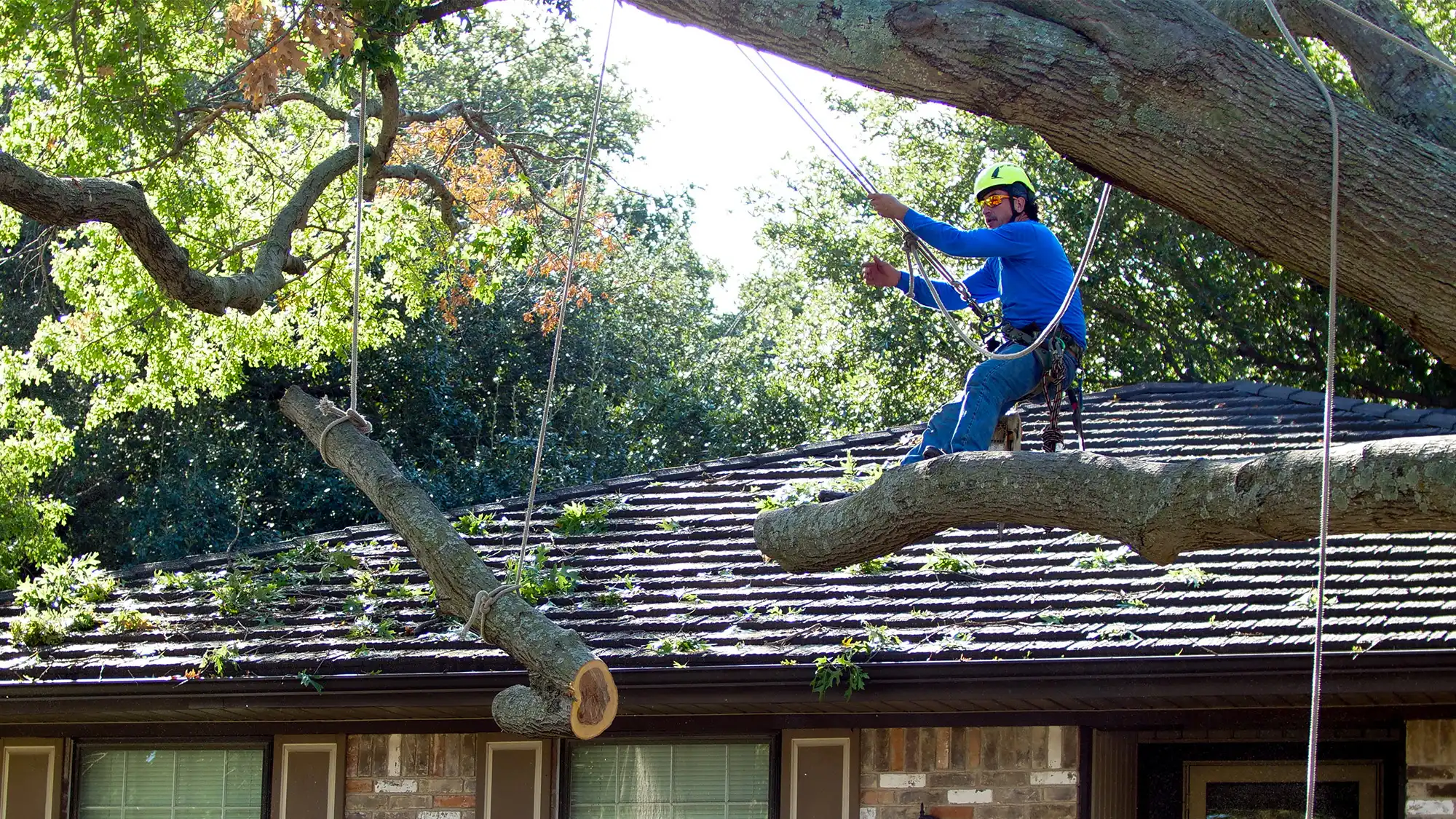
Large pruning work also creates climbing, chainsaw, rigging, and falling-branch hazards. Weak unions are particularly poor candidates for experimental DIY cutting because the branch being worked on may already have compromised support.
When should the union be checked again?
Inspection frequency depends on the tree and what surrounds it. A mature tree with an established defect over a frequently used area may need closer follow-up than a younger tree with a minor structural concern over open ground.
A new storm, visible crack, branch movement, construction near the roots, or noticeable change in the union is a reason to reassess sooner rather than waiting for a routine maintenance cycle.
New Hampshire winter weather can change branch loading quickly, so a condition documented in summer may deserve another look after unusual snow, ice, or wind.
Weak branch union evaluation in Bow, NH
Technical Tree Service provides tree service in Bow, NH for pruning, tree health evaluation, storm cleanup, removal, and other tree-care work. The company’s website states that it has a certified arborist on staff and that estimates are prepared after an on-site inspection rather than from a fixed price given without seeing the tree.
If you are looking at a narrow fork, codominant stems, included bark, a fresh crack, or a large branch positioned over part of your property, the useful next step is to have the attachment evaluated in place. The arborist can compare the defect with the branch load, the rest of the tree, and the targets below it before recommending pruning, monitoring, support, or removal.
Technical Tree Service can be reached at (603) 438-5956 to request an on-site assessment in Bow or another community in southern New Hampshire.