1. Start With the Branches That Have Something Under Them
A dead branch fifty feet into a wooded corner of the property is different from deadwood over your garage.
The branch condition may be similar. The consequence of failure is not.
When walking a Hooksett property in fall, start with trees near the house, driveway, parking areas, walkways, sheds, and places where people regularly spend time.
Look for branches that are already broken, hanging, visibly cracked, or no longer producing foliage during the growing season.
Snow and ice add weight to the canopy. Wind adds movement. A branch with a weak attachment does not become defective because winter arrived, but winter weather may be what finally exposes the defect.
That is why fall maintenance should prioritize known problems rather than treating the whole canopy as a problem.
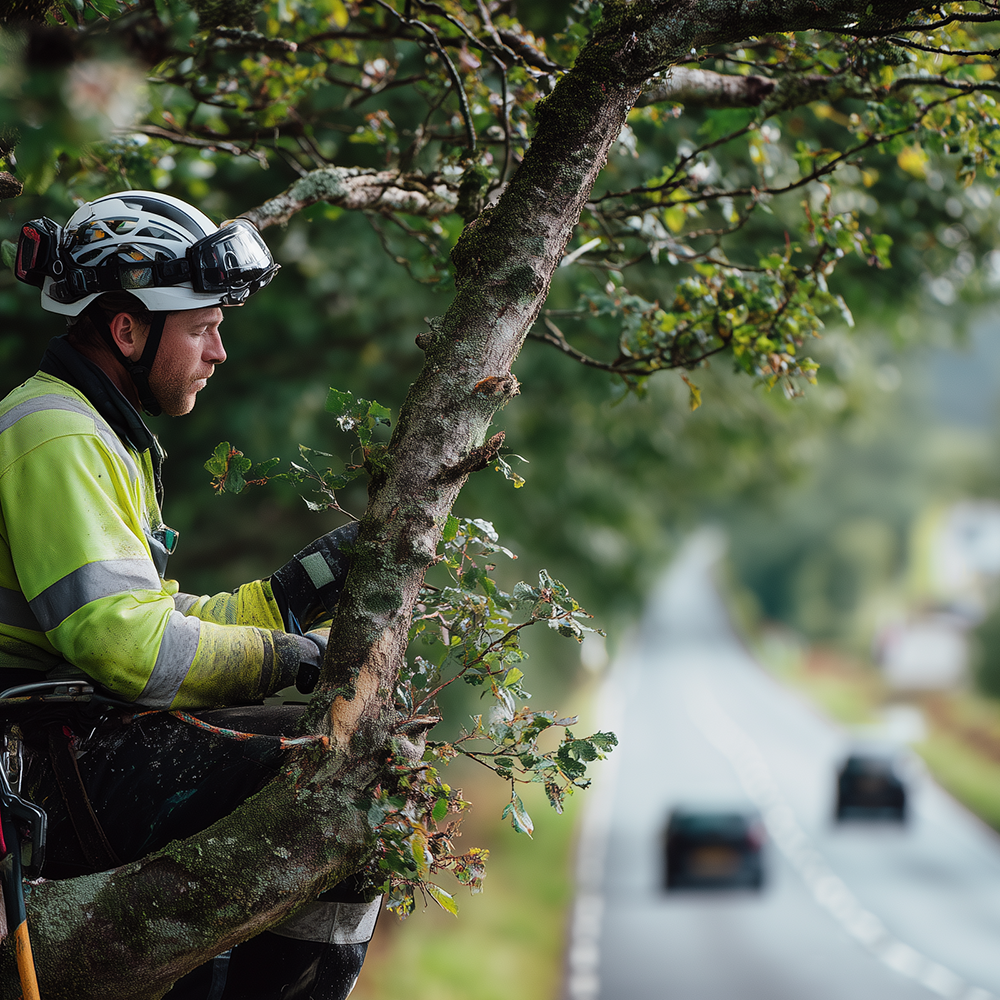
Technical Tree Service’s tree maintenance in Hooksett, NH includes crown cleaning for selected dead, damaged, and weak branches along with clearance pruning where trees interfere with roofs, driveways, and other parts of the property.
The amount of work still depends on the tree.
A small dead branch and a large cracked scaffold limb call for very different decisions.
2. Do Not Turn a Fall Inspection Into Automatic Heavy Pruning
A common pre-winter recommendation is to thin trees so snow and wind can move through the canopy more easily.
That sounds reasonable until too much healthy foliage gets removed.
Pruning changes the tree. Every live branch taken out means less leaf area available during the next growing season, and large cuts create wounds the tree has to respond to.
The right question is not how much of the canopy can be removed before winter.
It is which branches have a reason to be removed.
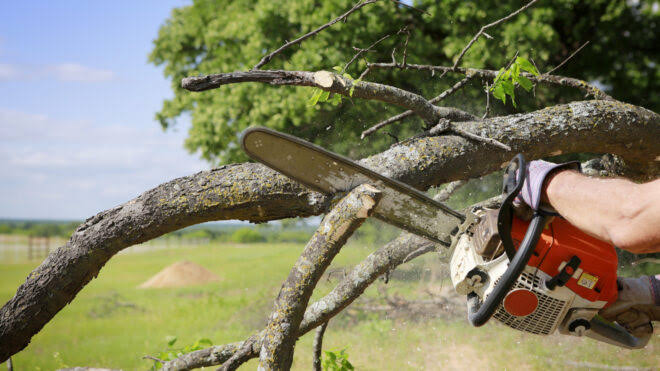
Broken branches may need immediate work. Deadwood over a driveway may deserve attention. A limb rubbing the roof may need clearance.
Routine structural pruning on an otherwise stable tree often has more scheduling flexibility.
UNH Extension generally recommends leaving fine pruning and finishing work until late winter or early spring. Technical Tree Service also lists late winter and early spring as a time to inspect winter damage and plan suitable pruning.
That makes fall a good planning window.
You can identify the work while leaves are dropping, deal with defects that should not remain over the property, and schedule lower-priority structural work for a better pruning period.
Technical’s tree trimming service also bases timing on the species and purpose of the pruning rather than applying the same schedule to every tree.
3. Look at Branch Attachments, Not Just Deadwood
A branch can be alive and still have a structural problem.
Large limbs with narrow attachments, competing stems, old cracks, or unusual weight distribution deserve more attention before winter than a healthy branch simply because it looks long.
The attachment point often tells more of the story than the leaves.
Look where major limbs connect to the trunk.
An open crack between two stems is different from normal bark texture. A branch that has shifted after a recent storm is different from one that has grown in the same position for years.
You may also notice crossing branches, old storm wounds, or a section of canopy that is carrying much more weight than the rest of the tree.
Not every condition calls for removal.
Some defects can be managed through pruning. Others need monitoring or a broader structural evaluation. A tree with extensive decay or trunk movement may need a conversation about removal rather than repeated branch trimming.
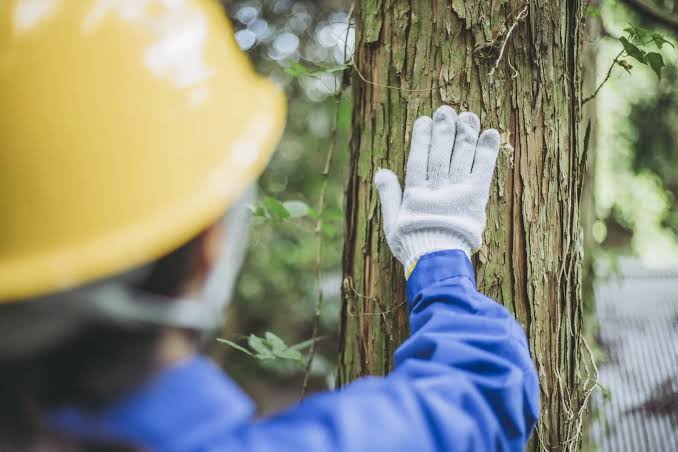
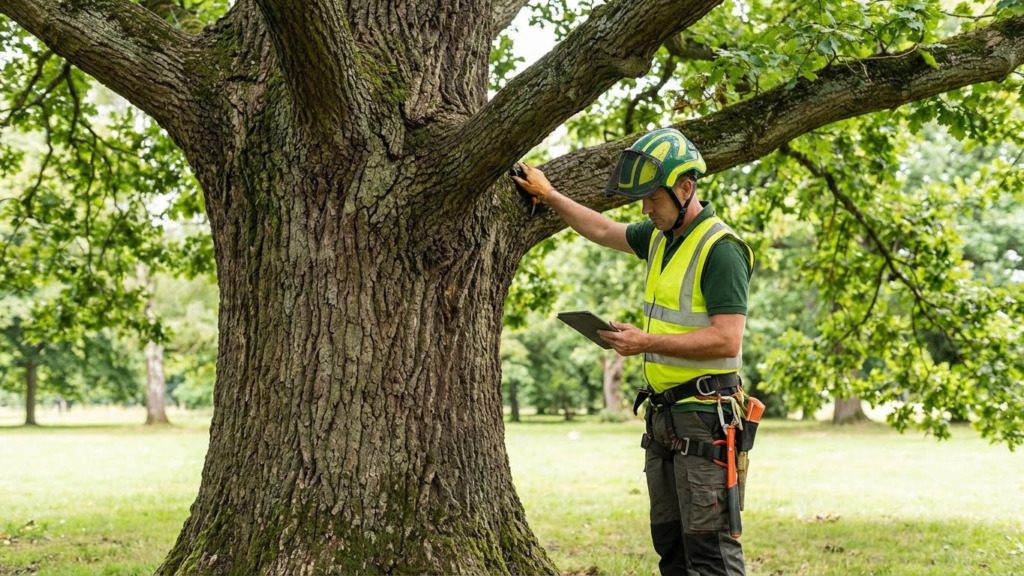
This is where a professional inspection becomes more useful than diagnosing the tree from one visible symptom.
4. A New Lean Matters More Than a Tree That Has Always Leaned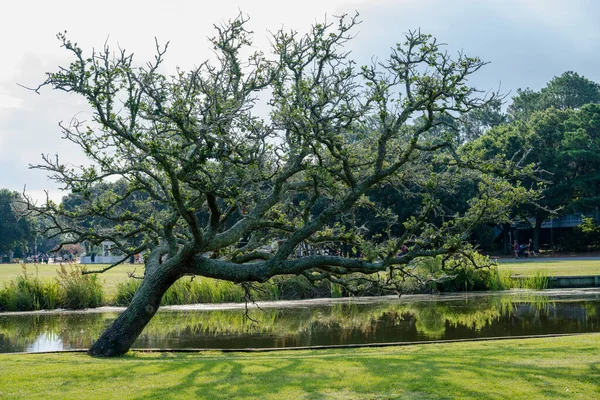
Plenty of healthy trees grow at an angle.
The concern rises when the position changes.
If a tree that stood in one position for years suddenly leans farther after wind or saturated soil, look around the root zone.
Fresh soil lifting on one side, new gaps around the base, exposed roots, or cracking in the ground can suggest root movement.
That requires more attention than the angle alone.
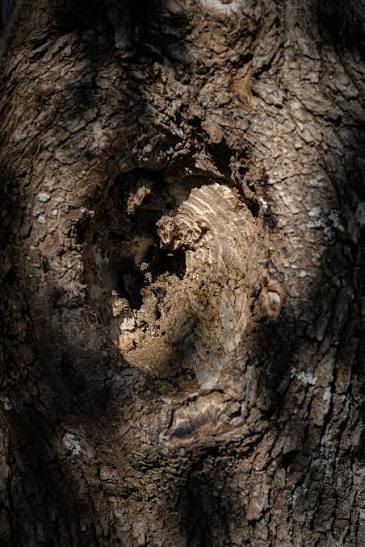
The same applies to trunks with cavities, fungal growth, or large cracks. These observations need context because they do not all mean the tree is about to fail.
Technical Tree Service’s tree health assessment evaluates the tree from the roots through the canopy, including trunk condition, branch structure, growth patterns, and root-zone problems.
That broader inspection is useful before winter because branch failure is only one possible issue.
Whole-tree stability starts below the canopy.
5. Water Before Freeze-Up When the Tree and Soil Actually Need It
“Water every tree deeply before winter” is too broad to be useful.
Start with the soil.
Recently planted trees generally deserve more attention because their roots have not spread far into the surrounding soil. If fall has been dry, supplemental watering can help keep the root zone from entering winter already short on moisture.
Established trees can also be affected by extended dry periods, but the decision should still depend on moisture conditions.
If the soil is already wet or drainage is poor, adding more water does not solve a problem.
For trees that do need supplemental water, the goal is to moisten the active root zone before the ground freezes rather than repeatedly wetting the trunk or dumping water into one small spot.
The weather matters too.
Once the ground freezes, liquid water is far less available to roots. Going into that period with adequate soil moisture can be particularly helpful for newly planted trees and evergreens that continue losing moisture through their foliage during winter.
Technical’s Hooksett maintenance guidance includes soil moisture and root-zone conditions as part of seasonal tree care rather than treating watering as a fixed calendar task.
6. Mulch the Root Zone, Not the Trunk
Mulch can help moderate soil temperatures and reduce moisture loss, which is useful as temperatures begin moving back and forth around freezing.
Placement matters more than making the pile deep.
A modest layer over the root zone is useful. Mulch stacked against the trunk is not.
Keep material pulled back from direct trunk contact so the base of the tree and root flare are not buried under a wet mound.
New trees usually benefit the most from this kind of root-zone protection because their root systems are still establishing.
Mature trees can benefit too when the surrounding site is mostly lawn or exposed soil, but mulch does not fix compacted roots, poor drainage, or an unstable tree.
If the tree is showing sparse growth, premature leaf drop, root damage, or other signs of decline, the condition deserves evaluation rather than another layer of mulch.
7. Use Fall Color and Leaf Drop as Information
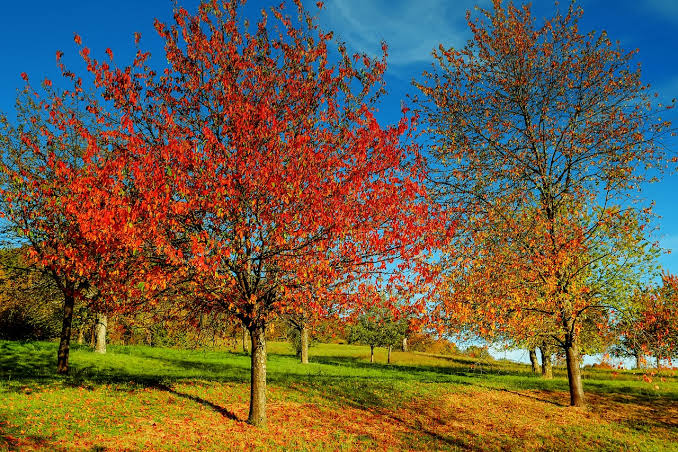
Leaves can tell you something before they disappear for winter.
A tree coloring or dropping leaves a little differently from the same species nearby is not automatically sick.
Still, unusual patterns deserve a note.
If one section of a canopy changed early while the rest remained normal, look at the branches in that section after leaf drop.
If the entire canopy was sparse all summer, check whether the problem is paired with dead twigs, trunk damage, construction near the roots, or soil changes.
Fall also makes branch architecture easier to see as deciduous trees lose foliage.
You may notice old broken stubs, crossing branches, or a crack that was hidden behind dense leaves in July.
This is one reason a tree health assessment can be useful before winter. The goal is to connect the canopy symptom with what is happening in the trunk, roots, and surrounding site rather than guessing from leaf color alone.
8. Check Clearance Before Snow Makes Access Harder
Branches near buildings deserve attention even when they are healthy.
A limb touching a roof can scrape shingles as wind moves the canopy. Low branches can reduce clearance over driveways or walkways. Growth near a building may also complicate snow removal or access during winter.
Clearance pruning has a defined purpose.
That does not mean stripping every branch from one side of a tree.
A good clearance cut creates the space needed around the structure while retaining as much appropriate canopy as possible.
Technical Tree Service includes clearance pruning in its Hooksett maintenance work and applies the same approach through its tree maintenance in Manchester, NH.
Trees near utility lines are a separate matter. Branches close to energized conductors should not be approached as a homeowner pruning project. Utility clearance involves electrical hazards that change who can safely perform the work.
9. Do Not Ignore Damage From Earlier Storms
A branch can survive a summer thunderstorm and still enter fall damaged.
Partial splits are easy to miss when foliage hides the attachment. The tree may continue looking normal until leaves drop or another weather event moves the branch.
Fall is a useful time to revisit trees that took heavy wind earlier in the year.
Look for branches that sit differently than they did before, hanging pieces caught in the canopy, torn attachments, and trunks that developed cracks.
Technical Tree Service provides storm damage cleanup for fallen trees, broken limbs, and hazards after severe weather. Its Hooksett service page also confirms 24/7 emergency response for urgent tree hazards.
If a branch is hanging overhead or a tree has shifted at the roots, waiting for snow to test it again does not provide useful information.
Have that condition evaluated.
When Should You Wait Until Late Winter to Prune?
A stable tree with no immediate clearance or safety problem often gives you more scheduling options.
Late winter and early spring are commonly good periods for planned structural pruning on many deciduous trees because the canopy is dormant and branch structure is easy to see.
There are exceptions.
Flowering trees may have different timing depending on whether preserving the next bloom matters. Storm-damaged limbs do not wait for the calendar. Species, condition, and pruning objective all affect the recommendation.
This is why professional pruning should begin with an objective.
If the goal is removing a cracked limb over a vehicle, the work may belong on the fall list.
If the goal is improving the long-term branch structure of a healthy tree, that project may be better planned for later in the dormant season.
What Types of Tree Service Might Be Needed Before Winter?
A fall inspection does not always end with pruning.
A damaged branch may need trimming. A questionable tree may need an assessment. A tree with extensive structural failure may need removal. Storm damage can require cleanup, while an otherwise healthy tree may simply need monitoring until the next pruning window.
Technical Tree Service’s guide to the types of tree service and when you need them explains how trimming, removal, stump work, emergency response, and preventive maintenance fit different conditions.
The useful decision is matching the service to what is actually wrong with the tree.
Cutting branches will not correct a failing root system.
Removing a healthy tree is excessive when the problem is one manageable limb.
An inspection may be all that is needed when a homeowner sees something unusual but does not yet know what it means.
Fall Tree Maintenance for Hooksett Properties
Technical Tree Service provides tree maintenance, pruning, health and risk evaluations, storm cleanup, and tree removal in Hooksett and throughout its southern New Hampshire service area.
Its Hooksett tree service page confirms that estimates start with an on-site inspection because condition, access, and safety need to be seen at the property.
That approach fits fall maintenance well.
Before snow and ice arrive, identify what changed during the growing season. Look at the branches above occupied areas, the major attachments, trunk, and root zone. Check soil moisture rather than watering by habit. Correct mulch that has accumulated against the trunk.
Then separate work that needs attention now from pruning that can wait for a better dormant-season window.
Winter weather will put its own load on the tree. The useful work in fall is finding the weaknesses before it does.