1. Inspect the Tree Before Deciding It Needs Pruning
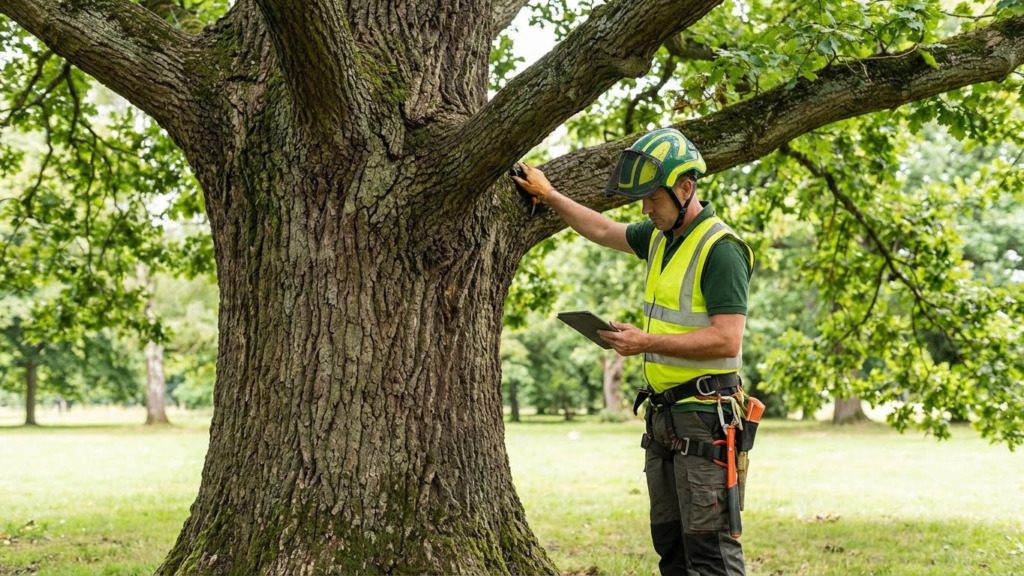
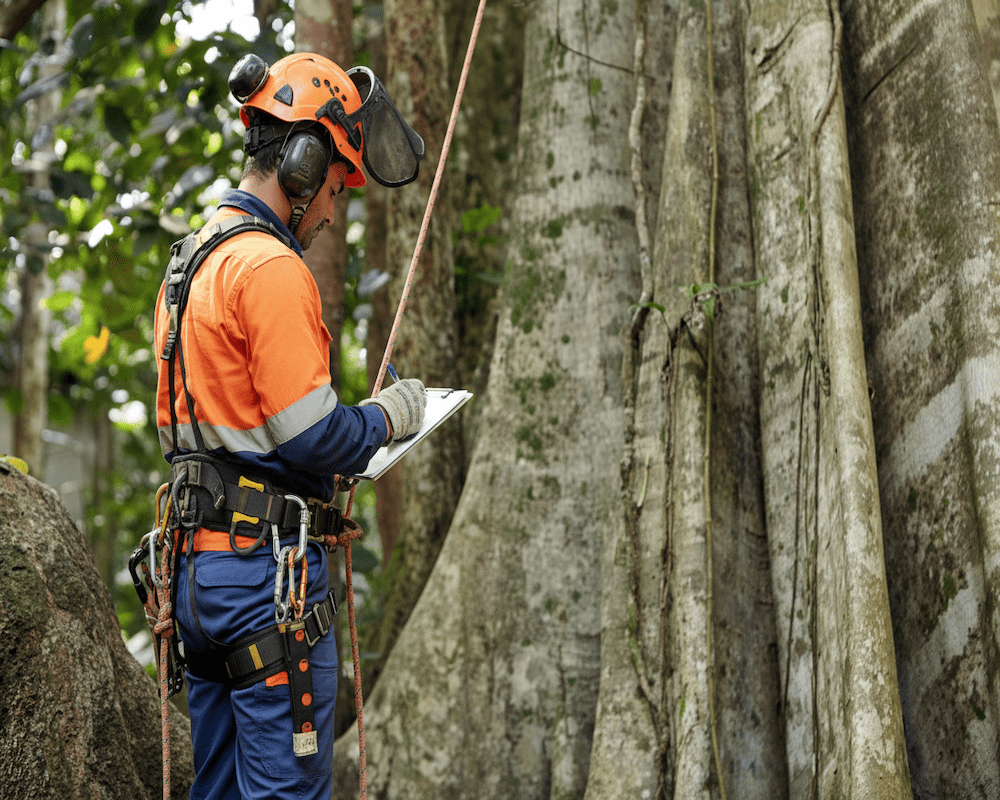
Do not start with the saw.
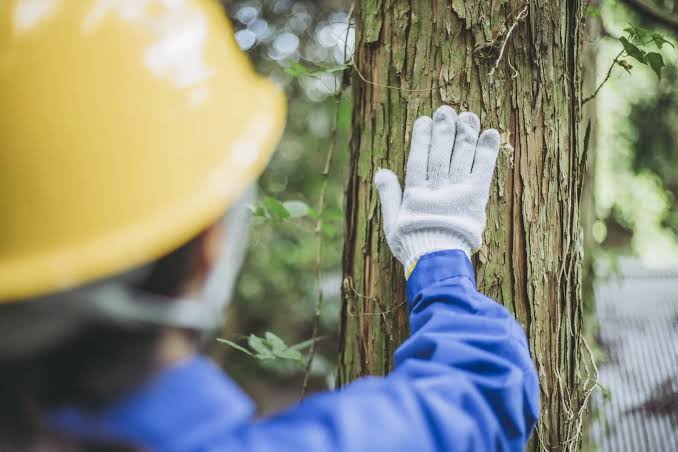
Start at the base.
Look at whether the tree has developed a new lean. Check for recently lifted soil around the root area, visible trunk cracks, dead branches, broken limbs that have not fully separated, or large branches with questionable attachments.
Then look up.
Where would those branches go if snow, ice, or wind caused them to move?
A dead branch over an unused corner of the yard presents a different concern from the same branch over your driveway. A long limb extending toward the roof deserves a different look than one with open ground below it.
The condition and the target matter together.
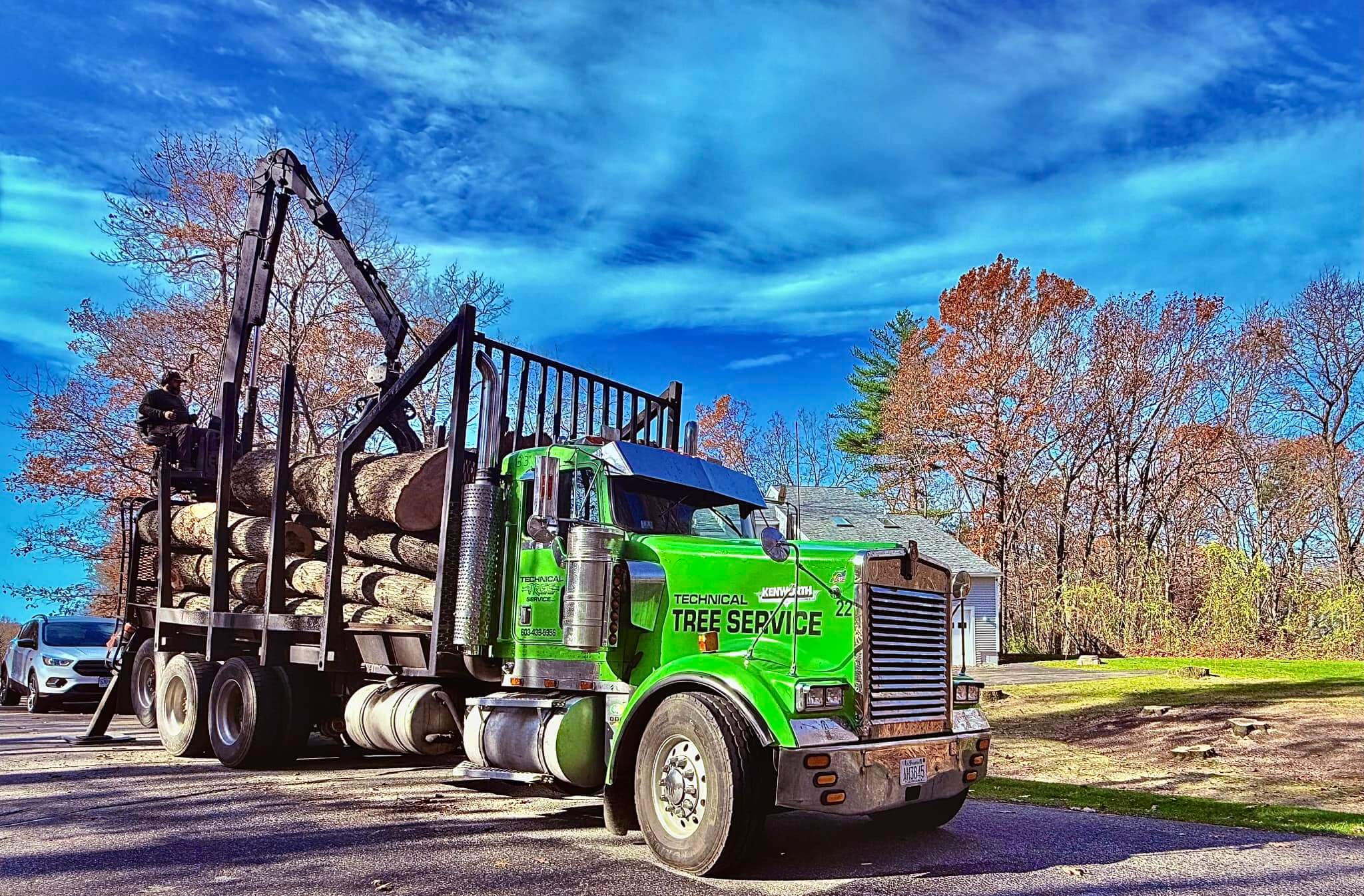
Technical Tree Service’s tree trimming in Manchester, NH begins with an on-site evaluation of the tree’s health, species, position, and pruning needs rather than assuming every tree requires the same treatment.
If the concern goes beyond an individual branch, a tree health assessment can look at the trunk, canopy, root area, structural condition, and other signs that affect the next decision.
Sometimes the inspection leads to pruning.
Sometimes it leads to monitoring.
And sometimes it shows that the problem is more serious than pruning can correct.
2. Deal With Dead or Damaged Branches, but Don’t Over-Prune in Fall
This is where pre-winter advice often gets too simple.
“Prune before winter” sounds useful until it is applied to every tree on the property.
Dead, damaged, and diseased material can be addressed when necessary, particularly when safety is involved. More extensive pruning is often better timed once woody plants are dormant, with the exact timing depending on species and the purpose of the work.
So if a large dead limb is positioned above the driveway, you do not ignore it for months because it is the “wrong season.”
That is a hazard question.
But if a healthy tree needs substantial structural pruning and there is no immediate defect, fall may be the time to evaluate and plan the work rather than remove a large amount of live canopy.
Technical Tree Service’s general tree trimming service similarly treats pruning timing as something that depends on the species and purpose of the work.
This is the useful way to think about winter tree pruning in Manchester, NH:
- Immediate defect? Address the risk.
- Routine structural work? Choose the timing deliberately.
- Healthy branch with no clear reason to remove it? Winter preparation alone is not a reason to cut it.
3. Pay More Attention to What Is Under the Canopy
A branch does not become a problem just because it is large.
What sits underneath it changes the decision.
Before winter, pay particular attention to limbs positioned over roofs, driveways, parked vehicles, walkways, sheds, and areas people use regularly.
Snow and ice add load. Wind adds movement. If a branch already has a poor attachment or visible damage, those winter forces can expose the weakness.
That does not mean cutting every branch above a roof.
A professional may determine that a branch is structurally sound. Another may need targeted reduction. Deadwood may need to be removed. A badly compromised tree may require a completely different conversation.
Technical Tree Service’s Manchester, NH tree services include pruning and maintenance, tree-health and risk assessment, storm response, and related tree care.
Electrical lines require another level of separation.
If branches are contacting or creating problems around electrical conductors, do not treat that as ordinary DIY pruning. Utility coordination or qualified professional work may be required depending on which line is involved.
The closer the tree is to something that matters, the more important the assessment becomes.
4. Prepare the Root Zone Before the Ground Freezes
Not every winter problem is in the canopy.
Roots still matter after the leaves are gone.
Trees and shrubs that need supplemental water can benefit from adequate moisture going into winter. Fall watering before freeze-up can help prevent unnecessary drought stress, particularly when conditions have been dry.
Mulch can help too.
A layer of organic material such as wood chips over the root zone can help moderate soil temperature and conserve moisture. Keep the material away from direct contact with the trunk rather than piling it against the base.
The common mistake is turning mulch into a mound around the trunk.
More is not automatically better.
Think about protecting the root zone, not burying the base of the tree.
If there are already signs of root disturbance, soil movement, decay, or a developing lean, mulch is not the solution to that structural issue. That is when an inspection matters more than another layer of wood chips.
Technical Tree Service offers tree-care consultations when the right next step is not obvious.
5. Protect Young and Winter-Sensitive Trees Selectively
Wrapping every tree in the yard is not winter preparation.
Neither is staking every young tree.
Some plants need additional protection because of their age, bark, exposure, or foliage. Others do not.
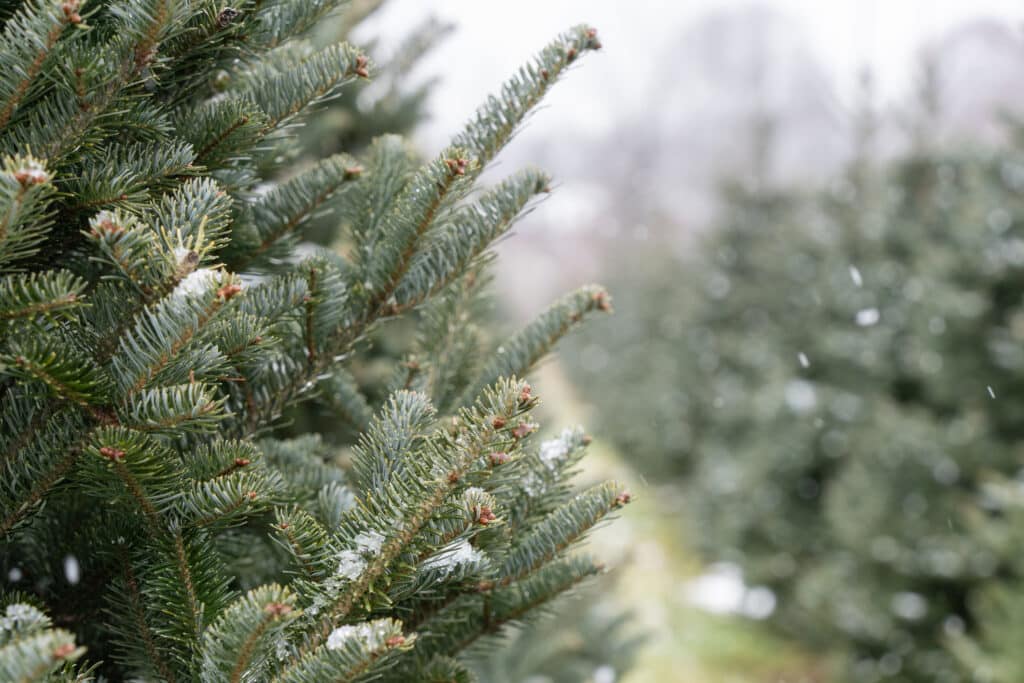
Broadleaf evergreens can lose moisture during cold, windy weather while frozen soil limits water uptake. In exposed locations, a windbreak may help susceptible plants. Thin-barked trees such as maples and cherries can also be vulnerable to frost cracking and sunscald under certain winter conditions.
The important word is susceptible.
A windbreak that makes sense for an exposed evergreen is not a universal treatment for a mature deciduous tree.
The same applies to young trees.
Check existing ties or supports rather than automatically adding more. Look at whether the tree is stable, whether ties are rubbing or constricting the trunk, and whether the root system has established adequately.
Winter protection should solve a specific problem.
If you cannot identify the problem, adding material to the tree may not improve anything.
6. Decide Now What Would Become an Emergency Later
Some pre-winter conditions are maintenance issues.
Others are warning signs.
A tree with an isolated dead branch may need targeted pruning.
A tree with significant root movement, a major trunk split, severe decay, or a sudden lean toward a house may need a broader risk assessment. If the tree is no longer a reasonable candidate for pruning, professional tree removal may be one of the options considered after inspection.
This is also a good time to think about access.
If a tree fails during an ice storm, can the driveway still be used? Are large branches positioned over the only entrance to the property? Is a damaged tree close enough to the house that failure would create an immediate response problem?
Technical Tree Service provides storm damage cleanup for fallen trees, broken limbs, blocked access, and severe-weather debris. The company also maintains emergency tree services for urgent hazards.
The goal before winter is not to assume the worst.
It is to notice the problems that are much easier to deal with before the weather makes them harder.
Does Winter Pruning Make a Tree More Storm-Resistant?
It can help when pruning corrects a real structural issue.
That is different from saying more pruning means a safer tree.
Removing dead or badly damaged branches can eliminate material that already presents a problem. Structural pruning may improve branch architecture or address excessive extension in appropriate trees. But unnecessary cuts also remove living tissue, and poor pruning can create new problems.
The question is not:
“How much should we cut before winter?”
It is:
“Which branches, if any, are actually contributing to the risk?”
That is why pruning method and timing should follow the assessment.
What About Heavy Snow or Ice Already on the Branches?
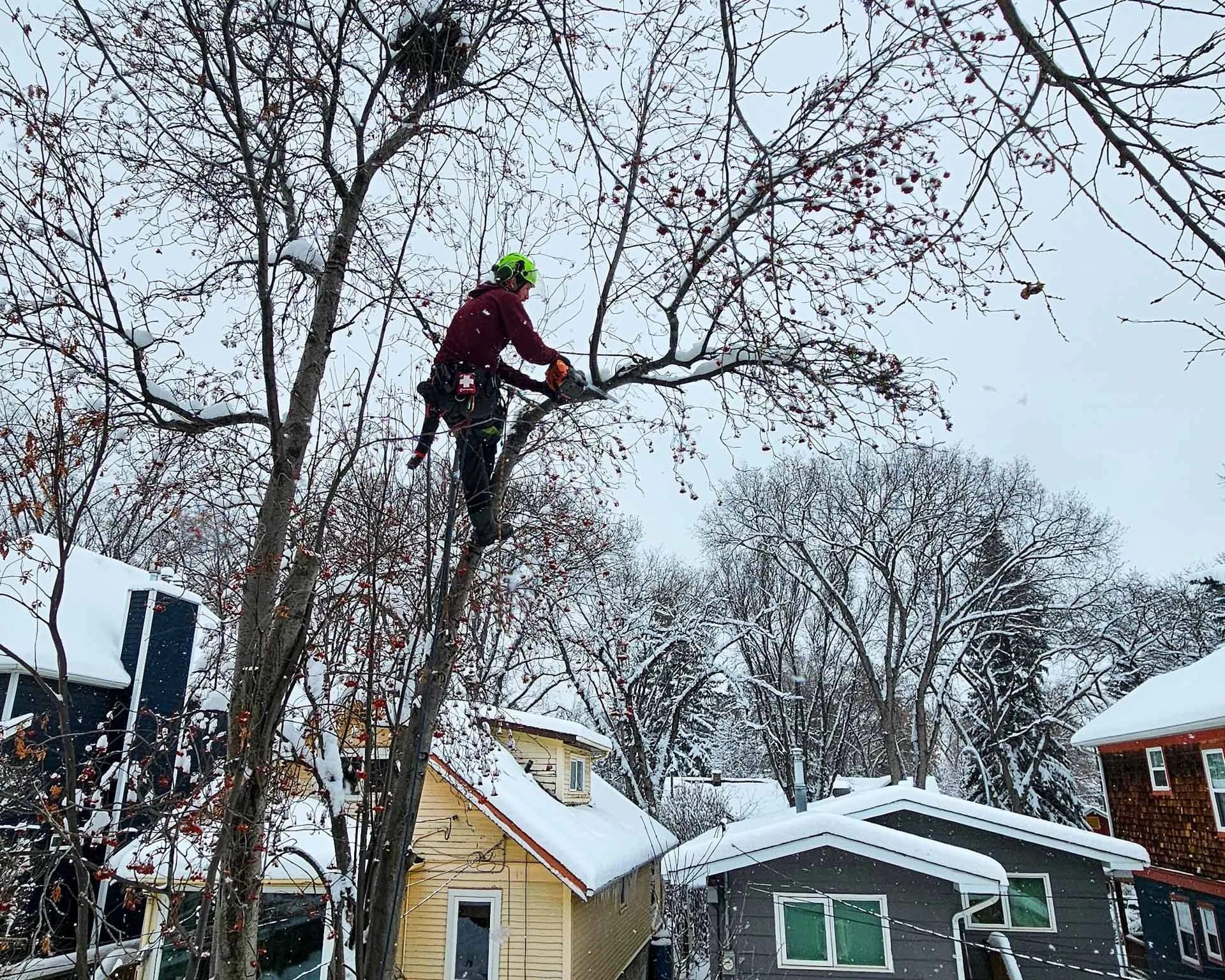
Once a tree is loaded with ice, the situation has changed.
Do not stand underneath stressed branches and try to force ice off them.
Branches under heavy ice or snow are already carrying additional load and may break if they are shaken or disturbed.
If the tree has cracked, dropped a major branch, developed a new lean, or created a hazard after the storm, move from winter preparation to damage assessment.
That is a different job.
The preventative window has passed. Now the question is what failed and what remains under load.
Do All Trees Need Winter Preparation?
No.
A healthy, established tree in an appropriate location may need very little intervention.
That is an important part of good tree care too.
You do not improve a tree by finding something to cut every season.
Young trees may need root-zone attention. An exposed evergreen may need protection from winter drying. A mature tree near a house may need structural assessment. Another established tree may simply need monitoring.
Different tree.
Different problem.
Different answer.
Winter Tree Care Across Southern New Hampshire
Technical Tree Service provides pruning and tree care throughout Manchester and surrounding Southern New Hampshire communities.
Homeowners in Manchester can schedule professional tree trimming in Manchester, NH when an inspection shows that branches need attention before or during the dormant season.
The same service is available for homeowners looking for tree trimming in Amherst, NH.
For homeowners who need pruning, health assessment, removal, storm response, or related tree work in the city, Technical Tree Service’s Manchester, NH tree services provide the broader starting point.
Prepare the Tree You Have, Not an Imaginary Storm-Proof Tree
Manchester winters can bring wind, snow, ice, freezing temperatures, and rapid changes in conditions.
No pruning cut or layer of mulch can guarantee that a tree will never fail.
A better goal is to remove the avoidable problems.
Find defects before they are carrying snow. Deal with dead or damaged branches when they create a hazard. Save major pruning for the appropriate season when the tree allows it. Protect roots and vulnerable plants where winter exposure is actually a concern.
And if the tree looks structurally questionable, have that question answered before the next storm is loading the canopy.
Technical Tree Service can evaluate trees in Manchester and Southern New Hampshire and determine whether the right next step is pruning, monitoring, health assessment, removal, or simply leaving a healthy tree alone.