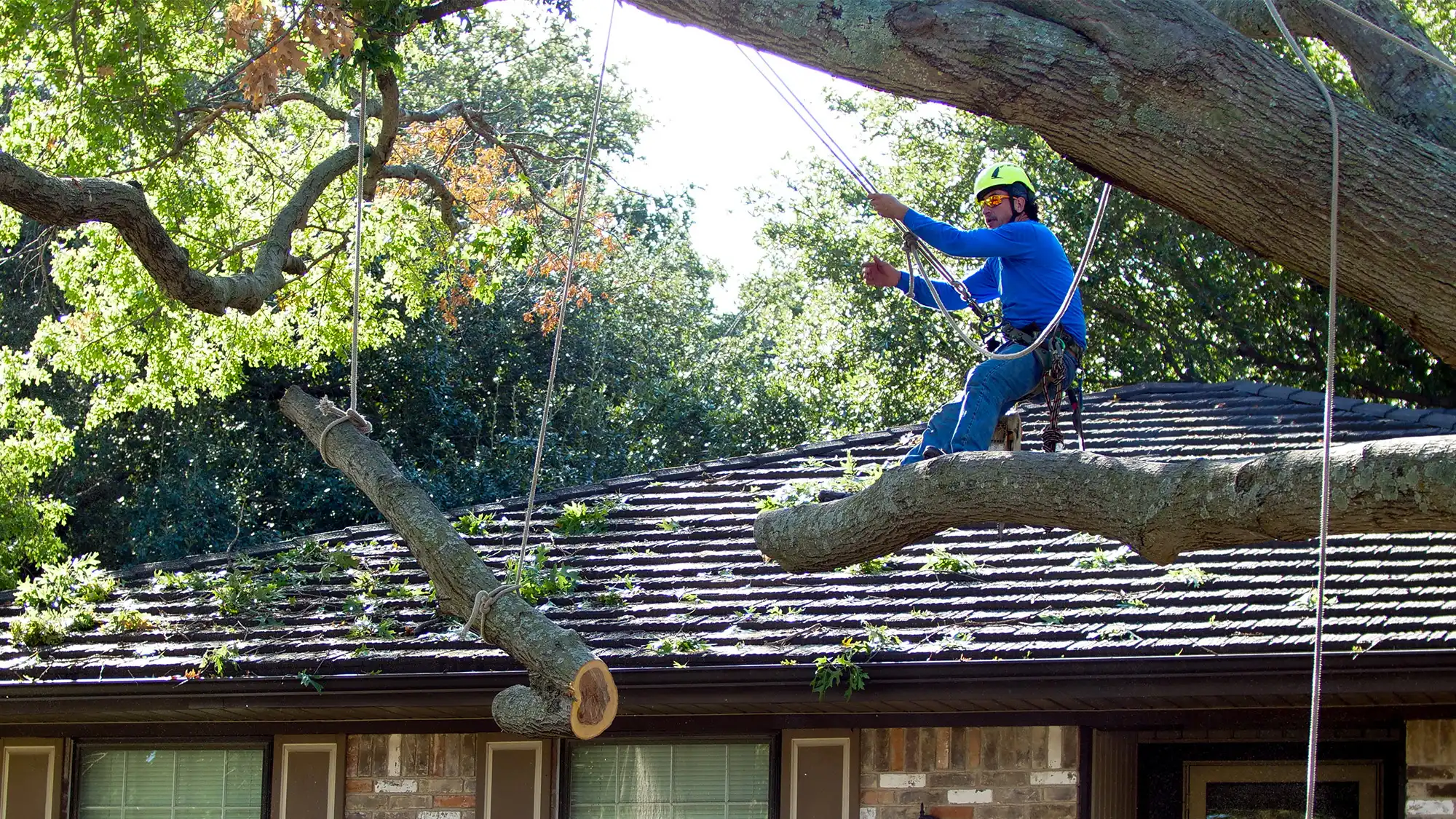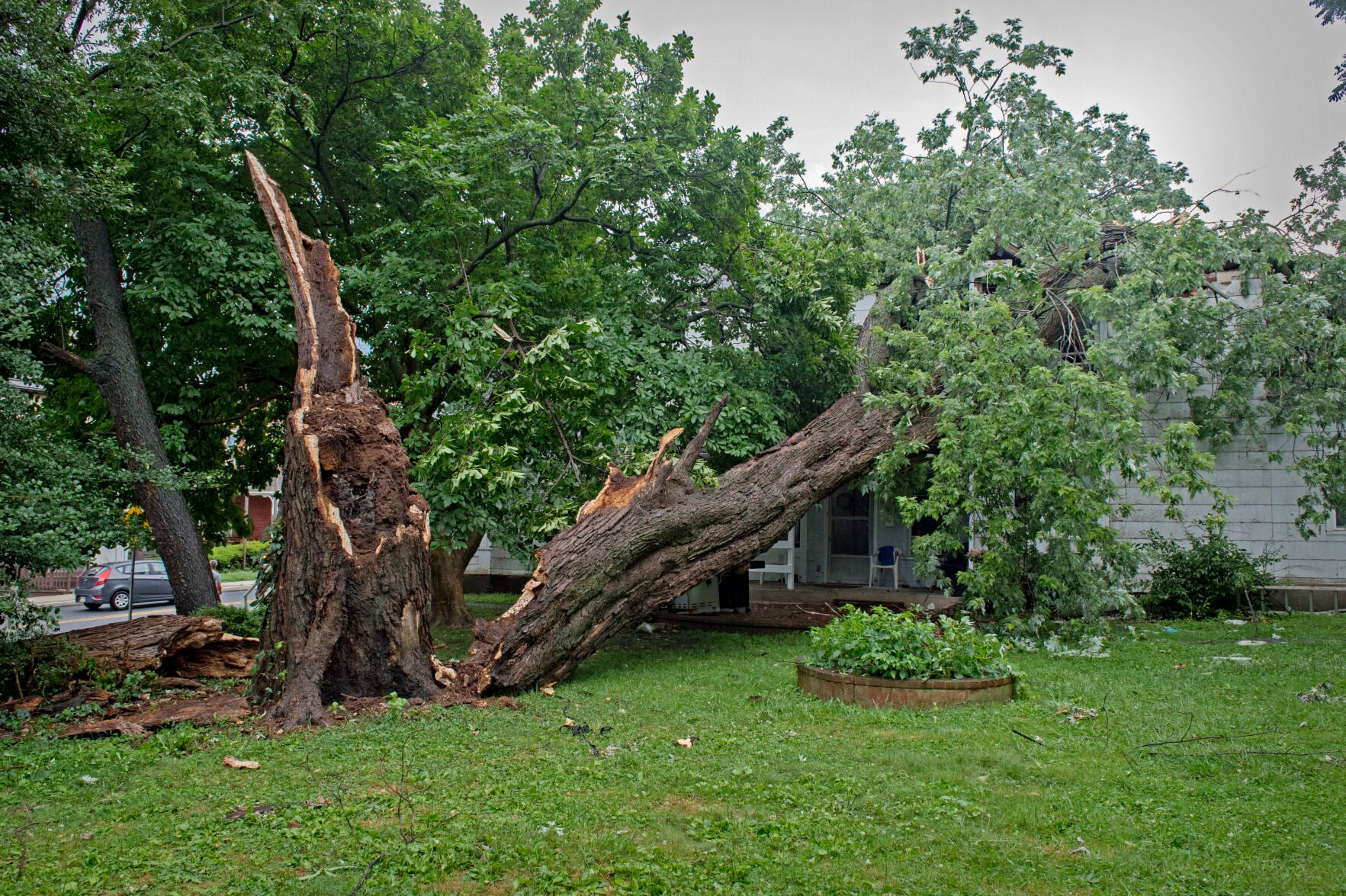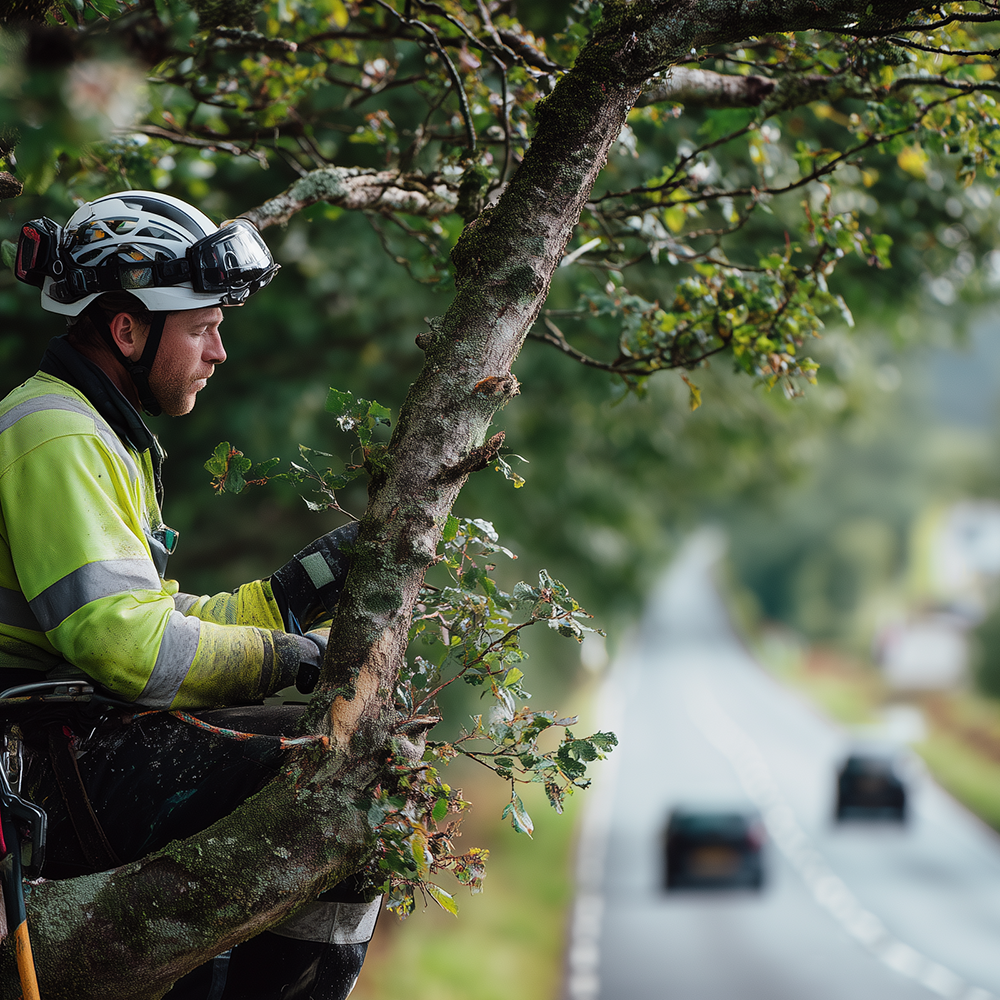
A tree near a driveway or walkway is not automatically a hazardous tree.
The better question is what is happening where the tree and the access area meet.
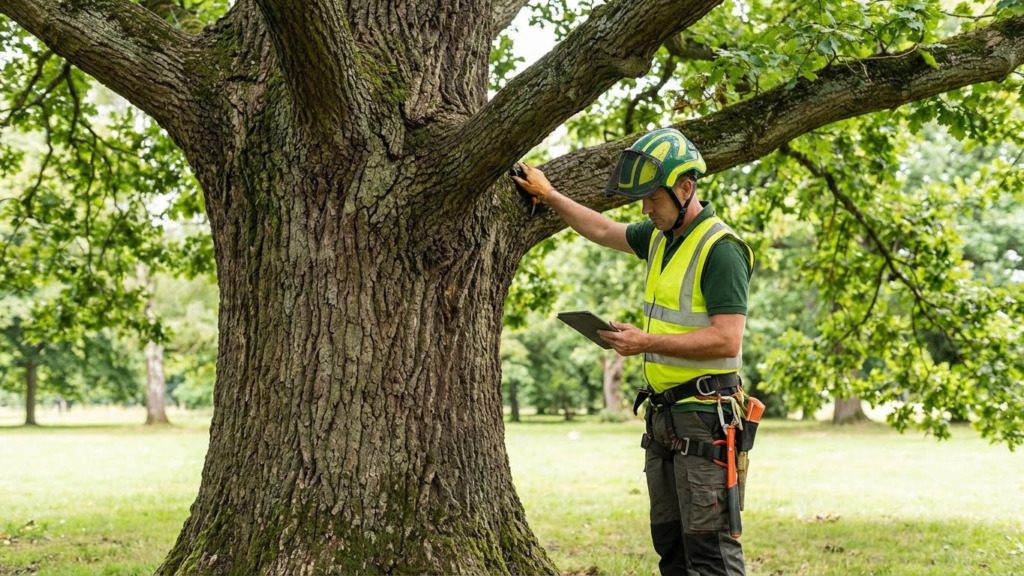
For a tree risk assessment in Auburn, NH, we want to know whether the tree has a part that could fail, what could be struck if it did, how the roots and pavement are interacting, and whether branches are interfering with drivers or pedestrians.
Distance matters.
It just does not answer those questions by itself.
Start with the tree, the target and the access route
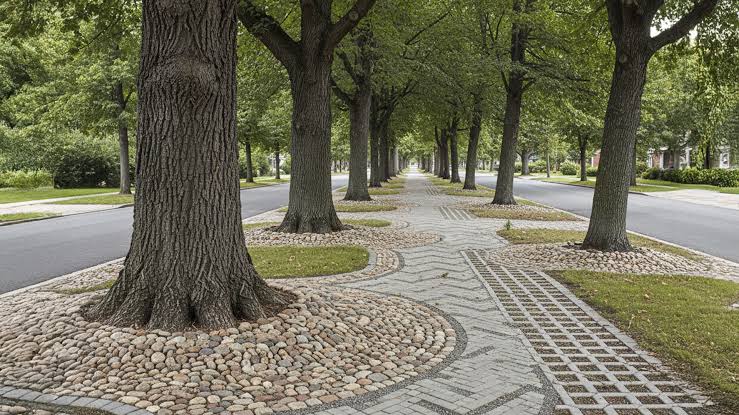
A driveway changes the context around a tree because people and property regularly move through the area.
The possible targets may include:
- parked vehicles;
- people getting in or out of cars;
- delivery drivers;
- children walking to the house;
- a garage;
- a retaining wall;
- a public road near the driveway entrance.
A limb extending over an unused corner of a property and the same limb extending over the family car do not create the same exposure.
Tree risk assessment looks at both the tree and what is below or around it.
“Ten feet from the driveway” is not a risk rating
You will see rules online saying trees within 10 or 15 feet of pavement need special monitoring.
That is too broad to tell you whether a particular tree is unsafe.
A healthy tree can grow relatively close to a driveway for decades.
Another tree farther away may contain a cracked union with a large limb extending directly over the parking area.
Species, age, defects, soil, root condition, canopy structure and targets all change the assessment.
Measure the distance because it helps document the site.
Do not use distance alone to decide whether the tree stays or goes.
The first useful inspection starts at ground level
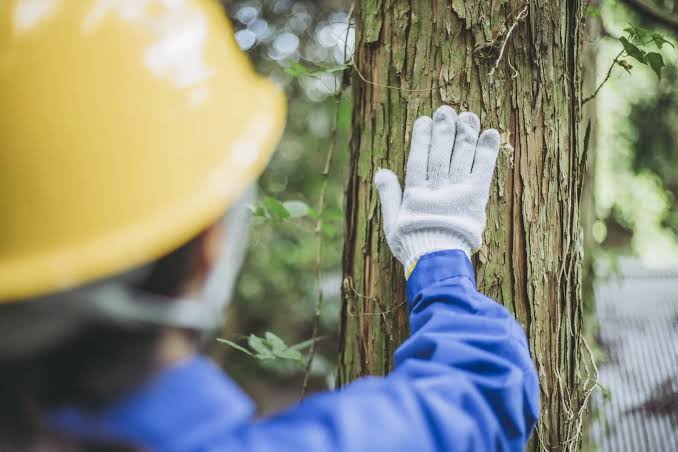
Before looking into the canopy, look at where the trunk enters the soil.
The base of a healthy tree normally widens into its root flare.
If the trunk appears to enter the soil like a straight telephone pole, the root flare may be buried by soil, mulch or previous grading.
That does not prove instability.
It is something worth examining.
Also look for:
- soil movement;
- newly exposed roots;
- cracks in the ground;
- cavities;
- loose or damaged bark;
- fungal fruiting bodies;
- decay around the lower trunk;
- recent excavation.
The base tells part of the structural story that leaves alone cannot show.
A mushroom near the trunk is information, not a removal order
Fungal growth around the base deserves attention because some fungi are associated with decayed roots or wood.
The species and location matter.
A mushroom in mulch does not carry the same meaning as a decay fungus growing from structural wood.
Do not diagnose the tree from a photograph of one mushroom.
The tree, roots, trunk condition and site history need to be considered together.
Look for changes, not just lean
Many mature trees are not perfectly vertical.
Some have grown toward available light for most of their lives.
A long-standing lean can be very different from a tree that shifted after wind, soil saturation or root disturbance.
A new lean deserves more attention when it is accompanied by:
- lifting soil;
- cracking around the root plate;
- exposed or broken roots;
- recent excavation;
- sudden canopy movement;
- storm damage.
History helps distinguish form from change.
Driveway use changes what is considered a target
A driveway is not occupied every minute of the day.
Its occupancy can still be substantial.
A limb over the section where vehicles are stored overnight has a different target pattern from a limb over the far edge of a driveway that cars pass under for a few seconds.
Walkways create another pattern because pedestrians move directly below the canopy.
This is one reason a professional tree risk assessment looks beyond “there is a branch over pavement.”
We need to understand who or what uses that space.
Tree health and tree risk are related, but they are not the same assessment
A healthy-looking tree can have a structural defect.
A declining tree can remain structurally stable for some time.
A tree health assessment looks at conditions such as foliage, pests, disease, root health, soil and decline.
Tree risk assessment adds failure potential, targets and consequences.
The overlap is substantial, but the question being answered is different.
If your concern is “Why is this tree losing leaves?” you may primarily need a health evaluation.
If your concern is “Could that stem reach the driveway if it fails?” the assessment needs to focus more directly on structure and risk.
Root heaving and tree instability are not the same thing
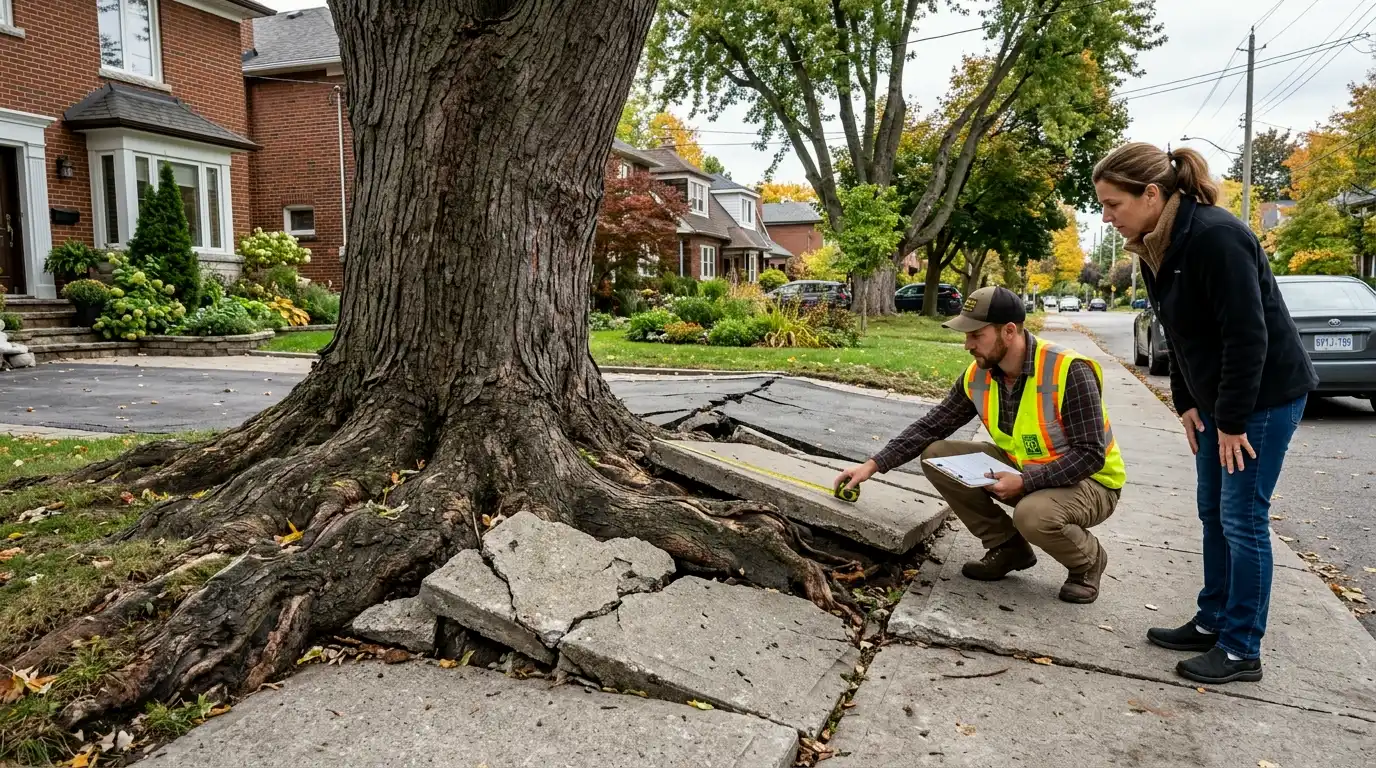
Surface roots can lift asphalt, pavers or concrete.
That can create a real property-maintenance problem or pedestrian trip hazard.
It does not automatically mean the root system is failing.
In compacted built environments, tree roots often occupy shallow soil where oxygen and moisture conditions are better.
The question then becomes whether the hardscape can be modified without damaging roots that matter to tree health or anchorage.
Do not cut a large root because it cracked the pavement
Root cutting can look like the simplest solution.
It may also affect tree stability.
The closer excavation occurs to the trunk and the larger or more structurally relevant the roots involved, the more careful that decision needs to be.
Grading, trenching, paving and root severing can damage the root system, sometimes with effects that become visible years later.
If the proposed driveway repair requires cutting major roots, have the tree evaluated before excavation starts.
That gives you options while the roots still exist.
Root pruning is a tree decision and a construction decision
There are situations where selected roots can be cut cleanly as part of planned construction.
The location, diameter, species, tree condition and amount of root loss all matter.
A contractor repairing pavement sees the root as an obstruction.
An arborist needs to consider what removing that root does to the tree.
Those two perspectives should meet before the saw does.
A root barrier is not a universal repair
Root barriers can be useful when designing a new planting or certain hardscape projects.
They work by redirecting root growth away from an area.
They are not automatically the correct answer for a mature tree that already has structural roots beneath a driveway.
Installing a barrier requires excavation.
Excavation itself can cut roots.
The design needs to consider how close the trench will be to the trunk and where the tree will still have usable rooting space afterward.
There is no single barrier depth that fits every Auburn property.
Sometimes the pavement should move instead of the root
A mature tree may be worth designing around.
Alternatives can include realigning a driveway, changing grading, bridging pavement over roots or rerouting utilities when protecting an existing tree is the goal.
For a walkway, that could mean shifting the path.
For a driveway edge, it might mean changing the footprint or construction approach.
The right answer depends on how much of the root zone would otherwise be disturbed.
Cracked asphalt does not tell you which root caused it
Pavement cracks for several reasons.
Freeze-thaw cycles matter in New Hampshire.
Base settlement matters.
Drainage matters.
Tree roots can contribute.
Before assigning the entire repair to the nearest tree, look at the crack pattern and surrounding grade.
If pavement is lifting directly over a visible root, the relationship may be clear.
If there are widespread cracks across the driveway, the hardscape itself may have additional problems.
Removing a tree does not repair a failing pavement base.
Walkway heaving deserves attention even when the tree is stable
A raised sidewalk slab may present very little concern for tree failure and still be a problem for people using the property.
That is a hardscape hazard created by the interaction between the tree and the site.
Possible options can include:
- changing the walkway alignment;
- adjusting individual pavers;
- redesigning the pavement section;
- evaluating whether selected roots can be managed;
- changing the access route.
The safest tree decision and the safest pedestrian decision should be considered together.
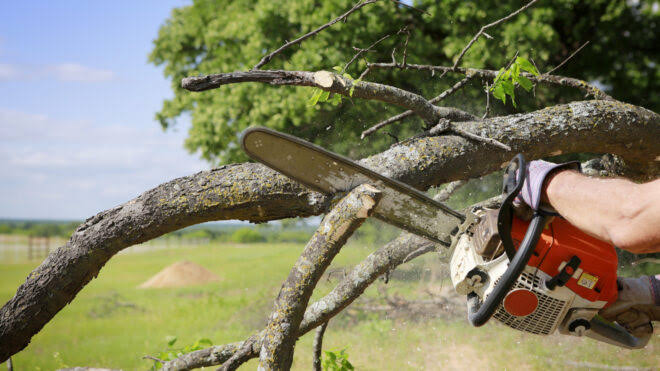
Clearance pruning should solve a defined problem
Low limbs can interfere with SUVs, delivery vehicles, snow-removal equipment and people walking beneath the canopy.
The solution is not to remove every low branch.
First define the needed clearance.
Then identify which branches create the conflict and whether they can be removed or reduced without producing poor structure.
Our arborist services in Auburn, NH include clearance pruning as one of the options considered after the tree and site are evaluated.
Branches do not rise higher on the trunk as the tree grows
This matters when planning long-term clearance.
A branch attached six feet above the ground will remain attached at approximately that height as the trunk and branch grow.
It does not gradually move to twelve feet.
The branch may become larger, longer and heavier.
If a young tree will eventually need vehicle clearance, structural pruning early in its development can reduce future conflict.
Waiting until a large scaffold limb blocks the driveway makes the correction more difficult.
Do not use topping to create driveway clearance
Cutting the upper canopy back to large stubs may appear to solve clearance quickly.
It creates another set of problems.
Topping can leave large wounds and stimulate dense regrowth with poor attachments.
A tree near vehicles and pedestrians should not trade one clearance problem for weaker future growth.
Selective pruning and reduction need to preserve useful structure.
Sight distance is different from vertical clearance
A branch may be high enough for a vehicle to pass beneath it and still block a driver’s view of traffic.
At the driveway entrance, look sideways.
Can a driver see approaching cars, bicycles or pedestrians?
Can somebody entering the public road see past foliage and low branches?
This may call for selective pruning along a specific line of sight rather than raising the entire canopy.
Auburn has driveway rules, but context matters
Auburn’s current site-plan regulations include driveway sight-distance and vegetative-clearance provisions for projects governed by those regulations.
The current site-plan document calls for 200 feet of sight distance and vegetation clearance across the driveway’s full width to 18 feet above the finished drive surface.
That should not be interpreted as an automatic instruction to prune every private residential tree to 18 feet.
Auburn has different regulatory documents for different kinds of development and driveway review.
If you are constructing, substantially changing or permitting a driveway, confirm which standards the Town applies to your project before designing the tree work around a number found online.
New driveway work can affect the tree more than routine pruning
If a driveway is being widened or rebuilt, ask where excavation will occur relative to the tree.
Construction can cause:
- root severance;
- soil compaction;
- fill over existing roots;
- grade changes;
- drainage changes;
- trunk injury from equipment.
Construction damage can affect a tree long after the project is complete.
Have valuable trees reviewed before the excavation limits are fixed.
Keep heavy equipment out of the root zone when possible
Driveway projects naturally bring machines close to trees.
That is where soil compaction becomes easy to overlook.
Repeated equipment traffic compresses soil, reducing pore space used by roots for air and water.
The pavement project may finish looking excellent while the tree begins a slow decline afterward.
Protecting the root zone during construction can be as meaningful as protecting the trunk from direct impact.
A buried root flare deserves a closer look
Driveway grading sometimes raises soil levels near trees.
Mulch can do the same thing gradually.
If the root flare disappears beneath fill, the lower trunk and roots experience different moisture and oxygen conditions than they were adapted to.
Do not excavate aggressively around the base without knowing what you are exposing.
A tree health inspection can help determine whether grade or mulch has changed around the trunk.
Deadwood over a driveway deserves more attention than deadwood over an empty corner
Dead branches eventually break.
The urgency depends partly on size, location and what is beneath them.
A dead twig high in the crown and a large dead limb over the garage entrance are not the same work priority.
During an assessment we identify where deadwood is located, how large it is and which targets are within reach.
That helps decide whether pruning is routine maintenance or a more immediate concern.
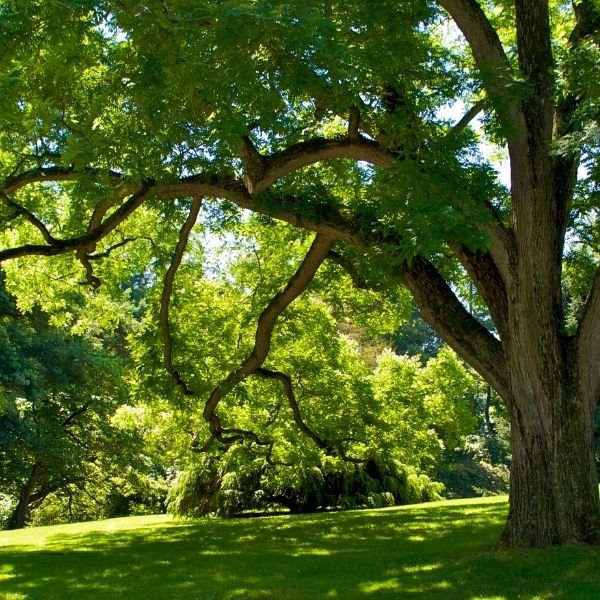
Cracks at branch unions change the conversation
A large codominant stem or branch union can deserve attention when visible cracking or movement is present.
Some unions are stronger than others.
Included bark, poor attachment and a developing crack may increase concern.
The location matters.
A defect that could affect a parked vehicle, front walkway or house needs to be evaluated in that context.
Do not judge the union only by whether the canopy is still green.
Cavities need context too
A cavity does not automatically make a tree unsafe.
Trees can remain standing with internal decay.
What matters is where the cavity is located, how much sound structure remains, whether cracking or other defects are present and what could be struck if failure occurs.
A visual inspection may be enough for some situations.
Other trees may justify a more detailed assessment.
Snow and ice change branch loading in Auburn
Southern New Hampshire trees regularly experience snow, ice and wind.
Those loads can expose weak attachments or previously damaged branches.
After a heavy event, look for new conditions:
- split branches;
- hanging limbs;
- fresh cracks;
- changed lean;
- root movement;
- newly broken tops.
A tree that looked unchanged all summer may deserve another look after a severe winter event.
Do not stand beneath a hanging limb to inspect it
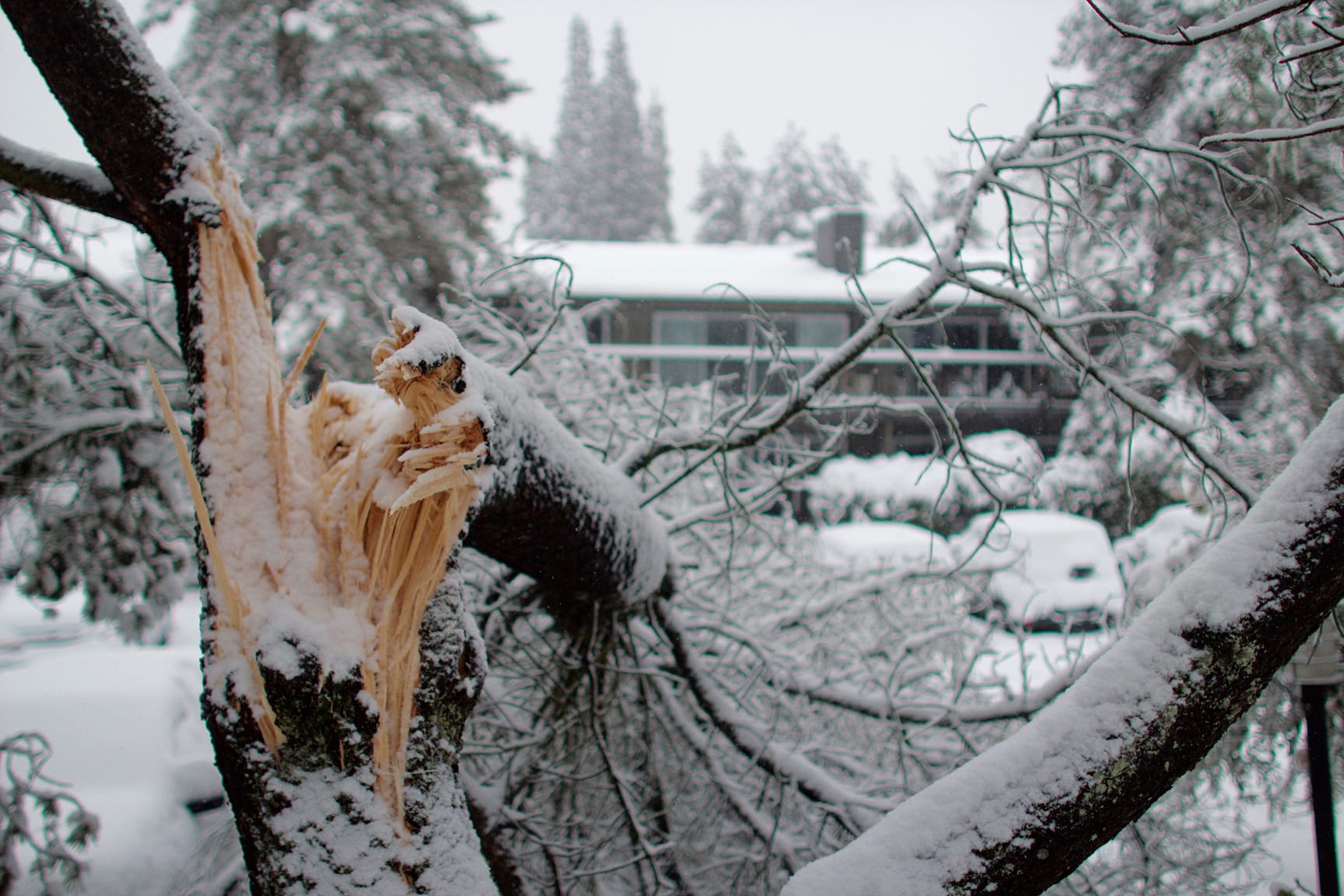
Some observations can be made safely from the ground.
A suspended branch is not one of the places to investigate up close.
Keep vehicles and people out of the area below visibly broken or hanging material.
If the tree involves utility lines, treat that as an electrical hazard and stay clear.
Technical Tree Service provides 24/7 emergency tree service in Auburn for urgent storm and tree hazards.
Emerald ash borer is established in Auburn
If the tree beside your driveway is ash, species identification matters.
Emerald ash borer has been detected in Auburn.
EAB damages ash trees and can contribute to decline and mortality.
That does not mean every ash near a driveway should be removed on sight.
It means an ash showing decline deserves an informed inspection because pest history changes what symptoms may mean.
Hemlocks in Auburn have local pest pressure too
Hemlock woolly adelgid and elongate hemlock scale have both been detected in Auburn.
If a hemlock beside a walkway is thinning, losing foliage or showing white woolly material on twigs, pest pressure may be part of the health diagnosis.
Again, health condition and tree risk are separate questions.
A pest can weaken a tree without making immediate failure inevitable.
Pesticide treatment requires another qualification in New Hampshire
Tree care sometimes moves from inspection into treatment.
Anyone applying pesticides or herbicides on property they do not own may need the applicable New Hampshire pesticide licensing.
That is separate from being an ISA Certified Arborist.
If treatment is recommended, ask who will apply it and what credential covers that work.
TRAQ and ISA Certified Arborist are different credentials
The International Society of Arboriculture’s Tree Risk Assessment Qualification, or TRAQ, is a specialized qualification focused on a standardized tree-risk-assessment process.
ISA Certified Arborist is a broader arboriculture credential.
Technical Tree Service’s current site confirms ISA Certified Arborist capability.
We do not present our Auburn service as a TRAQ assessment unless that qualification is specifically confirmed for the assessor involved.
If your insurer, attorney, municipality or project specification requires a formal TRAQ-qualified assessment, say that before scheduling.
A formal written risk report is not necessary for every tree
Many residential calls begin with a simpler question.
Should this branch be pruned?
Is this root conflict likely to get worse?
Does this tree need a closer structural evaluation?
Can the tree stay while the walkway is repaired?
An on-site arborist evaluation may be enough to guide ordinary maintenance.
A formal written assessment becomes more relevant when a record is required for a project, dispute, insurer, municipality or higher-consequence decision.
Ask what type of deliverable you actually need.
Not every driveway tree needs removal
A tree can remain near pavement when its structure is acceptable and conflicts can be managed.
Possible recommendations may include:
- monitoring;
- clearance pruning;
- deadwood removal;
- selective reduction;
- changing the hardscape;
- protecting the root zone during construction;
- modifying drainage;
- further inspection.
Removal becomes one option among several.
Its appropriateness depends on the actual defect, available mitigation and targets.
Cabling or bracing may apply to selected structural defects
Structural support systems can sometimes be considered for particular branch or stem configurations.
They do not make a tree incapable of failure.
They also do not repair decay.
If support is recommended, the assessor should be able to explain what condition it is intended to address and what inspection or maintenance will follow.
A support system should have a reason.
Tree removal becomes more likely when risk cannot be managed reasonably
Some trees do reach a point where preservation is a poor fit for the site.
That may involve major structural decay, root failure, severe storm damage or another condition where the remaining risk cannot be reduced to an acceptable level with practical mitigation.
The proximity of the driveway matters because it creates targets.
It should not be the sole reason for removal.
The decision should come from the tree’s condition plus the consequences of potential failure.
Boundary trees deserve another check before cutting
If the trunk or root system is close to a property line, confirm ownership before removal or major root cutting.
New Hampshire law addresses unauthorized cutting, destruction or injury to trees on another person’s land and can impose civil penalties.
Do not use the edge of a driveway as proof of the property boundary.
The two may not match.
Walkways and shared access can make ownership less obvious
Older properties sometimes have shared drives, easements or walkway locations that do not follow intuitive lot lines.
Before removing a mature tree because it interferes with access, make sure the tree and the proposed work are actually within the owner’s authority.
A survey may be more useful than guessing from a fence, pavement edge or mowing line.
Leaves and debris are maintenance issues before they are tree-risk issues
Leaves, needles, seeds and small twigs can collect on pavement.
Wet organic material can make a walkway slippery or obstruct a drain.
That is worth managing.
It does not automatically indicate poor tree health or structural risk.
Keep drainage paths open and clean high-use walking surfaces.
Reserve structural recommendations for structural conditions.
Salt exposure can affect trees beside driveways
Trees along driveways and walkways may receive deicing salt through runoff, splash or snow piles.
Repeated exposure can stress roots and foliage depending on species and concentration.
If a tree beside the driveway shows repeated edge burn, sparse foliage or decline, winter site conditions belong in the health discussion.
If you are planting a new tree, design for the mature tree
New planting gives you more control than managing a mature conflict.
Look at:
- mature canopy width;
- expected root space;
- snow storage;
- road salt exposure;
- driveway sightlines;
- overhead utilities;
- underground utilities;
- vehicle clearance;
- available uncompacted soil.
There is no universal “safe distance” based only on tree height.
Choose the species and planting location together.
Do not import a Texas species list into Auburn
A tree recommended next to a driveway in Texas may be a poor choice in New Hampshire.
Climate tolerance is only one difference.
Snow, road salt, local pests, soil and available root volume all matter.
Use species suited to the actual Auburn site rather than selecting a tree because an article calls its roots “non-invasive.”
Every tree develops roots.
The goal is providing adequate space and choosing a growth habit that fits the site.
Auburn driveway visibility may involve more than the tree
If visibility is poor near the road, inspect everything in the sightline.
The restriction may come from:
- a tree trunk;
- low limbs;
- shrubs;
- a stone wall;
- a snowbank;
- road geometry;
- or a combination of them.
Pruning one tree may not fix the actual sight-distance problem.
For driveway construction or modification, confirm the current Town standards that apply to that property and road.
Construction should start with a tree-protection conversation
If you are repaving, adding drainage, widening a walkway or rebuilding a driveway beside a tree you want to keep, contact the arborist before the excavation crew starts.
Once a major root is severed, the decision has already been made.
Before construction, we can look at:
- tree condition;
- root flare;
- likely root zone;
- proposed excavation;
- grade changes;
- equipment access;
- pavement alignment.
Sometimes the plan can move a few feet and avoid a much larger tree problem later.
Take photos before calling if the problem changes with weather
A driveway tree can look different after a storm than on a calm afternoon.
If it is safe, photograph:
- the entire tree;
- the trunk base;
- the pavement conflict;
- any crack or cavity;
- the branch over the driveway;
- a wide view showing the house, road and walkway.
If you noticed soil lifting during wind, describe that too.
A close-up tells us what the defect looks like.
A wide photo shows what it could affect.
What should you tell the arborist?
For a tree risk assessment in Auburn, NH, give us the problem as you observe it.
Useful information includes:
- tree species, if known;
- approximate trunk location relative to the driveway or walkway;
- whether the lean is new;
- whether pavement has lifted;
- recent digging or paving;
- storm history;
- dead or hanging limbs;
- fungal growth;
- vehicles normally parked below the tree;
- pedestrian use;
- planned construction.
Do not worry if you cannot identify the species or defect.
That is part of the inspection.
When should you request arborist services in Auburn?
Our arborist services in Auburn, NH are a good starting point when you are uncertain whether the issue calls for pruning, monitoring, health care or removal.
Call when:
- a branch has developed a crack;
- a tree changed lean;
- roots are being exposed or cut;
- pavement is lifting near a mature tree;
- deadwood hangs over vehicles or people;
- construction will enter the root area;
- foliage is declining;
- storm damage changed the tree.
You do not need to decide the service before the inspection.
That is what the assessment is for.
Tree service in Auburn may involve more than assessment
Once the condition is understood, the work may move into pruning, removal, stump grinding, storm cleanup or another tree-care service.
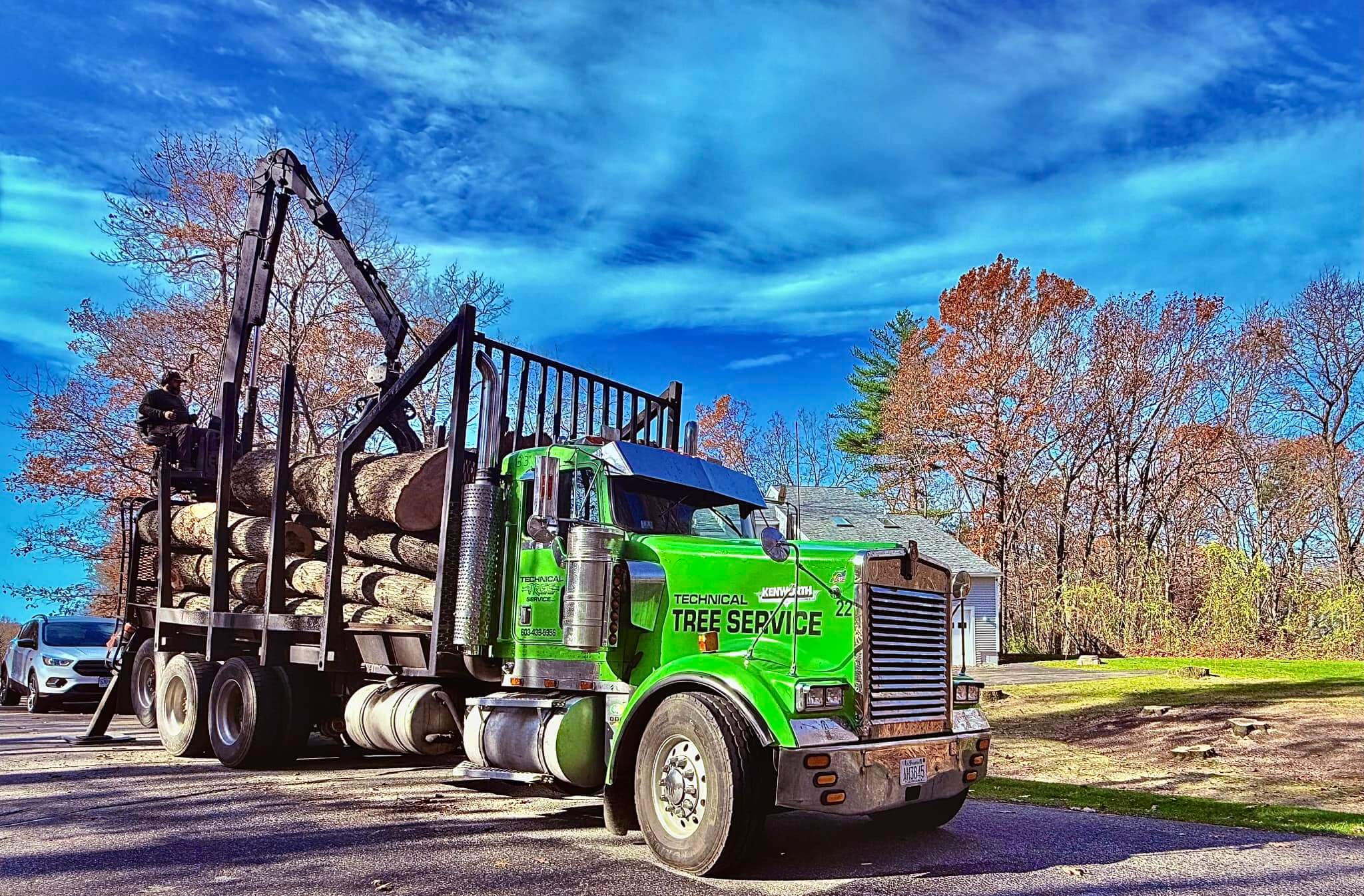
Our tree service in Auburn, NH page explains the local services we provide, including crane-assisted work when the tree and access make controlled lifting appropriate.
If you are not sure how those services differ, our guide to the types of tree service and when you need them provides a broader breakdown.
Nearby property in Candia?
Technical Tree Service also provides arborist services in Candia, NH for homeowners and commercial properties dealing with tree health, structure, clearance and maintenance questions.
The assessment logic is similar.
The tree, site and targets still determine the recommendation.
Need a tree assessment near a driveway or walkway in Auburn?
If you have roots lifting pavement, a branch hanging over parked vehicles, a tree leaning toward an access route or a driveway project planned close to mature trees, start with an on-site inspection.
Technical Tree Service provides tree health evaluations and arborist services in Auburn and throughout southern New Hampshire.
Our current site confirms ISA Certified Arborist capability, full insurance, company-owned crane equipment for appropriate tree work and 24/7 emergency service.
Call (603) 438-5956 to schedule an on-site estimate or assessment.
A tree does not become hazardous because a driveway was built beside it.
The decision comes from what the tree is doing, what the site has done to the tree, and what would be affected if something fails.