Preventive care for an older tree in Weare should start with one question: what has changed? A mature oak, maple, pine, birch, or hemlock does not need aggressive pruning or fertilizer simply because it is old. The better goal is to maintain a stable crown, protect the root zone, limit avoidable stress, and catch changes in health or structure while there are still practical options.
That is the basis of good mature tree maintenance in Weare, NH. Some trees need pruning. Others need soil or root-zone attention. Some need nothing more than monitoring for now.
Mature does not automatically mean declining
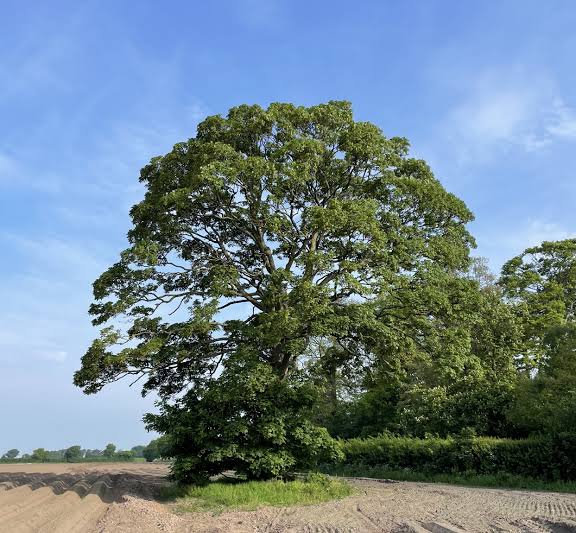
A large old tree may grow more slowly than a young one without being unhealthy.
Mature trees naturally allocate resources differently as they age. Their crowns, trunks, roots, and accumulated wounds create different demands than those of young trees. That means the maintenance objective changes too.
The important distinction is between normal maturity and a change that suggests decline.
Look for changes such as:
- more dead twigs appearing in the upper crown;
- leaves becoming noticeably smaller or sparser than in prior years;
- reduced twig growth compared with the tree’s previous pattern;
- new cavities, fungal fruiting bodies, or bark changes;
- large limbs dying back;
- movement or disturbance around the root zone;
- a lean or crack that is new rather than longstanding.
A single unusual leaf is not the issue. A pattern that is different from previous years is more informative.
Start preventive care with an annual ground-level inspection
You do not need to climb the tree to notice meaningful changes.
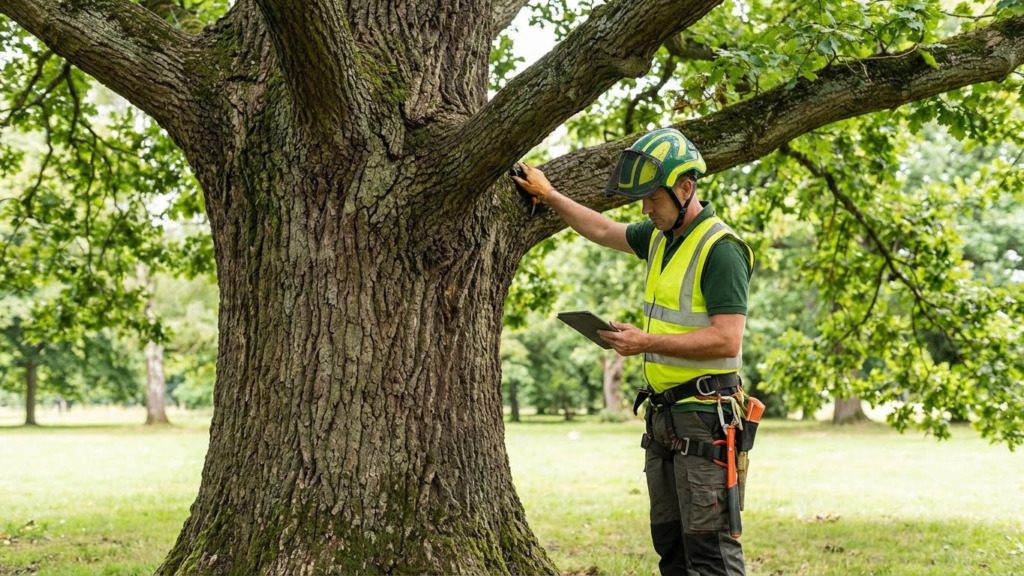
Once a year, walk far enough away to see the entire crown. Compare one side with the other. Look for dead sections, broken limbs, unusually thin foliage, or branches that have changed position.
Then move closer.
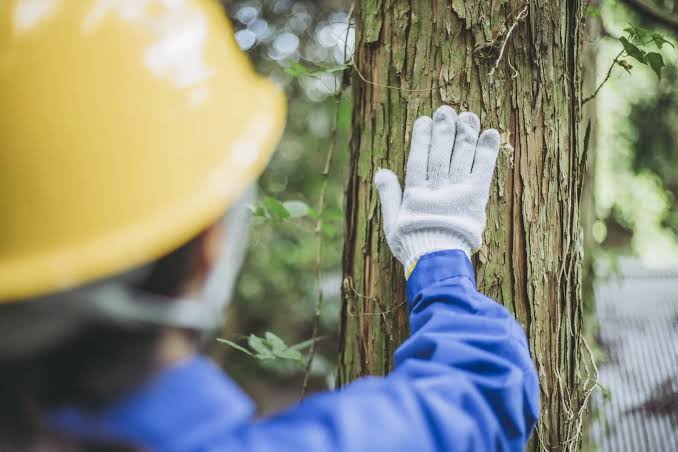
Look at the trunk for cracks, cavities, mushrooms, loose bark, or wounds. Check major branch unions from the ground where they are visible. At the base, look at the root flare and surrounding soil.
An annual check also gives you a baseline.
If something changes after a windstorm, ice event, drought, construction project, or excavation, you have a better sense of whether the condition is new.
On our tree health assessment page, we explain the same root-to-canopy approach we use when evaluating a tree, with more detailed testing considered when the visual inspection points to a specific concern.
Older trees usually need a pruning objective, not a generic trimming
“Trim the tree” is too broad to be useful.
For a mature tree, the first question should be what the pruning is intended to accomplish.
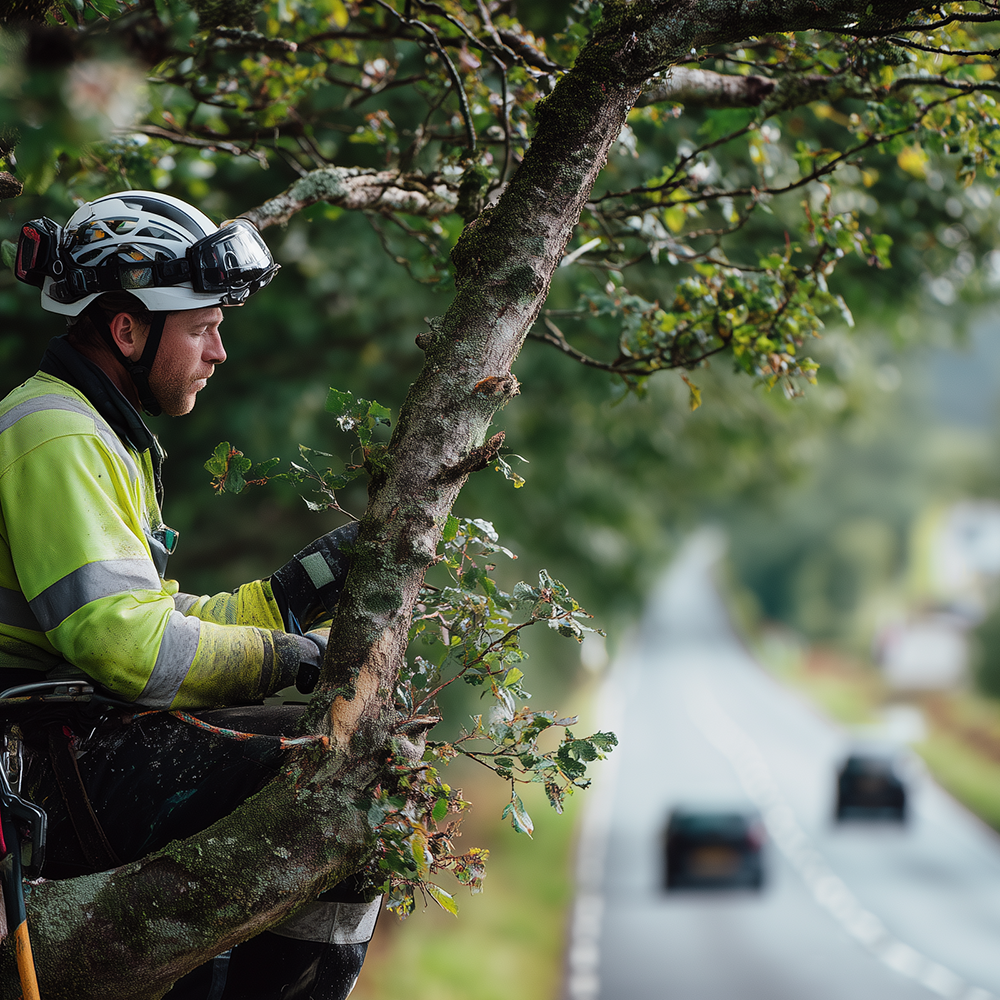
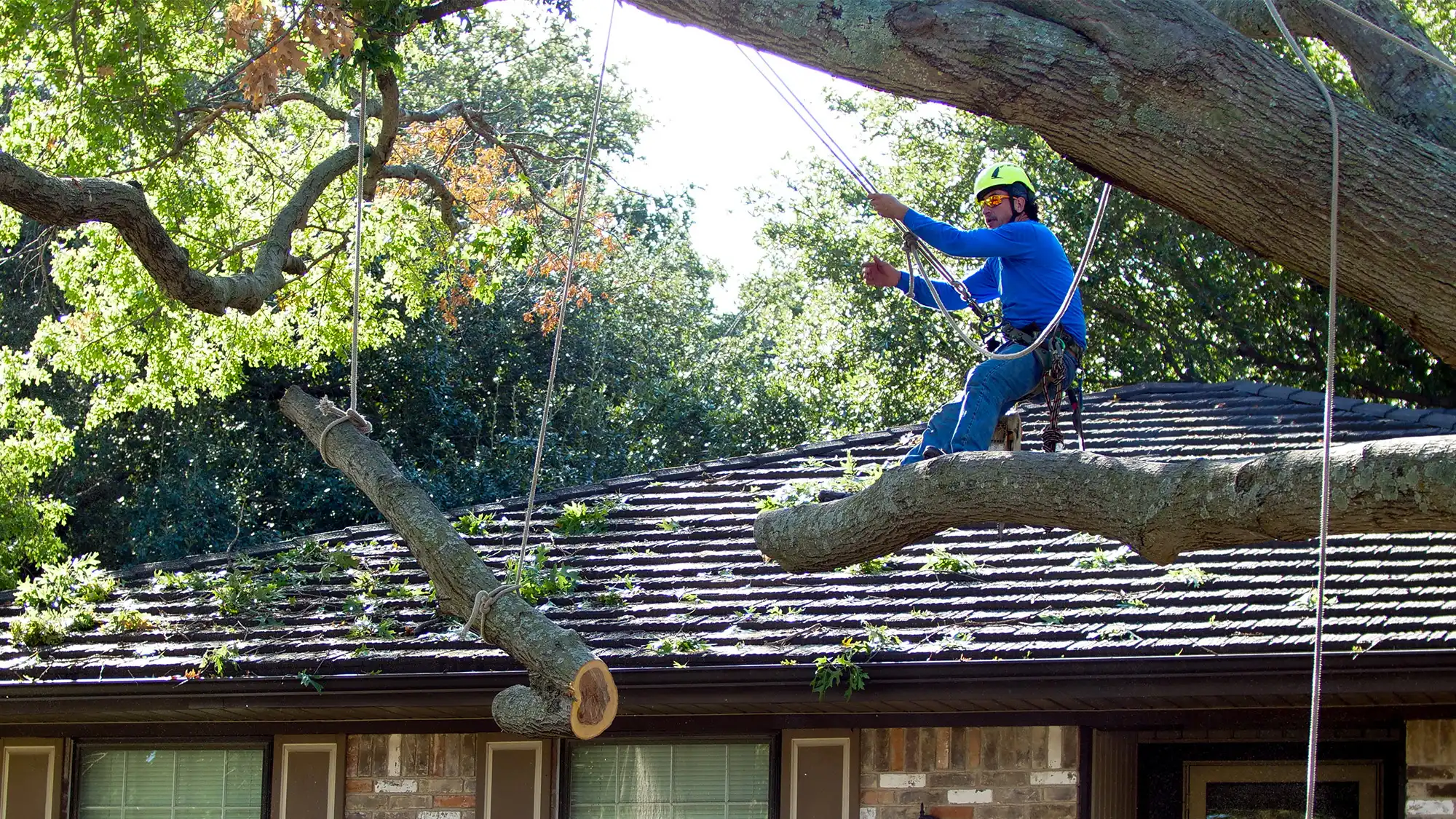
The objective might be to remove a dead limb over a driveway. It might be to shorten an overextended branch with too much end weight. It could be clearance from a roof or removal of a damaged branch after a storm.
Those are different jobs.
For mature trees, cuts should be tied to a reason rather than removing live canopy simply to make the tree look smaller.
That distinction becomes more important as trees age because removing live branches also removes leaf area and creates wounds the tree must respond to.
Deadwood removal and live-branch reduction solve different problems
A dead branch no longer contributes leaf area to the tree.
Removing it may make sense when its failure could affect a house, driveway, walkway, play area, or other target below.
A live branch is different.
If an older limb has become long and heavily extended, an arborist may sometimes reduce leverage by shortening the branch back to an appropriate lateral rather than removing the whole limb at the trunk.
That can preserve more functioning canopy and avoid creating an unnecessarily large wound near the main stem.
It is also different from topping.
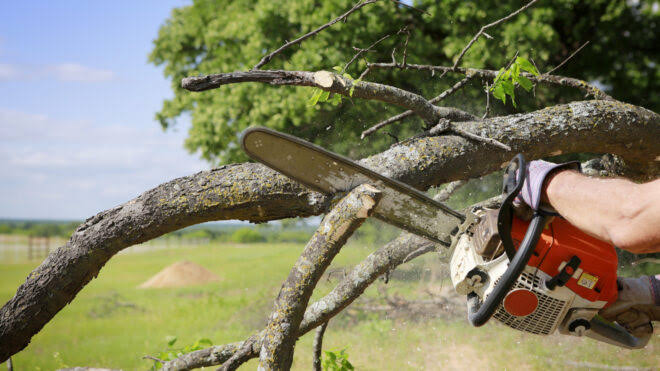
Topping makes indiscriminate heading cuts to control tree size. It can lead to decay, stress, poor structure, and increased risk.
For an older tree, “smaller” is not a pruning objective by itself.
Heavy canopy removal can create another stress
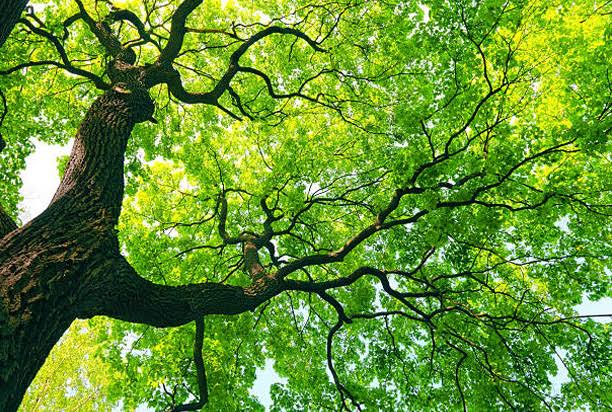
Older trees still depend on their leaves to produce the carbohydrates used for maintenance, defense, and growth.
That is why a large pruning dose deserves more caution than a few targeted cuts.
There is no useful universal percentage that tells you how much every mature tree can lose. Species, condition, age, branch size, season, previous pruning, and the objective all matter.
A healthy mature maple with one overextended limb is not the same pruning problem as an oak with a thin crown and extensive dieback.
The amount of live tissue removed should follow the condition of the individual tree.
This is one reason preventive care usually works better when problems are addressed before they require large cuts.
Protect the roots before trying to improve them
A mature tree has spent decades developing in one soil environment.
Sudden changes around that root system can create more stress than homeowners expect.
Common examples include:
- parking vehicles repeatedly under the crown;
- storing building materials around the tree;
- driving heavy equipment across the root zone;
- trenching for utilities;
- adding or removing significant amounts of soil;
- changing drainage;
- cutting roots for a driveway, patio, wall, or foundation.
Compaction reduces pore space in the soil, which affects movement of air and water around roots.
Trenching can remove roots outright.
For an older tree that is currently stable, preventing those disturbances is often more useful than trying to compensate for the damage afterward.
If construction is planned around a tree you want to keep, tree protection should be discussed before machinery arrives.
Soil compaction is different from a fertilizer problem
A tree growing poorly does not automatically need nutrients.
If roots are sitting in compacted soil with poor aeration, adding fertilizer does not restore pore space.
If drainage is poor, fertilizer does not correct saturated soil.
If roots were severed during construction, fertilizer does not reconnect them.
When compaction is part of the problem, specialized methods using compressed air may be considered to loosen soil while reducing the likelihood of damaging roots compared with conventional digging.
The appropriate treatment depends on what the soil assessment actually finds.
Fertilizer should answer a diagnosed need
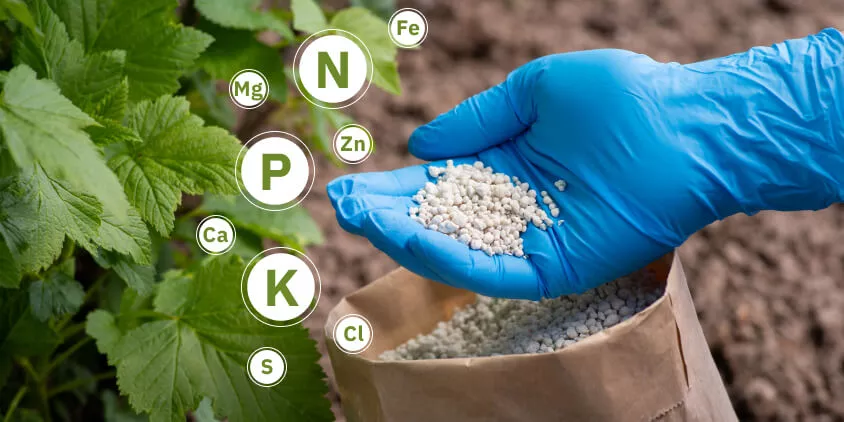
It is tempting to think that an old tree needs extra fertilizer because its growth has slowed.
Slow growth alone does not prove a nutrient deficiency.
Mature trees naturally grow differently than young trees, and excessive stimulation is not necessarily the maintenance goal.
A soil test can help determine nutrient status and pH. Foliage, shoot growth, species, site history, and surrounding landscape also provide context.
On our tree maintenance in Weare, NH page, we explain that fertilizer and deep-root fertilizer may be considered when appropriate, along with soil and root-zone evaluation.
That order matters.
Identify the problem first. Then decide whether nutrition belongs in the treatment plan.
Mulch can improve the root environment without touching the trunk
Mulch is useful around mature trees because it moderates soil temperature and moisture, reduces competition from turf, and keeps mowers and string trimmers farther from the trunk.
Depth matters.
A layer of roughly 2–4 inches is generally appropriate.
Placement matters just as much.
Mulch should be kept away from direct contact with the trunk rather than piled into a volcano around the base. The root flare should remain visible.
Where the landscape allows, extending mulch farther across the root zone is generally more useful than building a deep, narrow ring around the trunk.
A wide layer protects more soil while keeping foot and equipment traffic away from roots.
Water the root zone during extended dry periods
Large established trees can tolerate periods without irrigation better than newly planted trees, but prolonged drought still creates stress.
For an established tree, the useful watering area is not the trunk.
Fine absorbing roots occupy soil across a much wider area. Apply water through the root zone near and somewhat beyond the dripline and allow it to penetrate deeply.
A slow soaking is usually more useful than frequent shallow watering.
Before irrigating, check soil conditions. A tree growing in wet or poorly drained soil has a different problem from one experiencing drought.
Do not automatically water on a calendar
“Deep water once a week” sounds convenient, but the tree does not know what day it is.
Rainfall, soil texture, slope, drainage, temperature, species, and root competition all affect moisture.
A sandy site can dry much faster than a heavier soil.
A tree surrounded by turf may compete for moisture differently than one growing in a mulched area.
The better question is whether the root zone is becoming dry enough to create stress.
In Weare and elsewhere in New Hampshire, rainfall can vary considerably from one period to another. Check established trees during prolonged dry spells rather than assuming their needs from the calendar alone.
Avoid changing the environment around an old tree all at once
Preventive tree care is often less about adding treatments and more about avoiding abrupt changes.
A tree that has spent decades growing beside an open lawn may respond poorly if the grade is raised and the soil over its roots is compacted during a landscaping project.
A tree adapted to one drainage pattern may react after a new driveway redirects runoff toward or away from the root zone.
Even well-intended treatments change the growing environment.
When the tree is healthy, preserving the conditions that are already working deserves attention.
Watch the upper crown for early changes
Many homeowners inspect only the trunk because it is easy to see.
The crown often tells another part of the story.
Look for a section that leafs out later than the rest, repeated branch-tip dieback, sparse foliage, or a noticeable reduction in leaf size.
Those symptoms do not identify a cause by themselves.
Root injury, drought, disease, insects, soil changes, storm damage, and other stresses can all produce canopy symptoms.
The value of noticing them early is that the next step can be diagnostic rather than reactive.
Mushrooms at the base deserve context, not an instant removal decision
Fungal fruiting bodies on the trunk or near the root flare deserve attention because some fungi are associated with wood decay.
That does not mean every mushroom proves a tree is about to fail.
Species of fungus, location, extent of decay, remaining sound wood, tree species, crown condition, targets, and site exposure all affect the assessment.
If mushrooms appear around an older tree that has never shown them before, photograph the location and avoid removing the evidence before an arborist can see it.
A cavity does not tell you by itself whether the tree is safe
Older trees can contain cavities and internal decay while continuing to live for years.
The question is how that defect affects structure.
Location matters.
A cavity at a major union is different from one in another part of the trunk. Root decay is different from a hollow branch. The amount and distribution of sound wood matter too.
External inspection may sometimes be enough to set the next step. In other cases, a more detailed risk assessment or diagnostic testing may be needed.
This is where our tree health assessment process can be more useful than treating every hollow as a removal recommendation.
Changes after construction deserve long-term monitoring
Root injury does not always produce an immediate canopy response.
A mature tree can appear relatively normal shortly after excavation or compaction and show stress later.
If work has occurred within the root zone, document what changed.
Was soil added?
Were roots cut?
Did heavy equipment cross the area?
Was drainage changed?
Those details help explain future changes in foliage or growth.
A tree that was stable before construction and begins thinning afterward should be evaluated in that context.
Storm damage should be separated from routine maintenance
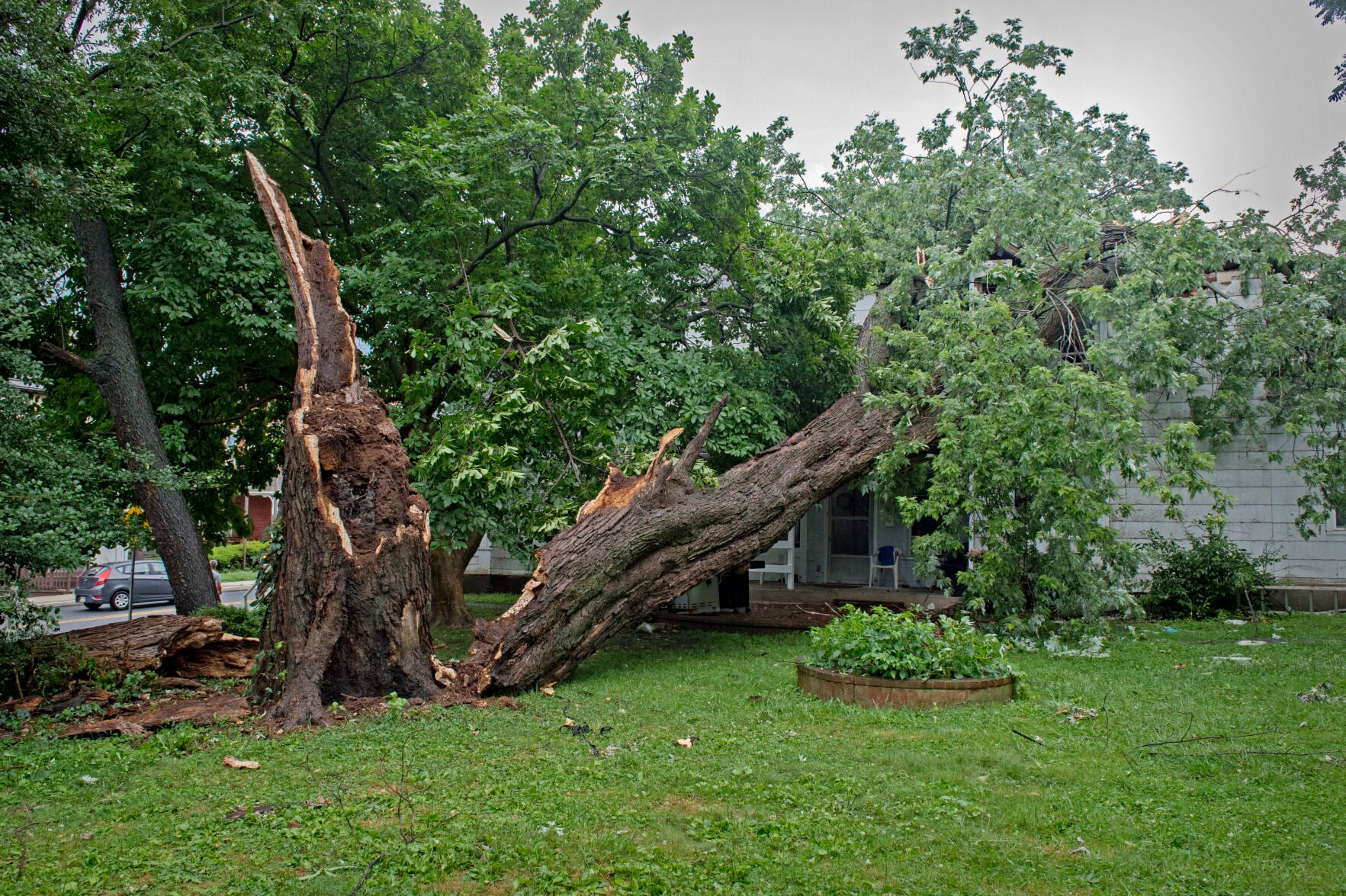
Preventive care can reduce some avoidable defects, but it cannot make a mature tree storm-proof.
After a major wind, snow, or ice event, inspect the tree again even if it was checked earlier in the year.
Look for hanging limbs, cracked unions, branches resting on other branches, fresh trunk cracks, root movement, or a change in lean.
Do not stand beneath a damaged crown to inspect it.
If the concern is overhead or involves large wood, the inspection should remain at ground level until a qualified tree professional can assess the condition.
We also explain the types of tree service and when you need them to help homeowners distinguish routine maintenance from storm response, risk assessment, pruning, or removal.
Preventive maintenance can sometimes mean doing less
There are trees that do not need pruning this year.
There are trees that do not need fertilizer.
There are trees whose soil should not be disturbed.
If the crown is stable, the root zone is protected, and no meaningful health change is visible, monitoring may be the appropriate maintenance decision.
Preventive tree care works best when the treatment answers a problem or objective instead of being performed because another year has passed.
That approach is especially useful for older trees, where unnecessary disturbance can create work for the tree that it did not need.
Tree maintenance in Weare should account for the individual site
On our Weare service pages, we identify oaks, sugar maples, white pines, birches, and hemlocks among the trees commonly found in the area.
Those species do not all respond to stress, pruning, soil conditions, or pests in the same way.
The site matters too.
A tree standing in an open lawn has different wind exposure from one surrounded by woods. A mature tree beside a driveway has a different root-zone history from one growing in an undisturbed part of a property.
That is why we start a maintenance plan with the tree’s species, condition, location, and the homeowner’s objective.
For nearby properties, we also have a dedicated page for tree maintenance in Dunbarton, NH, where we follow the same site-specific approach rather than treating every property as one generic service area.
Know when maintenance has become a risk decision
Preventive care is meant to preserve trees when their condition supports preservation.
There are also situations where maintenance cannot reasonably correct the underlying problem.
A dead tree, an irreparably hazardous tree, extensive structural failure, or a condition that leaves no practical pruning or support option may shift the conversation toward removal.
That decision should not be based on age alone.
An older tree can remain a strong part of the landscape. A younger tree can have a serious defect.
Condition and consequence matter more than the number of years the tree has been standing.
Build a record instead of waiting for a crisis
For a mature tree you want to keep, take a few photographs from the same locations each year.
Record major pruning, construction nearby, storm damage, drought stress, pest problems, and noticeable canopy changes.
That record gives an arborist something more useful than “it looks different lately.”
It can show when a branch began declining, whether crown density changed gradually, or whether symptoms followed a specific disturbance.
That is preventive care in a practical form: catch change, understand the cause, and intervene only when the tree gives you a reason.
If you have an older tree in Weare and want to understand what it actually needs, we can start by looking at its current condition, structure, root zone, and site history before recommending any work.
On our Weare tree maintenance page, we explain how inspections, pruning recommendations, soil and root-zone care, and longer-term planning can fit into a mature tree maintenance program.
The goal is to preserve what is working, identify meaningful changes early, and recommend work only when the tree and site give us a reason to do it.