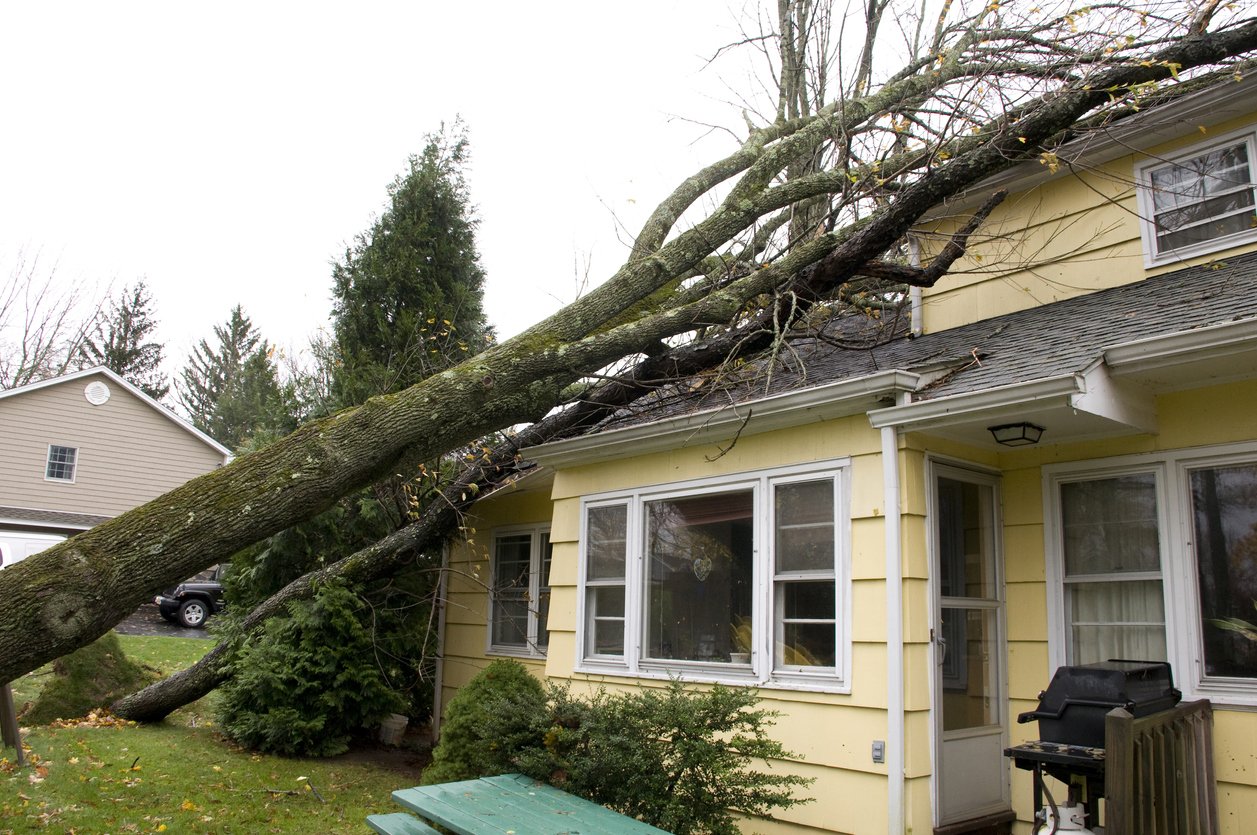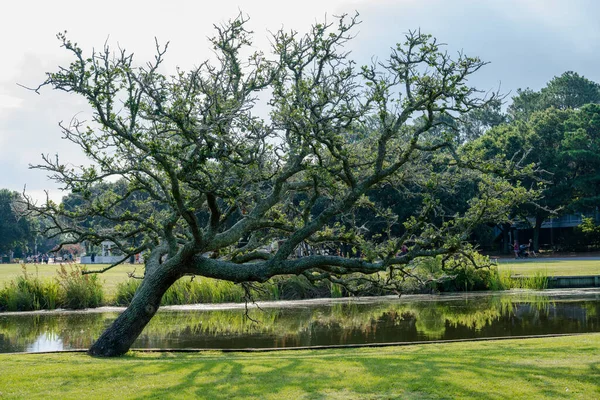
A leaning tree in Manchester, NH is not automatically dangerous. The bigger question is whether the tree has always grown that way or whether its position recently changed. A new lean after wind, saturated soil, root disturbance, or a storm deserves prompt attention, especially when the tree can reach a house, driveway, sidewalk, utility line, or another area people regularly use.
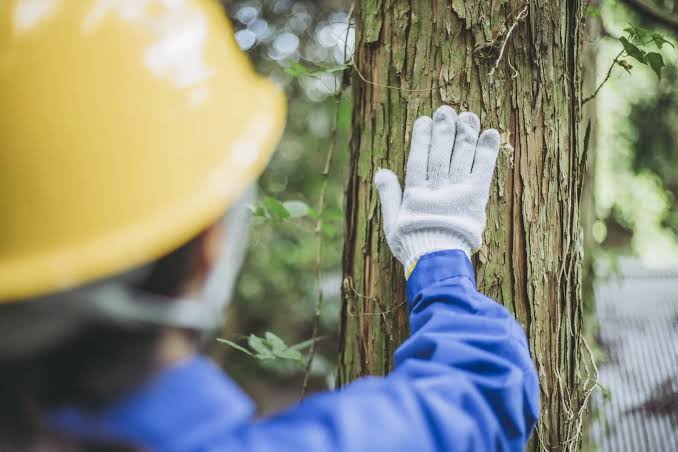
A professional tree risk assessment in Manchester, NH looks beyond the angle. The arborist examines the root zone, soil, trunk, branch structure, crown, recent site changes, and the objects or people that could be hit if part of the tree fails.
That context is what separates an unusual-looking tree from one that may be losing support.
A Tree Can Lean for Years Without Being Unstable
Trees do not all grow straight.
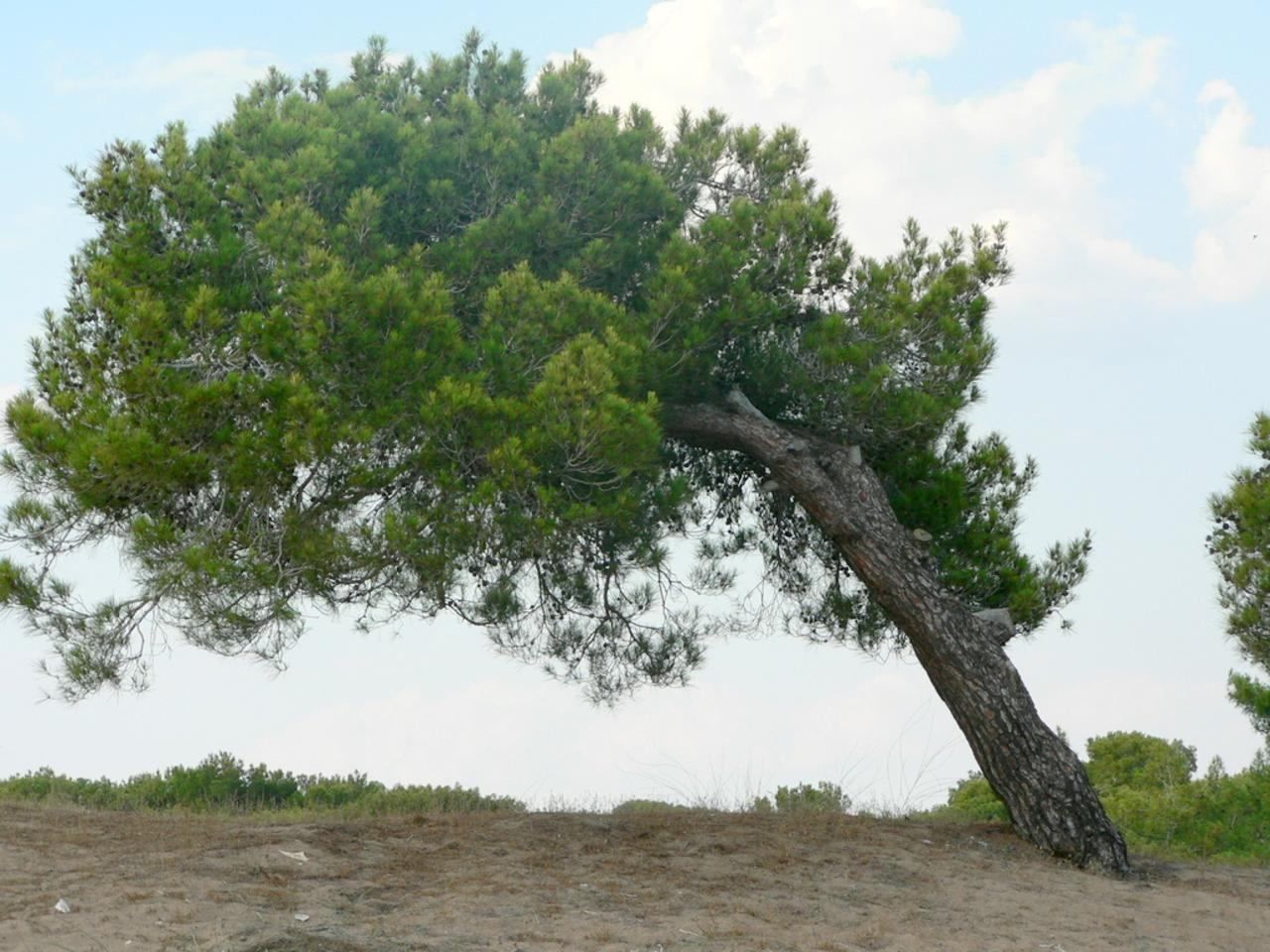
A young tree may bend toward available light. A tree growing along the edge of a wooded area may develop more canopy on the open side. Wind exposure, competition from neighboring trees, slope, and the tree’s early development can all influence its form.
Over time, the tree adds wood in response to the loads acting on it. The upper trunk may also curve back toward a more upright position even though the lower trunk remains angled.
That history matters.
If a mature tree has held the same position for many years, the root zone is undisturbed, the soil is not lifting, and there are no new structural changes, the lean by itself does not tell you that the tree is about to fall.
An arborist still looks at the rest of the structure. The point is that an old lean and a newly developing lean do not carry the same information.
A New Lean Changes the Conversation
Recent movement is more concerning because something may have changed below ground.
Strong wind can load the crown enough to move roots in the soil. Prolonged rain can reduce soil strength. Construction can remove or damage roots that previously helped anchor the tree. A nearby excavation, trench, driveway project, or grade change can also alter the root zone.
Sometimes the homeowner notices the difference immediately. Other times the first clue is that the trunk suddenly looks closer to the roof, fence, or neighboring tree than it did before.
A new lean does not prove that the tree is going to fail. It does mean the cause needs to be understood.
If the change appeared during or immediately after a storm, keep people away from the area beneath the tree until it can be evaluated.
Arborists Start at the Ground
When homeowners worry about a leaning tree, their eyes usually go to the top.
The root zone can tell a more useful story.
An arborist will look around the base for soil that has lifted, cracked, separated, or formed a mound on one side. Fresh gaps between the soil and trunk can indicate movement. Roots that have recently become exposed or pulled upward can also change the assessment.
The arborist is looking for evidence that the root plate has shifted as a unit.
This matters because a tree can have a full green canopy while its anchorage is changing below the surface. Leaves tell you something about tree health, but they do not prove that the root system is mechanically stable.
Soil conditions are part of the picture too. Saturated ground after heavy rain behaves differently from firm, well-drained soil. Compaction, erosion, restricted rooting space, recent trenching, and changes in grade can all affect how roots support the tree.
Technical Tree Service includes root damage, soil compaction, buried root flares, drainage, and moisture conditions among the issues evaluated during its arborist services in Manchester, NH.
Ground Cracks Matter More When They Are New
Cracks around a tree base deserve context.
An old dry-soil crack elsewhere in the lawn is not the same observation as fresh separation appearing beside the root plate immediately after high winds.
The arborist looks at where the crack is, how fresh it appears, and whether it corresponds with the direction of movement.
Fresh soil lifting on the side opposite the lean can be especially concerning because roots may be rotating upward as the tree shifts.
This is one reason photographs can help when a tree has been changing slowly. A picture taken from the same safe location every few months can document whether the trunk position or soil around the base is actually changing.
Photos do not replace an inspection, but they can provide useful history.
The Trunk Is Checked for More Than the Lean

After the root zone, the arborist looks at the trunk and major stem unions.
Cracks, splits, old wounds, cavities, damaged bark, weak branch attachments, and visible decay can change how the tree carries load.
Their location matters.
A cavity low on the trunk near the root flare raises different questions from a small wound higher on one side. A crack passing through a major union has a different mechanical meaning from superficial bark damage.
Size alone does not answer the question either.
A large tree can sometimes compensate for defects by adding wood around an injured area. Another tree can have a defect that looks small from one angle but extends farther internally.
The visual inspection is where the arborist decides whether the available evidence is enough to make a recommendation or whether a more detailed examination is justified.
Does a Hollow Trunk Mean the Tree Will Fall?
No.
A cavity tells the arborist that wood has been lost or altered in part of the trunk. It does not tell you by itself how much load-bearing wood remains, whether decay is still progressing, or whether the tree has developed compensating growth.
The position of the cavity, the amount and distribution of remaining wood, cracks around it, crown size, tree species, and nearby targets all matter.
That is why homeowners should be cautious about both extremes.
Ignoring a large cavity because the canopy is still green can miss a structural problem. Assuming every hollow tree has to be removed can lead to unnecessary removal.
An on-site assessment fills in the missing context.
What Do Mushrooms at the Base Mean?
Fungal fruiting bodies near the trunk or roots deserve attention because some decay fungi affect wood involved in structural support.
The presence of a mushroom does not identify the extent of decay by itself.
An arborist looks at the type and location of fungal growth, the condition of the surrounding roots and trunk, and other symptoms on the tree.
Some fungi live on dead organic material without meaning the standing tree has lost its support. Others are associated with decay in roots or lower trunk tissue.
A photograph of the fruiting body can be useful because mushrooms may disappear before the inspection. Avoid removing all of them before the tree is evaluated if the identification may help explain what is happening.
The Arborist Also Looks Up
Root movement can threaten the whole tree, but a leaning tree can have separate problems higher in the canopy.
Dead branches, storm-broken limbs, weak unions, cracks, unusually long branches, and uneven canopy weight can create their own failure concerns.
A tree may lean toward a house while carrying most of its crown weight in another direction. Another tree may lean away from the house but have a large compromised branch extending over the roof.
That is why risk assessment does not end with drawing a line through the trunk.
The entire load path matters, from roots through trunk and branch structure to the outer crown.
Can You Tell Risk From the Angle of the Lean?
There is no single angle that works as a universal removal rule.
You may see online advice claiming that a tree becomes dangerous at a particular number of degrees. That sounds precise, but it leaves out too much.
A tree’s history, size, root condition, crown distribution, species, exposure, soil, defects, and targets all influence the assessment.
Ten degrees of new movement with fresh soil lifting can be more concerning than a much larger lean that has remained unchanged for decades.
The useful question is not simply, “How many degrees is it leaning?”
The useful question is, “Why is it leaning, has it changed, and what else is happening at the tree and site?”
What Is a Target in Tree Risk Assessment?
In arboriculture, a target is something that could be struck if the tree or one of its parts fails.
That may be a house, garage, parked vehicle, road, walkway, play area, utility line, patio, or person.
How often the area is occupied matters.
A defective branch over a rarely used back corner of a large property does not create the same exposure as the same branch over the front steps.
The consequences can differ too. A branch falling into an empty section of lawn is a different event from a whole tree reaching a bedroom, public sidewalk, or power line.
This is why an arborist evaluates the property along with the tree.
Technical Tree Service’s Manchester arborist page specifically lists roofs, driveways, walkways, and other potential targets as part of its inspection process.
A Defect Does Not Automatically Equal High Risk
This distinction is easy to miss.
A tree may contain a defect and still have manageable risk.
A dead branch over open ground might be pruned. A weak branch union may be managed through reduction or another appropriate treatment. A mature tree with a stable old lean may simply need monitoring.
The presence of a defect tells the arborist what needs investigation.
Risk increases when that defect has a realistic likelihood of failure, the failing tree part has a good chance of reaching a target, and the consequences would be serious.
Changing any one of those pieces can change the recommendation.
What Does a Manchester Arborist Actually Inspect?
For a residential leaning-tree concern, an arborist will typically work around the tree and site rather than judge it from the driveway.
The assessment may include:
- whether the lean appears old or recent;
- soil cracking, lifting, or separation around the roots;
- exposed, cut, damaged, or decayed roots;
- drainage and saturated-soil conditions;
- trunk cracks, cavities, wounds, or decay indicators;
- major branch unions;
- dead, broken, or hanging limbs;
- crown shape and weight distribution;
- evidence of previous failures;
- recent construction or grade changes;
- surrounding wind exposure;
- structures, driveways, walkways, vehicles, and utility lines within reach;
- and whether the tree has changed since a storm or other event.
A basic residential inspection can answer many questions visually from the ground.
More specialized testing is sometimes appropriate when a particular concern cannot be resolved that way.
Does Every Tree Risk Assessment Require Special Equipment?
No.
Some online articles make tree assessment sound like every visit requires laser scanning, sensors, or advanced decay equipment.
Most trees do not begin there.
A detailed ground-based inspection often provides enough information to identify visible defects, site changes, targets, and the need for further work.
More advanced techniques can be used when a specific question remains. Depending on the tree and concern, that could involve closer inspection of an upper stem, root investigation, or equipment intended to gather more information about internal wood.
The tool should answer a question that matters to the decision.
Using advanced equipment without a clear reason does not automatically produce a better recommendation.
Construction Can Change a Tree That Previously Looked Stable
One of the more easily overlooked causes of changing tree stability is work around the property.
Roots extend well beyond the visible trunk base.
Trenching for utilities, driveway expansion, grading, retaining-wall installation, foundation work, soil stockpiling, and repeated equipment traffic can cut roots or change the soil environment.
The tree may remain standing after the project and show no immediate canopy symptoms.
That delay can give the impression that the work caused no harm.
If a tree starts leaning after recent excavation or major disturbance near its root zone, tell the arborist what work occurred and where. That history may explain more than the trunk angle itself.
Technical Tree Service also evaluates trees before construction and property changes through its arborist and consultation services.
Can Pruning Make a Leaning Tree Safer?
Sometimes pruning can reduce a specific risk, but pruning is not a universal treatment for lean.
If the concern is an overextended or damaged branch, selective pruning may reduce load on that part of the crown.
If the whole root plate is actively moving, removing a few branches does not repair lost anchorage.
Heavy pruning can create new problems if too much live canopy is removed. Trees need foliage for photosynthesis, and large or poorly placed cuts can create additional stress and wounds.
The pruning objective should come from the defect being managed.
Technical Tree Service provides pruning as part of its tree service in Manchester, NH, but the company’s site also states that pruning cannot correct every tree defect.
What About Cabling and Bracing?
Cabling or bracing may be appropriate for certain structural conditions, particularly weak stems or branch unions.
That does not mean a cable is a way to pull a mature, root-compromised tree upright.
Support systems are designed around a particular structural objective and require inspection and maintenance. They also do not guarantee that a supported tree can never fail.
If the concern is whole-tree movement at the root plate, the arborist first needs to understand what has happened below ground.
Young, recently planted trees are another situation. Temporary staking may occasionally help them establish, but that is very different from trying to straighten a mature leaning tree.
When Does a Leaning Tree Become an Emergency?
A tree deserves same-day attention when there are signs that the situation may still be changing.
Examples include a tree that developed a new lean during a storm, fresh root-plate movement, rapidly widening soil cracks, a newly split trunk, hanging major limbs, or an uprooting tree that can reach a home or occupied area.
Keep people and vehicles away from the potential fall area while help is being arranged.
If power lines are involved, do not approach the tree or try to move branches. Contact the utility or emergency services as appropriate.
Technical Tree Service lists hazardously leaning trees after storms and uprooted trees threatening structures among the situations handled through its 24/7 emergency service.
When Can an Assessment Be Scheduled Normally?
A long-standing lean without recent movement may not require an emergency call.
You should still schedule an inspection when something about the tree has changed, when defects are visible, or when the consequences of failure would be substantial.
That includes a tree with a cavity near the base, recurring deadwood, root damage from construction, fungal growth, a new crack, or a large crown extending over a house or frequently used area.
Monitoring works best when there is a baseline.
If the arborist determines that the current condition is acceptable to monitor, future inspections can compare the tree against what was documented previously.
What Homeowners Can Check Safely From the Ground
You do not need to climb the tree or dig around major roots to gather useful information.
Walk far enough away to see the whole tree from several directions. Think about whether the position looks different from old photographs. Check the ground from a safe distance for fresh lifting or cracking. Note recent storms, excavation, drainage changes, driveway work, or construction.
Look for large dead branches, fresh splits, hanging wood, or visible changes at major branch unions.
If the tree looks actively unstable, stop approaching it to collect more evidence.
The purpose of your observations is to give the arborist history, not to prove that the tree is safe.
A Leaning Tree Does Not Always Need to Come Down
Removal is one possible outcome of a tree risk assessment.
It is not the default outcome simply because the trunk is angled.
Depending on what the inspection finds, the recommendation might involve monitoring, pruning a specific branch, protecting the root zone, changing how an area beneath the tree is used, further investigation, or removal.
Trees with active root movement, severe structural compromise, or unacceptable risk to nearby targets may have fewer reasonable options.
A tree that has adapted to an old lean with no evidence of movement may have considerably more.
That distinction is why an on-site assessment is more useful than trying to classify the tree from a photograph or lean angle.
Tree Risk Assessment in Manchester, NH
Manchester properties expose trees to changing conditions through the year, including snow, ice, wind, wet soil, summer heat, and periods of drought. Any one of those can interact with an existing structural weakness or root problem.
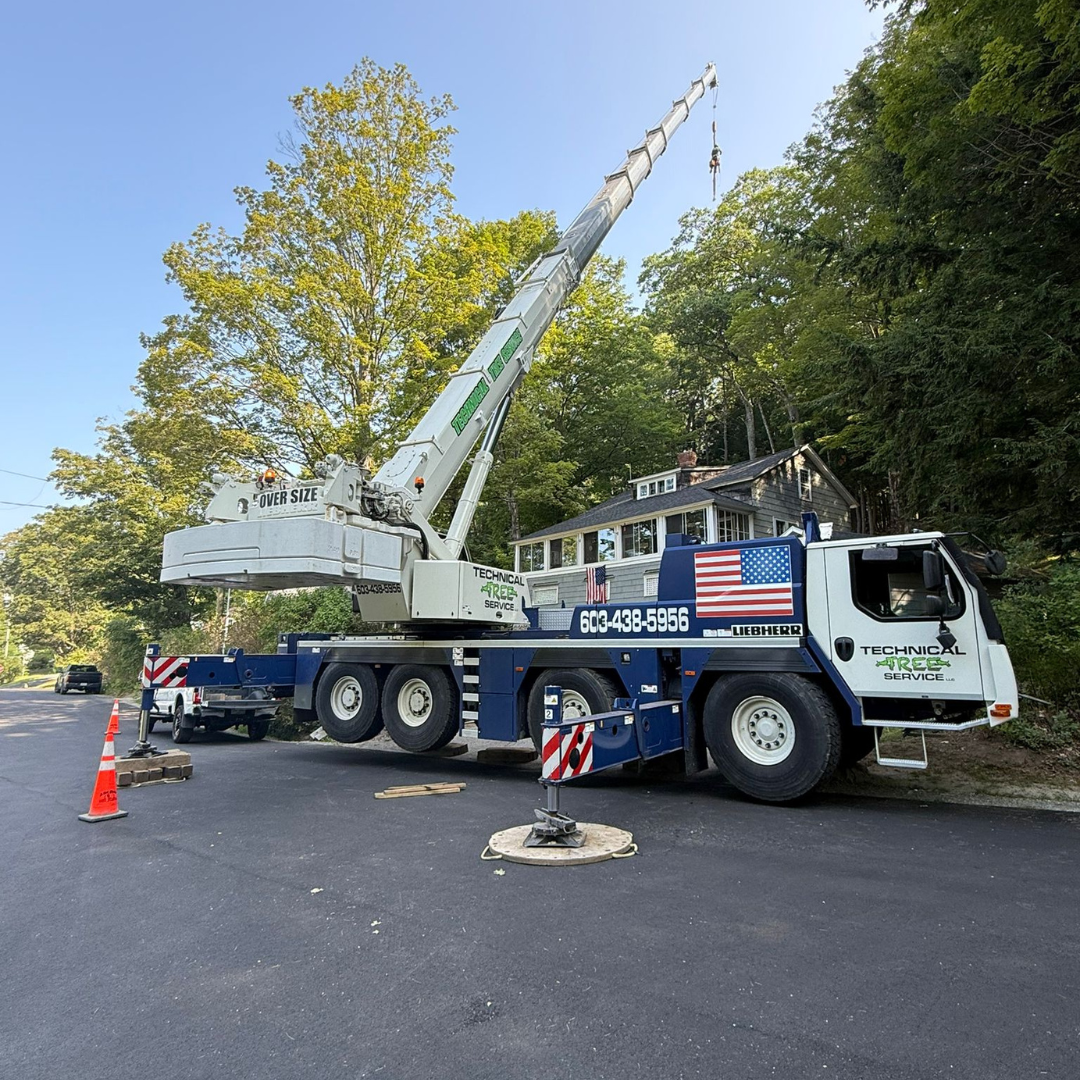
Technical Tree Service provides arborist services in Manchester, NH for homeowners and property managers who need a tree evaluated before deciding on pruning, monitoring, or removal. The company has a certified arborist on staff and provides tree health assessments, pruning, removal, storm response, and 24/7 emergency service.
Technical Tree Service also provides arborist services in Goffstown, NH and serves communities throughout southern New Hampshire.
If a tree recently changed position, the soil around the roots is moving, or the tree can reach a house, driveway, utility line, or frequently used area, avoid standing beneath it while trying to decide whether it looks safe. An on-site assessment can determine what the lean means in the context of that tree and that property.
Technical Tree Service can be reached at (603) 438-5956.