Professional Tree Maintenance in Bedford, NH
Tree maintenance in Bedford, NH should start with the condition of the tree and the site around it. Pruning, Tree Health assessment, soil care, shrub maintenance, Tree Fertilizer, Deep Root Fertilizer and monitoring can all be useful, but they solve different problems. Technical Tree Service evaluates the canopy, trunk, root zone, soil conditions, nearby structures and the property owner’s goal before recommending work.
Technical Tree Service provides tree and shrub maintenance for residential and commercial properties in Bedford. The company has more than 25 years of tree-service experience, is fully insured, is a member of the Tree Care Industry Association (TCIA), and has an ISA Certified Arborist available for Tree Health, pruning and maintenance decisions.
Bedford’s wooded lots, mature landscape trees, winter weather and ongoing residential development create a mix of structural and root-zone concerns. A tree beside a driveway may need clearance and deadwood management, while a tree affected by grading or construction traffic may need root-zone evaluation before anyone recommends fertilizer or pruning.
For broader local service information, see our tree service in Bedford, Bedford arborist services, Tree Health assessment and tree trimming services.
ISA Certified Arborist Guidance for Bedford Tree Maintenance
Technical Tree Service has an ISA Certified Arborist available for Bedford tree-care decisions. We are not publishing employee names, personal profiles or certification numbers on this page. The credential matters because an arborist assessment considers more than the visible branch a homeowner wants removed: species, structure, growth pattern, decay indicators, root condition, soil, targets and the likely response to pruning or treatment all influence the recommendation.
Technical Tree Service is also a member of the Tree Care Industry Association (TCIA). TCIA membership and ISA Certified Arborist status are separate credentials. The New Hampshire Arborists Association operates another voluntary state certification program, so those terms should not be used interchangeably.
For Bedford property owners deciding whether a tree needs pruning, Plant Health Care, monitoring or removal, the useful question is what problem is being managed. A trained arborist can help separate a Tree Health issue from a structural defect or a site problem such as compaction, drainage or recent root disturbance.
What Tree Maintenance Includes
- Visual Tree Health inspection
- Structural pruning for young and developing trees
- Crown cleaning for selected dead, broken or damaged branches
- Clearance pruning around roofs, driveways, signs and walkways
- Root-zone and soil-condition evaluation
- Shrub and ornamental tree maintenance
- Soil pH testing recommendations when nutrition is a concern
- Tree Fertilizer or Deep Root Fertilizer recommendations when justified
- Monitoring for insects, disease symptoms and winter injury
- Storm preparation and post-storm inspection
- Tree preservation planning before grading or construction
Tree maintenance is broader than cutting branches. A healthy tree may need little more than periodic inspection. A declining tree may need a diagnosis before treatment. A structurally compromised tree near a house may need a different level of attention than the same defect in a low-use wooded area.
Types of Tree Pruning We Offer in Bedford
Pruning should be tied to a clear objective rather than a fixed percentage of canopy removal.
Structural Pruning
Structural pruning is used primarily on young and developing trees to improve branch spacing and reduce future conflicts. Early work can often be more conservative than corrective pruning after defects become large.
Crown Cleaning
Crown cleaning targets selected dead, broken or damaged branches. It may be appropriate where deadwood is developing over driveways, lawns, roofs or other frequently used areas.
Clearance Pruning
Clearance pruning creates needed separation from roofs, buildings, signs, driveways and walkways while retaining as much suitable live canopy as practical.
Crown Reduction
Crown reduction shortens selected branches back to appropriate laterals. It is different from topping and is used only when the tree, structure and maintenance objective support that approach.
See our dedicated tree trimming in Bedford, NH page for more information about local pruning work.
Common Tree Problems in Bedford, NH (Emerald Ash Borer, Winter Injury, Soil Compaction)
Bedford does not have one official list ranking every current tree disease by prevalence, but several concerns are locally relevant and worth recognizing.
Emerald Ash Borer (EAB)
Emerald Ash Borer was documented in Bedford by New Hampshire forest-health tracking. Ash trees may develop thinning canopies, branch dieback, bark blonding caused by woodpecker activity and galleries beneath the bark. As deterioration advances, removal can become more difficult, so ash near homes, driveways or active areas should be evaluated before the tree is severely compromised.
Hemlock Woolly Adelgid
Hemlock Woolly Adelgid has also been documented in Bedford. White wool-like material around the bases of hemlock needles is a recognizable sign. Infestation can weaken an Eastern Hemlock over time and may increase vulnerability to additional stress.
Winter Moth
Winter Moth is present in Southern New Hampshire and can defoliate oaks, maples, birch, crabapple and other deciduous trees and shrubs. Bedford-specific activity changes from year to year, so leaf damage should be identified before assuming winter moth is the cause.
Winter Injury
Heavy snow, ice, freeze-thaw cycles, road salt and cold drying winds can damage branches or stress exposed trees and shrubs. Winter injury may show up as dieback, split branches, damaged leaders or foliage burn.
Soil Compaction
Construction traffic, repeated vehicle use, grade changes and landscaping activity can compress soil and reduce pore space around roots. Compaction affects water movement and oxygen availability, so a tree can decline even when nutrients are adequate.
Plant Health Care (PHC), Tree Fertilizer & Deep Root Injection
Plant Health Care (PHC) is a broad approach to preventing, monitoring and treating problems in trees and shrubs within the surrounding landscape. PHC can include inspection, pruning, soil management, water management, insect and disease monitoring and, where appropriate, treatment.
Technical Tree Service’s maintenance work overlaps with several PHC practices, including Tree Health assessment, pruning, shrub care, soil review and fertilization recommendations. Chemical pesticide applications require the appropriate New Hampshire licensing when performed on property the applicator does not own.
Tree Food is a common marketing term for fertilizer. Trees produce their own energy through photosynthesis; fertilizer supplies selected nutrients. UNH Cooperative Extension advises that healthy trees and shrubs often do not need additional fertilizer and that soil testing is useful when pH or nutrient availability is in question.
Deep Root Injection or Deep Root Fertilizer generally refers to placing liquid material below the soil surface in the root zone. The method is not automatically better than surface application. UNH Extension notes that subsurface fertilizer is no more effective than broadcast application in most situations, although it can have site-specific uses. Technical Tree Service evaluates the tree and site before recommending this type of treatment.
How Bedford’s Clay Soil Affects Tree Health
Bedford does not have one uniform clay-heavy soil. Individual parcels can differ because of native soil, fill, grading, drainage and development history. Where a property has clay-rich or heavily compacted soil, however, slow drainage and reduced root-zone oxygen can affect Tree Health.
Roots need both water and oxygen. Fine-textured soil can hold water for longer periods, while compacted soil reduces pore space even when the soil is not naturally clay-rich. Symptoms may include poor growth, canopy thinning, premature leaf drop or branch dieback, but those symptoms can also come from drought, root injury, insects or disease.
Soil pH matters too. UNH Extension notes that unaltered New Hampshire soils often range from about pH 4.5 to 5.5, but a Bedford property should be tested rather than assigned a townwide pH. Soil pH testing can help determine whether lime or nutrient amendments are actually needed.
Bedford’s Native Trees & Recommended Species for Your Property
Tree selection should fit the actual site: mature size, soil moisture, drainage, salt exposure, sun, available rooting space and distance from buildings all matter. Species associated with New Hampshire landscapes include Sugar Maple, White Oak, Eastern Hemlock and Red Pine, but they do not all fit the same Bedford property.
Sugar Maple
Sugar maple can perform well on suitable, well-drained sites but may respond poorly to compaction, road salt and severe root disturbance. It is a better fit where the root zone has room and soil conditions remain stable.
White Oak
White oak develops into a large long-lived tree and needs adequate space above and below ground. It is better suited to properties that can accommodate its mature canopy and root system without repeated clearance conflicts.
Eastern Hemlock
Eastern hemlock can provide year-round screening and shade but requires monitoring for hemlock woolly adelgid. Site moisture and exposure also matter.
Red Pine
Red pine is native to the region but is more site-specific than a generic suburban shade-tree choice. Soil, drainage, exposure and available space should be considered before planting.
The brief refers to USDA Hardiness Zone 5b. Bedford was mapped as Zone 5b on the 2012 USDA map, but the 2023 USDA Plant Hardiness Zone Map places ZIP code 03110 in Zone 6a. The current USDA map should be used for plant selection rather than relying on the older zone label alone.
Storm Damage Prevention for Bedford’s Mature Oaks & Maples
Mature oaks and maples can carry large limbs over driveways, patios, roofs and outdoor living areas. No maintenance plan can make a tree storm-proof, but inspection and selective pruning can identify some conditions worth addressing before snow, ice and wind load the canopy.
Look for large dead branches, cracks at major unions, cavities, old storm breaks and limbs that have changed position. Trees that became newly exposed after neighboring trees were removed can also experience different wind loads.
After heavy snow, ice or wind, inspect from the ground before entering the area beneath the tree. If a branch is suspended, the trunk is split, the root plate has lifted or utilities are involved, keep people away and call for professional help. Technical Tree Service provides 24/7 emergency tree service and storm damage cleanup.
Bedford Tree Maintenance Case Studies
Verified Bedford Customer Service Example: On-Site Visit and Tree Removal
A recent Bedford customer review provides a verified local service example without identifying the reviewer by name. The customer reported finding Technical Tree Service through a Bedford community recommendation, contacting the company through the website, receiving a prompt phone call, and scheduling an on-site visit. The customer described the quote as reasonable, scheduled the tree removal, and reported that the crew arrived on time and handled the work professionally.
This verified example involved tree removal rather than a fertilization or pruning maintenance treatment, so it is not presented as proof of a Bedford PHC outcome. It does demonstrate the local process that also applies to maintenance work: contact, on-site evaluation, scope, scheduling and service at the property.
Technical Tree Service will not publish a Bedford maintenance treatment case with invented street names, species, dates or outcomes. Additional before-and-after maintenance cases should be added only when the property location and work details are confirmed.
Tree Maintenance Pricing Guide for Bedford Homeowners
For planning purposes, basic annual tree inspections may start around $150, while fertilization commonly falls around $200-$400 depending on tree size, number of trees, product, access and the treatment plan. These ranges are not a final quote for a Bedford property.
Final pricing is provided only after an on-site estimate. Cost can change with the number and size of trees, pruning scope, Tree Health concerns, soil testing, Deep Root Fertilizer work, shrub care, access, equipment requirements and proximity to structures or utilities.
A two-acre property with three maintained trees can cost less than a smaller property with many mature trees near buildings. Acreage by itself is not a useful pricing shortcut.
Our Bedford Service Guarantee & Insurance Coverage
Technical Tree Service is fully insured for tree-service operations. For commercial or property-management documentation, the company can provide current insurance information that includes general liability and workers’ compensation coverage. Policy limits should be confirmed from the current certificate of insurance rather than copied from an old document or web page.
Technical Tree Service stands behind the agreed workmanship and cleanup scope. If something within the agreed scope needs correction, contact the company so it can be reviewed and addressed. The service guarantee does not mean a maintained tree is guaranteed against every future storm, pest, disease or natural failure; living trees continue to change after the visit.
The company’s published service information also includes cleanup after tree work and environmental responsibility in debris handling. Expectations for logs, brush, chips, stump grindings and site condition should still be written into the estimate so both sides understand the final scope.
Bedford Conservation Commission, Wetlands & Tree Work
The Bedford Conservation Commission works with the town on natural resources, conservation areas, wetlands and related environmental issues. Bedford’s wetland guidance states that vegetation, including trees, can be cut in some wetland situations under state rules, but removing rooted vegetation and stumps in wetlands can require a permit.
Bedford also has a Historic District. Current Historic District rules restrict certain tree removals and clear cutting without Commission approval, subject to stated exceptions such as an imminent hazard or a tree diseased beyond repair that threatens people or property. Property owners should confirm whether their parcel or project falls within a regulated area before major clearing.
For unusually large trees, the New Hampshire Big Tree Program maintains records of county, state and national champion trees and accepts nominations. A large mature tree on a Bedford property is not automatically protected because of size alone, but documenting unusual specimens can be useful before major work.
Residential and Commercial Tree Maintenance in Bedford
Residential maintenance may focus on shade, roof and driveway clearance, outdoor living areas, shrubs and mature trees close to the home. Commercial maintenance may require documented priorities, predictable scheduling, parking and pedestrian clearance, customer access and coordination across multiple trees.
Technical Tree Service provides maintenance for both. Property owners with multiple Southern New Hampshire locations can also review tree maintenance in Manchester, tree maintenance in Nashua, tree maintenance in Merrimack and tree maintenance in Amherst.
For a broader explanation of service types, see our guide to professional tree services and tree trimming in Concord.
Frequently Asked Questions About Tree Maintenance in Bedford, NH
What tree diseases are most common in Bedford, NH right now?
There is no official Bedford list ranking tree diseases by current prevalence. Locally documented concerns include Emerald Ash Borer in ash and Hemlock Woolly Adelgid in hemlock. Winter Moth is present in Southern New Hampshire and can defoliate hardwoods, but Bedford-specific activity varies. Fungal diseases, root problems and winter injury also occur, so diagnosis should be based on symptoms and the individual tree.
How does Bedford’s soil type (clay-heavy) impact tree fertilization needs?
Bedford does not have one uniform clay-heavy soil. On sites with clay-rich or compacted soil, drainage and root-zone oxygen can be limited, which may produce symptoms that look like nutrient problems. Soil pH testing and root-zone evaluation should come before Tree Fertilizer or Deep Root Injection so treatment addresses the actual cause.
What does a typical tree maintenance visit cost in Bedford?
As a planning guide, basic annual inspections may start around $150 and fertilization commonly falls around $200-$400 depending on tree size, number of trees, materials and access. Final Technical Tree Service pricing is provided only after an on-site estimate because pruning scope, Tree Health concerns, equipment needs and site conditions can change the work substantially.
Which trees thrive best in Bedford’s USDA Zone 5b climate?
Bedford was listed as USDA Zone 5b on the 2012 map, but the 2023 USDA map places ZIP code 03110 in Zone 6a. Sugar maple, white oak, eastern hemlock and red pine are all relevant regional species, but the best tree depends on soil moisture, drainage, sunlight, salt exposure, available rooting space and mature size. Use the current USDA zone together with site conditions rather than choosing by hardiness zone alone.
How do I know if my Bedford property needs a certified arborist vs. a general tree service?
An ISA Certified Arborist is especially useful when the decision involves diagnosis, Tree Health, structural defects, preservation, pruning objectives, soil and root problems or whether removal is necessary. Straightforward cleanup may not require the same level of diagnostic input, but large, mature or declining trees near people and structures benefit from professional evaluation.
What emergency tree services does Technical Tree Service offer in Bedford after storms?
Technical Tree Service provides 24/7 emergency response for fallen trees, dangerous leaning trees, suspended limbs, blocked access and storm debris. If electrical lines are involved, keep clear and contact the utility or emergency services before approaching the tree. Call (603) 438-5956 for current Bedford emergency availability.
Are there Bedford town ordinances I need to know before tree removal or pruning?
Routine tree work on a private residential lot is different from work in wetlands, conservation areas or Bedford’s Historic District. Wetland rules can restrict removal of rooted vegetation and stumps, while Historic District regulations can require approval for certain tree removals or clearing. Confirm current Town requirements when the property or project falls within a regulated area.
How does Technical Tree Service’s 25+ years of experience benefit Bedford homeowners specifically?
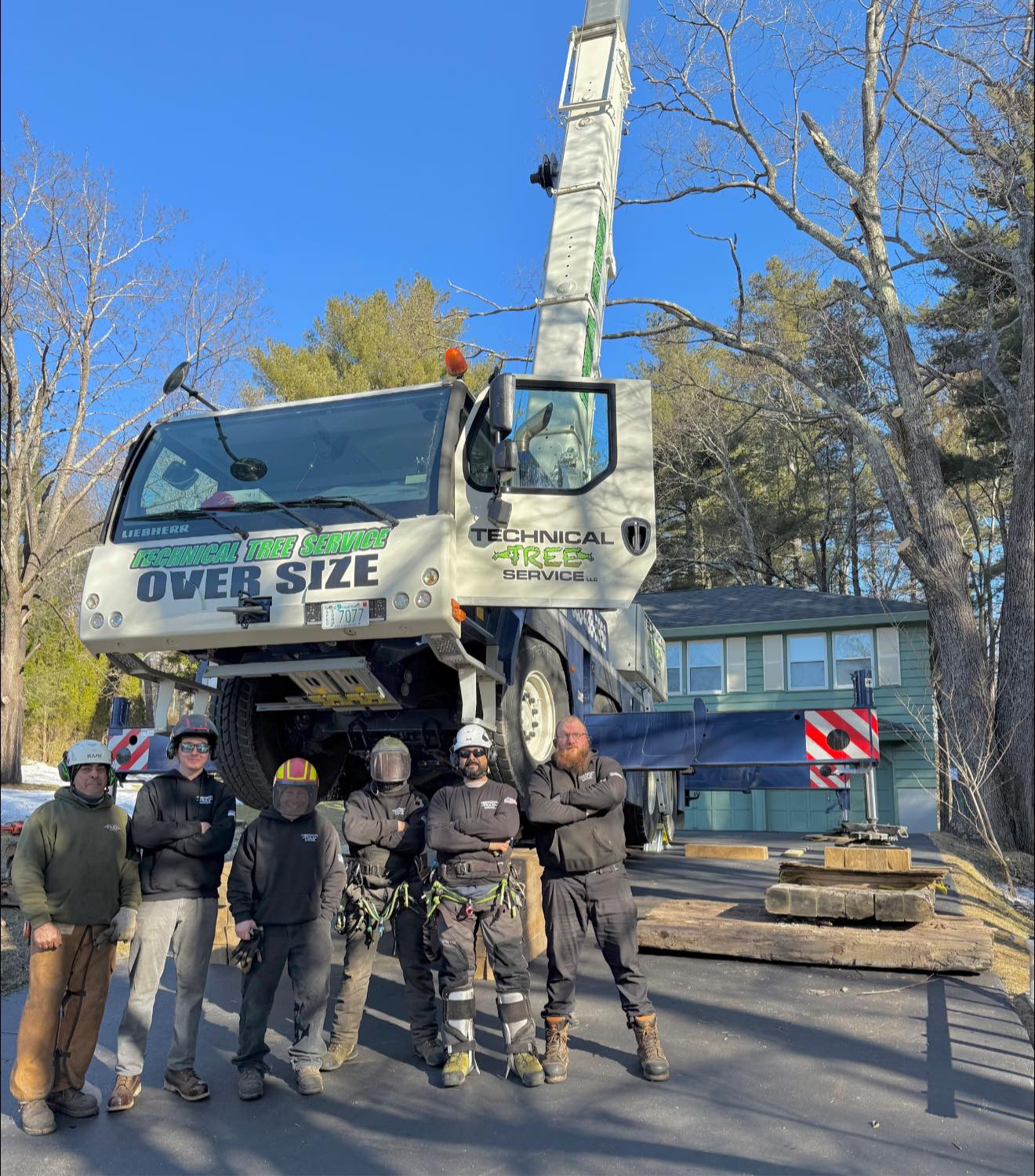
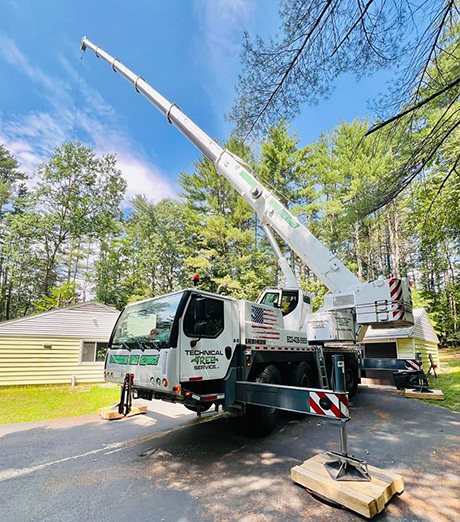
The company has more than 25 years of tree-service experience and is based in Bedford. For local homeowners, that experience is applied through on-site evaluation, arborist guidance, pruning, Tree Health assessment, crane capability, storm response and maintenance decisions adapted to wooded residential lots, mature trees and Southern New Hampshire weather. The 25+ years figure describes company experience; it should not be read as a claim that every employee has 25+ years individually.
Schedule Tree Maintenance in Bedford, NH
If a tree is declining, a shrub needs corrective pruning, roots were disturbed during construction, or you want a maintenance plan before another New Hampshire winter, Technical Tree Service can inspect the property and recommend the next step.
Call (603) 438-5956 or request an on-site estimate for tree maintenance in Bedford, NH.